


x

Olio su tela dipinto a mano nelle tue dimensioni e con la tua cornice, realizzato su ordinazione dai nostri artisti. ( Acquista stampa Acquista immagine)





























Scegli tra le nostre dimensioni predefinite, che rispettano le proporzioni originali dell'opera d'arte.

È possibile inserire dimensioni personalizzate per adattare l'opera a una cornice o a uno spazio specifico. Se la dimensione selezionata non corrisponde alle proporzioni dell'immagine originale, provvederemo a ritagliare l'opera o a estendere il dipinto con elementi aggiuntivi dipinti a mano. Un mockup digitale ti sarà inviato per approvazione prima dell'inizio della produzione.
Si prega di notare che l'anteprima a schermo non riflette il ritaglio o l'estensione effettivi. Solo il mockup mostrerà accuratamente la composizione finale.
Sebbene siano disponibili dimensioni personalizzate, consigliamo di selezionare una dimensione dall'elenco predefinito per preservare le proporzioni originali.
Consegna in tutto il mondo () in 3/4 settimane anziché nelle normali 5 settimane. (22 Agosto). Nessun compromesso sulla qualità.


In the Dance Studio
Dimensioni riproduzione
“In the Dance Studio” by Edgar Degas is more than just a painting; it's a meticulously observed snapshot of Parisian life in the late nineteenth century, brimming with an intimate energy and a poignant sense of quiet drama. Created in 1897, this pastel work transports us to a ballet rehearsal studio, offering a rare glimpse into the world of aspiring dancers and the subtle social dynamics that shaped their lives. Degas, a master of capturing movement and emotion, doesn’t simply depict dancers; he reveals their personalities, their aspirations, and even their moments of frustration – all rendered with an astonishingly delicate touch.
The scene unfolds within a modestly sized studio, its walls hinting at the grandeur of the Palais Garnier, the opulent opera house where many of these young women would eventually perform. Degas’s genius lies in his ability to condense this vast space into a remarkably intimate composition. The figures are arranged with an almost theatrical precision, each positioned to draw the viewer's eye and contribute to the overall narrative. Notice the central figure, draped in a vibrant orange shawl, her posture conveying both exhaustion and a quiet determination. Her downturned gaze suggests a moment of reflection amidst the rigorous demands of training – a subtle commentary on the sacrifices inherent in pursuing a career as a ballerina.
Degas’s masterful use of pastel is crucial to the painting's evocative power. The medium allows for an unparalleled level of subtlety and nuance, capturing the soft textures of the dancers’ costumes, the delicate sheen of their skin, and the diffused light filtering through the studio windows. The loose, broken brushstrokes create a sense of immediacy and movement, as if we are witnessing a fleeting moment frozen in time. The pastel's inherent fragility mirrors the ephemeral nature of youth and beauty – themes that resonate deeply within Degas’s work.
Beyond its aesthetic qualities, “In the Dance Studio” offers valuable insights into the social context of the era. Ballet was not merely a form of entertainment; it was a highly structured profession governed by strict rules and expectations. The presence of the ballet mistress, overseeing the dancers with an air of authority, underscores this hierarchical system. The watchful eyes of the “stage mothers,” positioned in the background, hint at the intense pressure placed upon these young women to meet the exacting standards of the Parisian ballet world. Degas’s painting serves as a poignant reminder of the complex social dynamics that shaped the lives of those who pursued careers in the arts.
Edgar Degas, born Hilaire-Germain-Edgar De Gas in Paris in 1834, was a pivotal figure in the transition from academic art to modernism. Initially trained as a lawyer, he abandoned his legal aspirations to pursue painting, guided by the influential advice of Jean-Auguste-Dominique Ingres – “Draw lines, young man, and still more lines.” This foundational principle shaped Degas’s distinctive style, characterized by its emphasis on line, movement, and capturing everyday moments with remarkable realism.
Unlike many of his contemporaries who focused on historical or mythological subjects, Degas chose to depict the vibrant life of contemporary Paris. He was particularly fascinated by dancers, horses, and racehorses – subjects he observed tirelessly in the streets and at the racetrack. His paintings are not simply representations of these figures; they are imbued with a sense of immediacy and spontaneity, as if captured on the spot. Degas’s innovative approach to painting—often working *en plein air* (outdoors) and employing unconventional techniques—challenged traditional artistic conventions and paved the way for future generations of artists.
His use of pastel was revolutionary. While not entirely new, Degas elevated the medium to a level of sophistication previously unseen. He exploited its ability to create delicate textures, subtle gradations of tone, and luminous effects – qualities that perfectly suited his subject matter. Furthermore, he frequently worked on multiple canvases simultaneously, layering colors and creating complex compositions with remarkable speed and precision.
Degas’s work is inextricably linked to the broader movement of Impressionism, though he resisted being labeled as one of its core members. He shared many of the Impressionists' concerns – a focus on capturing fleeting moments, an interest in light and color, and a rejection of academic conventions. However, Degas maintained a more rigorous approach to technique, prioritizing line and observation over pure optical effects.
Despite his resistance to the “Impressionist” label, Degas’s influence extended far beyond this movement. Artists like Paul Cézanne, who bridged the gap between late 19th-century Impressionism and early 20th-century Cubism, were profoundly inspired by Degas's innovative use of line, perspective, and composition. Cézanne’s later works, particularly his still lifes, demonstrate a clear debt to Degas’s meticulous observation and his ability to capture the essence of form through simplified lines.
Degas’s legacy continues to resonate with artists today. His paintings are celebrated for their technical brilliance, their psychological depth, and their unique perspective on modern life. Reproductions of “In the Dance Studio” offer a beautiful opportunity to experience this remarkable work firsthand, bringing a touch of Parisian elegance and artistic insight into any space.
To delve deeper into the world of Edgar Degas, we encourage you to explore these resources:
For a deeper understanding of Paul Cézanne's influence, visit Paul Cézanne’s page on Most-Famous-Paintings.com.

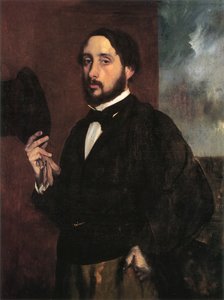
1834 - 1917 , Francia
Explore the ethereal beauty of pastel art. From Renaissance origins to Impressionist mastery, discover the history, technique, and velvety textures that define this luminous medium in our expert guide for art connoisseurs.


Rimani aggiornato sulle ultime novità dell'arte, sulle offerte esclusive e sulle idee di decorazione.
Raccontaci del tuo progetto e i nostri esperti d'arte ti proporranno 3 suggerimenti artistici personalizzati.
Lascia che creiamo per te una selezione di 3 opzioni su misura – Gratis!


 Anteprima in scala reale
 Invia
Invia Condividi
 Dettagli opera

 Scarica immagine
 Simili
 Radiografia
 Slideshow

 Espandi i dettagli







 L'opzione vetro è disponibile solo per dimensioni inferiori a 110 cm


