Henri de Toulouse-Lautrec: A Parisian Visionary
Henri Marie Raymond de Toulouse-Lautrec-Monfa, universally known as Toulouse-Lautrec (November 24, 1864 – September 9, 1901), stands as one of the most distinctive voices in late nineteenth-century French art. Born into a noble lineage descended from both the Counts of Toulouse and Odet de Foix, Vicomte de Lautrec, his childhood was marked by an unusual familial circumstance: his parents separated shortly after his birth, leaving him to be raised primarily by his maternal grandparents—a fact that profoundly shaped his worldview. Despite facing considerable physical challenges stemming from a congenital skeletal disorder – suspected to be pycnodysostosis though debated even today – Toulouse-Lautrec defied expectations and forged an extraordinary artistic path, becoming synonymous with the vibrant pulse of Montmartre and capturing its essence in unforgettable images.
Early Influences & Artistic Training
Toulouse-Lautrec’s formative years were spent honing his artistic skills under the tutelage of Léon Bonnat and Fernand Cormon in Paris—institutions that instilled in him a foundational understanding of academic painting techniques. However, it was his encounter with Eugène Fromentin, a celebrated naturalist painter who championed the depiction of nature’s beauty, that truly ignited his passion for observation and artistic exploration. Fromentin encouraged Toulouse-Lautrec to venture beyond traditional subjects, urging him to embrace the world around him—a directive that would prove instrumental in shaping his distinctive style. Notably, Toulouse-Lautrec's fascination with Japanese woodblock prints – then gaining considerable popularity in Europe – profoundly impacted his aesthetic sensibilities. The bold compositions and flattened perspectives characteristic of Ukiyo-e art served as a catalyst for experimentation and challenged the conventions of Western artistic tradition.
The Bohemian Embrace: Montmartre & Artistic Innovation
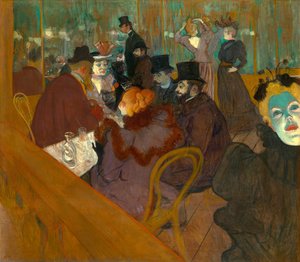
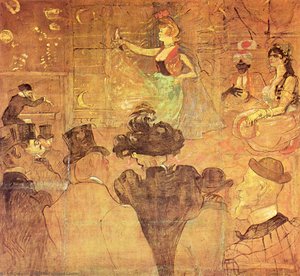
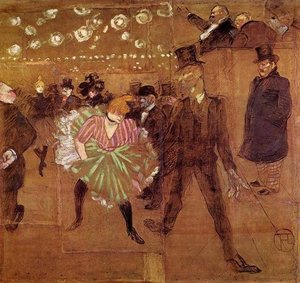
Toulouse-Lautrec’s artistic breakthrough occurred amidst the burgeoning bohemian culture of Montmartre—a district renowned for its artists, writers, musicians, and performers. Rejecting the rigid formalism of the Salon, he immersed himself in this dynamic milieu, documenting its sights and sounds with unparalleled sensitivity and stylistic daring. He eschewed idealized representations of beauty, instead portraying his subjects with unflinching honesty—capturing their vulnerabilities alongside their charisma. This approach is vividly exemplified in his iconic depictions of Moulin Rouge dancers, cabaret singers, and prostitutes—images that transcended mere documentation to become emblems of Parisian decadence and artistic freedom. Toulouse-Lautrec’s technique was revolutionary for its time. He skillfully employed line – often thick and expressive – to convey movement and emotion, creating compositions that pulsated with energy. His color palette, though frequently muted, possessed an arresting vibrancy—capturing the artificial glow of gaslight and the smoky atmosphere of Montmartre cafes. Lithography became his favored medium, allowing him to reproduce his images widely and disseminate them throughout Europe.
Notable Works & Artistic Legacy
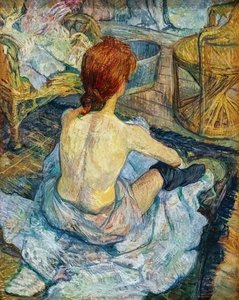
Toulouse-Lautrec’s oeuvre comprises a remarkable collection of paintings, prints, drawings, and decorative commissions—each imbued with an unmistakable stylistic signature. Among his most celebrated works are *La Blanchisseuse* (The Washerwoman), a poignant portrayal of female labor and vulnerability; *Moulin Rouge*, No. 1—a monumental canvas capturing the frenetic energy of Paris’s famed cabaret; *Paris Street Scene*, depicting a bustling cityscape bathed in twilight; and *Jane Avril*, a portrait of a celebrated dancer that embodies Toulouse-Lautrec's masterful command of line and color. His posters advertising performers like Jane Avril and Yvette Guilbert stand as masterpieces of graphic design—demonstrating his ability to transform visual elements into powerful expressions of artistic intent. Toulouse-Lautrec’s influence extended far beyond the confines of his own era, inspiring subsequent generations of artists who embraced experimentation and challenged conventional aesthetic norms. He remains a pivotal figure in the transition from Impressionism to modern art, solidifying his place as one of France's most enduring artistic icons—a testament to the transformative power of observation, empathy, and stylistic innovation.
## A Singular Vision: Toulouse-Lautrec’s Enduring Influence
Despite facing considerable personal hardship – including debilitating alcoholism and syphilis – Toulouse-Lautrec persevered in his artistic pursuits until his untimely death at the age of 36 on September 9, 1901. His legacy transcends mere stylistic innovation; it embodies a profound engagement with human experience—a willingness to confront darkness alongside beauty—and an unwavering devotion to capturing the essence of a particular moment in time. He is considered one of the key Post-Impressionist painters alongside Cézanne, Van Gogh, Gauguin, and Seurat. His work continues to captivate audiences today, reminding us that art can illuminate the complexities of human existence with remarkable clarity and sensitivity—a testament to Toulouse-Lautrec’s enduring artistic vision.