A Brushstroke of Dutch Life: The World of Pieter Cornelis Dommershuijzen
Pieter Cornelis Dommershuijzen occupies a cherished, though often quietly celebrated, corner within the pantheon of 19th-century Dutch landscape painting. While not as widely recognized as some of his contemporaries, Dommershuijzen’s work offers an intimate and vibrant glimpse into the everyday life of the Netherlands during a period of significant social and economic change. His canvases are not grand historical narratives or dramatic allegories; instead, they present scenes brimming with authenticity – bustling market squares, tranquil riverbanks, and the gentle rhythm of Dutch towns. Dommershuijzen’s enduring appeal lies in his ability to capture the *atmosphere* of a place, imbuing his paintings with a sense of warmth, light, and genuine connection to the subject matter.Early Life and Artistic Formation
Details regarding Dommershuijzen's early life remain somewhat scarce, a common characteristic for artists whose focus lay primarily on observation and execution rather than self-promotion. What is known suggests he received his artistic training within the established Dutch tradition, likely benefiting from the influence of local landscape painters who were continuing the legacy of the 17th-century masters. The Netherlands had a long and proud history of landscape art, dating back to the Dutch Golden Age, and Dommershuijzen clearly absorbed these lessons. He wasn’t necessarily striving for groundbreaking innovation; rather, he sought to refine and perpetuate a style that resonated deeply with the national identity – a celebration of the land, its people, and their daily routines. His early works demonstrate a meticulous attention to detail, a careful rendering of light and shadow, and a developing skill in depicting atmospheric effects.Themes and Techniques: Capturing Dutch River Scenes and Market Life
Dommershuijzen’s oeuvre is characterized by two primary themes: Dutch river scenes and lively market place depictions. His riverscapes are particularly compelling, showcasing the intricate network of waterways that define the Netherlands. He masterfully portrays the interplay between water, sky, and land, often including boats laden with goods, figures engaged in commerce, and charming villages nestled along the banks. These paintings aren’t simply topographical representations; they evoke a sense of movement, industry, and the vital role rivers played in Dutch life. His market scenes are equally captivating. Dommershuijzen possessed an exceptional ability to capture the energy and bustle of these gatherings – vendors hawking their wares, shoppers examining produce, children playing amidst the stalls. He employed a technique that emphasized *plein air* painting, working directly from nature to achieve a remarkable sense of realism and immediacy. His brushwork is often loose and expressive, creating a dynamic surface texture that conveys the vibrancy of the scene. The color palettes are typically warm and earthy, reflecting the natural tones of the Dutch landscape and the everyday clothing of his subjects. He was adept at using light to highlight key elements within the composition, drawing the viewer’s eye to specific details and enhancing the overall sense of depth and atmosphere.Influences and Artistic Legacy
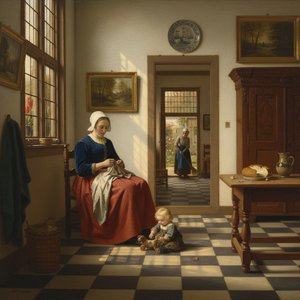
While Dommershuijzen developed a distinct style, it's possible to identify influences from earlier Dutch masters such as Jan van Goyen and Pieter de Hooch. Like Van Goyen, he demonstrated a keen understanding of atmospheric perspective and the subtle nuances of light. From De Hooch, he may have drawn inspiration in his ability to depict intimate domestic scenes and the everyday lives of ordinary people. However, Dommershuijzen’s work is not merely imitative; he synthesized these influences into something uniquely his own. His legacy lies in his contribution to the tradition of Dutch genre painting – a style that focused on depicting scenes from daily life. He wasn't concerned with grand narratives or idealized representations; instead, he sought to capture the beauty and authenticity of the world around him. His paintings offer valuable insights into the social and economic conditions of 19th-century Netherlands, providing a visual record of a bygone era. Today, his works are appreciated for their charm, realism, and ability to transport viewers to a simpler time. His art continues to resonate with collectors and enthusiasts who seek a genuine connection to Dutch history and culture.Current Recognition and Significance
Although Dommershuijzen may not be a household name, his paintings are increasingly sought after by collectors and museums alike. His work provides an important counterpoint to the more dramatic and historically focused art of the 19th century, offering a refreshing glimpse into the everyday lives of ordinary people. The enduring appeal of his Dutch river scenes and market place depictions lies in their ability to evoke a sense of nostalgia, warmth, and genuine connection to the subject matter. His paintings serve as a reminder that beauty can be found in the simplest of things – a bustling marketplace, a tranquil riverbank, or the gentle rhythm of daily life.- Known for vibrant Dutch river scenes
- Masterful depiction of lively market place scenes.
- Contributes to the tradition of 19th-century Dutch genre painting.
- Offers valuable insights into social and economic conditions of the Netherlands.