x





























作品のオリジナル比率に合わせた、当店の規定サイズからお選びください。

特定のフレームやスペースに合わせて、ご希望のサイズをご入力いただけます。選択されたサイズが元の画像の比率と異なる場合、アートワークをトリミングするか、手描きで要素を追加して絵画を拡張いたします。デジタルモックアップ を制作し、制作開始前にご確認(承認)をいただきます。
画面上のプレビューは、実際のトリミングや拡張を正確に反映しているものではありません。最終的な構図は、モックアップによってのみ正確にご確認いただけます。
カスタムサイズもご利用いただけますが、元の比率を維持するためには、あらかじめ用意されたリストからサイズを選択することをお勧めいたします。

The accordion
複製画のサイズ
In the vibrant landscape of early twentieth-century modernism, few works capture the pulse of the machine age as electrifyingly as Fernand Léger’s 1926 masterpiece, The Accordion. This is not merely a painting of a musical instrument; it is a bold, chromatic manifesto that translates the mechanical heartbeat of urban life onto a static canvas. Upon first encounter, the viewer is swept up in a sea of luminous reds and sun-drenched yellows, anchored by assertive black accents that slice through the composition with architectural precision. Léger rejects the hazy, ephemeral softness of Impressionism, opting instead for a visual language defined by structural integrity and a profound clarity that demands attention.
The centerpiece of this rhythmic dance is the accordion itself—a symbol that bridges the gap between soulful human expression and the burgeoning mechanical power of the era. Through his unique lens, Léger presents the instrument not as a static object of nostalgia, but as an active participant in a larger, geometric choreography. The composition is a masterful display of Constructivism, where the world is reimagined through simplified forms such as cylinders, cubes, and intersecting planes. As the eye wanders across the canvas, one discovers smaller, fragmented echoes of the accordion scattered throughout the periphery, creating a sense of infinite movement that mirrors the relentless energy of a modernizing Europe.
To understand The Accordion is to understand the soul of the post-World War I era, a period defined by unprecedented urbanization and the rapid expansion of industrial technology. Léger, whose early life was rooted in the physical labor of rural Normandy, found a profound connection between the rhythmic movements of manual work and the precision of the machine. His technique utilizes tachisme—a method of applying paint with loose, gestural strokes—to infuse his rigid geometric shapes with a sense of organic vitality. This tension between the structured, mechanical forms and the energetic, painterly texture creates a captivating visual friction that keeps the viewer perpetually engaged.
For the discerning collector or interior designer, this artwork offers more than just aesthetic beauty; it provides a sophisticated focal point that embodies strength and dynamism. The painting’s ability to command a room lies in its balanced use of primary colors and bold outlines, making it an ideal centerpiece for contemporary spaces that celebrate modernism and structural elegance. Owning a high-quality reproduction of this work allows one to invite the spirit of the avant-garde into their home, serving as a constant reminder of a time when art dared to embrace the beautiful, clanging complexity of the modern world.

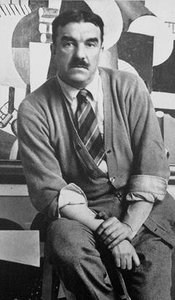
1881 - 1955 , フランス

Explore the profound impact of Minimalism and Geometric Abstraction. From Mondrian to Malevich, discover how stripping art to its essential forms revolutionized modern aesthetics through our expert-led historical guide.
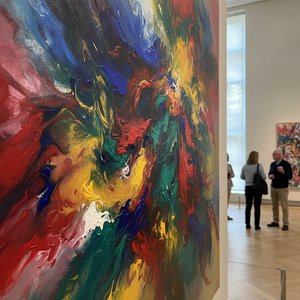
Explore the profound emotional depth of Lyrical Abstraction. Discover how masters like Raymond Parker used color and form to bridge Impressionism and Abstract Expressionism. Learn about this pivotal movement through our expert-led art history guide.


最新の美術ニュース、限定オファー、そしてインテリアのアイデアをいち早くお届けします。
お客様のプロジェクトについてお聞かせください。当社の美術専門家が、お客様に合わせた3つのパーソナライズされた芸術提案をご提供いたします。
あなたにぴったりの3作品を無料で厳選いたします


 プレビュー
プレビュー
 プリントを購入
 シェアする
シェアする シェアする
シェアする
 詳細を見る
詳細を見る

 ダウンロード
 似ている作品
 X線調査
X線調査 スライドショー

 詳細を見る
詳細を見る









 ガラスオプションは、110cm未満のサイズでのみご利用いただけます。