


x
 パネルに油彩Romantic Landscape Painting
 1833
1833 25.0 x 35.0 cm
 イェール英国美術館
当社のアーティストが、お客様のご希望のサイズと額縁に合わせて、キャンバスに手描きで制作する油彩画です。 ( プリント版に切り替え 画像に切り替え)





























作品のオリジナル比率に合わせた、当店の規定サイズからお選びください。

特定のフレームやスペースに合わせて、ご希望のサイズをご入力いただけます。選択されたサイズが元の画像の比率と異なる場合、アートワークをトリミングするか、手描きで要素を追加して絵画を拡張いたします。デジタルモックアップ を制作し、制作開始前にご確認(承認)をいただきます。
画面上のプレビューは、実際のトリミングや拡張を正確に反映しているものではありません。最終的な構図は、モックアップによってのみ正確にご確認いただけます。
カスタムサイズもご利用いただけますが、元の比率を維持するためには、あらかじめ用意されたリストからサイズを選択することをお勧めいたします。

クイーン・メアリー宮殿のコロンネード
複製画のサイズ

The name Edward Calvert might not immediately resonate with art history enthusiasts, yet his contribution to British printmaking and painting during the early 1800s deserves recognition. Born in Greenlaw, Scotland, on September 20, 1799, into a family steeped in artistic tradition – his father, Charles Willson Peale, was a renowned naturalist and museum curator – Calvert’s life unfolded as a fascinating blend of scientific observation and artistic skill. Unlike the flamboyant figures often associated with the era, Calvert's legacy lies in his meticulous depictions of rural life, particularly scenes of cattle on the Scottish countryside, rendered with an understated elegance and remarkable detail.
Calvert’s early education likely involved exposure to his father’s museum, a hub for collecting and displaying specimens. This immersion in natural history undoubtedly shaped his artistic sensibilities, fostering a keen eye for observation and a deep appreciation for the beauty of the natural world. He formally studied at the Royal Academy in Edinburgh, a common path for aspiring artists of the time, honing his technical skills before embarking on his independent career.
Calvert’s primary medium was watercolor and engraving, techniques he mastered with considerable skill. His most celebrated works depict scenes of rural Scotland, specifically cattle grazing in expansive landscapes. These aren't dramatic, heroic portrayals; rather, they are intimate studies of animals in their natural habitat, capturing the subtle shifts of light, texture, and mood. The compositions are often simple, focusing on the relationship between animal and environment, conveying a sense of tranquility and timelessness.
Unlike many artists of his era who sought fame through grand historical or mythological subjects, Calvert’s focus remained firmly rooted in the everyday. This dedication to depicting ordinary scenes—a farmer tending his flock, cattle browsing in a field—is what distinguishes his work and contributes to its enduring appeal. His prints were not intended for large-scale display; they were created for private collections and circulated amongst a discerning clientele who appreciated his quiet mastery.
Calvert’s artistic style is often described as ‘rustic’ or ‘deliberately understated.’ He drew inspiration from the works of earlier landscape painters, particularly those associated with the Scottish School of Landscape painting. However, unlike some of his predecessors, Calvert avoided overtly romanticizing nature. Instead, he presented a more realistic and objective view, emphasizing the inherent beauty of the countryside without resorting to sentimental embellishments.
The influence of his father’s scientific pursuits is also evident in Calvert's work. His meticulous attention to detail—the texture of fur, the movement of hooves, the play of light on water—reflects a naturalist’s eye for observation and accuracy. This combination of artistic skill and scientific rigor is what elevates Calvert’s prints beyond mere depictions of scenery; they are carefully constructed studies of animal behavior and the natural world.
Edward Calvert continued to work as an artist throughout his life, producing a substantial body of prints and paintings. He remained largely unknown during his lifetime, but his work gradually gained recognition in the 20th century, particularly through the efforts of art historians who appreciated its quiet beauty and understated elegance.
Today, Edward Calvert is recognized as one of the most important printmakers of the early 19th century. His depictions of rural Scotland offer a valuable glimpse into a bygone era, capturing the essence of a landscape that has largely disappeared. His legacy lies not in grand gestures or dramatic scenes, but in his quiet mastery of watercolor and engraving—a testament to the enduring power of observation and artistic skill.
Calvert's work is held in collections at the Tate Gallery in London and other institutions, ensuring that his quiet contributions to British art continue to be appreciated by generations of viewers.

1799 - 1870

Explore 25 iconic Sir Alfred Munnings paintings! Discover the beauty of British Impressionism, equine art & rural England. Find museum-quality reproductions and elevate your home decor with Most-Famous-Paintings. Explore the full collection online.
ジェームズ・マクニール・ホイストラーの至高の25選。ノクターン、印象派、美しい色彩に満ちた作品群を紐解きます。Most-Famous-Paintingsで高品質なアートプリントとインテリアをお楽しみください。名画の世界へ – Most-Famous-Paintings.com

クロード・モネの傑作25選。印象派を代表する光の画家、モネの世界を旅しませんか?睡蓮や風景画など、名画の背景にある物語と芸術技法をご紹介。Most-Famous-Paintingsで高品質な複製画とインテリアアートを見つけましょう。全コレクションはこちら。
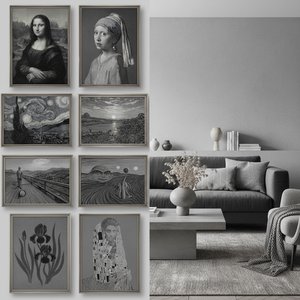
Explore 10 iconic gray paintings by masters like Rembrandt, Hopper & Whistler. Discover the stories behind these atmospheric artworks and find museum-quality art reproductions for your home decor at . Explore the full collection online.

Explore 10 famous paintings where 'Chrome Green' reigns supreme! Discover Monet, Manet & Van Gogh’s masterpieces. Learn the stories behind these iconic artworks and find museum-quality art reproductions for your home at .


最新の美術ニュース、限定オファー、そしてインテリアのアイデアをいち早くお届けします。
お客様のプロジェクトについてお聞かせください。当社の美術専門家が、お客様に合わせた3つのパーソナライズされた芸術提案をご提供いたします。
あなたにぴったりの3作品を無料で厳選いたします


 シェアする
シェアする シェアする
シェアする
 詳細を見る
詳細を見る

 ダウンロード
 似ている作品
 スライドショー
 詳細を見る
詳細を見る









 ガラスオプションは、110cm未満のサイズでのみご利用いただけます。


