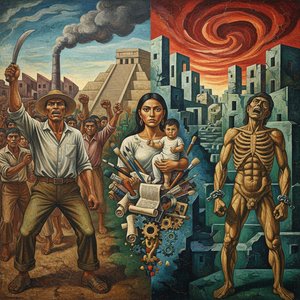
From Stage to Studio: The Theatrical Soul of a Painter
Manuel Salvador Ojeda Armenta, often remembered by the name Manuel Díaz Meré, lived a life defined by the power of performance. Born in the coastal serenity of La Paz, Mexico, his initial journey was not one of pigment and oil, but of light and shadow upon the stage. As an actor trained at the Instituto de Bellas Artes, he mastered the art of presence, a skill that would later breathe life into his canvases. His career in the cinematic and television realms—notably his role as the villain Zolo in the Hollywood classic
Romancing the Stone—provided him with a unique perspective on drama, composition, and the human condition. This theatrical foundation allowed him to approach the canvas not merely as a surface for depiction, but as a stage where emotion could be staged through color and form.
The Language of Color and Mexican Heritage
As he transitioned into painting in his thirties, Ojeda Armenta began to weave the vibrant textures of his Mexican heritage into a style that bridged the gap between
Expressionism and
Realism. Drawing profound inspiration from masters such as August Macke and Ilya Efimovich Repin, he sought to capture more than just the physical likeness of his subjects; he aimed for their psychological essence. His works are characterized by:
- Vivid Color Palettes that evoke the warmth and intensity of the Mexican landscape.
- Textured Surfaces that lend a tactile, visceral quality to his depictions of daily life.
- A seamless blend of meticulous observation and imaginative interpretation.
Through his brush, the landscapes of Baja California Sur and the intimate scenes of Mexican culture are transformed into narratives of profound depth. His journey concluded in 2022, yet his legacy remains a single, continuous performance, where every stroke of the brush serves as an act of storytelling, capturing the enduring spirit of a nation through a lens of emotive beauty.