მხატვრის ბიოგრაფია
Ivan Konstantinovich Aivazovsky (Hovhannes Aivazian): Embodies the Romantic Soul of the Sea
Ivan Konstantinovich Aivazovsky, born Hovhannes Aivazian in 1817, wasn’t merely a painter; he was inextricably bound to the Black Sea—a vast expanse that pulsed with untamed energy and whispered tales of ancient myths. His life unfolded against this backdrop, shaping his artistic vision and propelling him to unparalleled success as one of Russia's foremost marine artists. Born in Feodosia, Crimea – a city steeped in maritime history – Aivazovsky’s connection to the sea began early, nurtured by his upbringing amidst the bustling port environment and fostered by the mentorship of architect Jacob Koch who recognized his prodigious talent. This formative influence would prove crucial in shaping his distinctive style—a style characterized by dramatic compositions and masterful manipulation of color that continues to captivate audiences today.
Early Years and Artistic Training
From a young age, Aivazovsky’s artistic inclinations were evident, attracting the attention of Jacob Koch who recognized his innate aptitude for art. Recognizing this potential, Koch encouraged him to pursue formal training at Saint Petersburg’s Imperial Academy of Arts—a decision that would prove pivotal in honing his skills and grounding him in the traditions of Western European painting. Despite the rigorous academic environment, Aivazovsky transcended mere imitation; he absorbed influences from Turner and Friedrich, artists who championed the Romantic movement's preoccupation with sublime landscapes and emotive expression. This exposure to groundbreaking artistic ideas fueled his own creative exploration and solidified his commitment to capturing the grandeur and terror of nature—a pursuit that would define his entire career.
The Rise of a Naval Painter: Influence and Patronage
A turning point arrived when Aivazovsky was appointed official painter of the Russian Navy – an honor that granted him access to ships, sailors, naval battles, and firsthand observation of maritime life. This patronage profoundly impacted his artistic output, imbuing his paintings with authenticity and immediacy. He became intimately acquainted with the realities of seafaring—the hardships endured by sailors, the exhilaration of victory, and the devastating consequences of defeat—translating these experiences into canvases that resonated deeply with both military officials and the broader public. The support of Czar Nicholas I ensured a steady stream of commissions and allowed him to dedicate himself entirely to his craft, cementing his reputation as Russia’s premier marine artist.
A Master's Technique: Capturing Atmospheric Drama
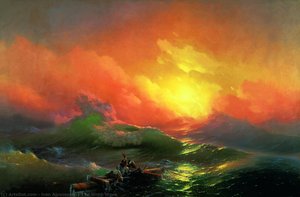
Aivazovsky’s artistic technique was revolutionary for its time—a departure from academic conventions that prioritized meticulous detail and idealized beauty. Instead, he embraced a looser brushstroke style, prioritizing expressive color and capturing the fleeting effects of light and weather. He frequently worked *en plein air*, directly from nature, meticulously studying the nuances of atmospheric conditions to convey their impact on the sea’s surface—a practice that yielded breathtaking results. His masterful use of color – particularly blues and greens – created luminous textures and evoked powerful emotions, transporting viewers into the heart of a storm or onto the deck of a ship battling turbulent waves. Like Turner before him, Aivazovsky sought to capture not just what was visible but also what was felt—a profound connection with the sublime power of nature that distinguishes his work from its contemporaries.
Legacy and Enduring Recognition
Ivan Konstantinovich Aivazovsky’s legacy extends far beyond his artistic achievements; he remains a symbol of Russian Romanticism and a testament to the enduring allure of maritime art. His paintings—characterized by dramatic compositions, masterful color palettes, and an unwavering commitment to capturing atmospheric drama—continue to inspire artists and captivate audiences worldwide. The saying “worthy of Aivazovsky’s brush,” popularized by Anton Chekhov, encapsulates the essence of his artistic vision—a celebration of beauty born from confrontation with nature's formidable forces. His prolific output – approximately 6,000 paintings – solidified his place as one of Russia’s most celebrated artists and ensured that his masterpieces would endure for generations to come. Aivazovsky’s influence can be seen in the works of subsequent Russian painters who embraced a similar expressive style and sought to convey the grandeur and terror of the sea—a testament to his enduring impact on the artistic landscape of Russia and beyond.