


x
 Conceptual Art
 1995
1995 148.0 x 121.0 cm
원하는 크기와 액자로 주문 제작되는, 작가들이 직접 캔버스에 손으로 그린 유화 작품입니다. ( 프린트 주문으로 전환 이미지로 전환)
작품의 원본 비율을 유지하는 미리 설정된 크기 중에서 선택하세요.

특정 프레임이나 공간에 맞도록 직접 크기를 입력할 수 있습니다. 선택하신 크기가 원본 이미지의 비율과 일치하지 않는 경우, 작품을 자르거나 추가적인 손으로 그린 요소를 사용하여 그림을 확장합니다. 제작 시작 전 승인을 위해 디지털 목업을 보내드립니다.
화면 미리 보기는 실제 자르기 또는 확장을 반영하지 않습니다. 최종 구성은 목업을 통해서만 정확하게 확인하실 수 있습니다.
맞춤 크기 제작도 가능하지만, 원본 비율을 유지하기 위해 사전 정의된 목록에서 크기를 선택하시는 것을 권장합니다.

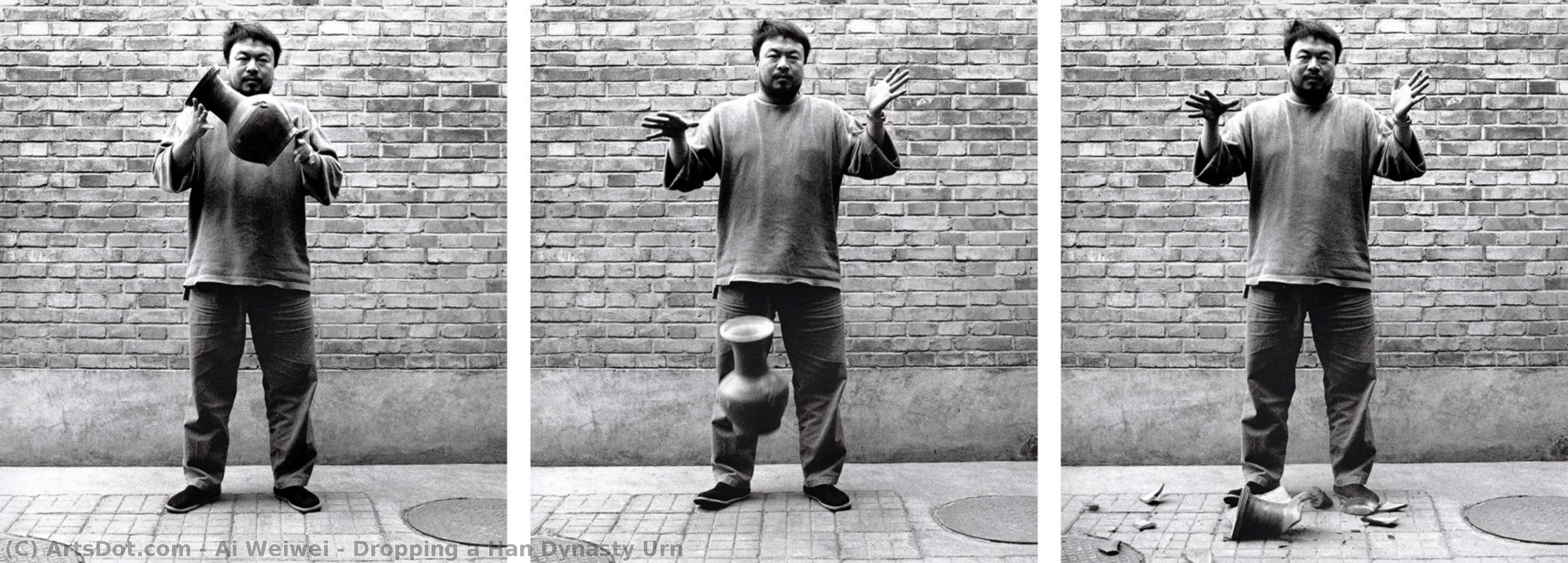
Dropping a Han Dynasty Urn
복제본 크기

Ai Weiwei, born in Beijing in 1957, stands as one of the most recognizable and controversial figures in contemporary Chinese art. His upbringing amidst the stark realities of rural northwest China—marked by his father’s exile under Mao Zedong’s regime—shaped his worldview and fueled a lifelong commitment to artistic expression as a vehicle for social critique. From an early age, Weiwei demonstrated an innate fascination with sculpture and design, honing his skills through formal education at Tsinghua University before embarking on a career that would propel him into the global spotlight. His life has been a continuous dialogue between the personal and the political, where the boundaries of art and activism are perpetually blurred.
Weiwei’s initial artistic endeavors focused on minimalist sculptural forms—often utilizing industrial materials like steel and concrete—reflecting a deliberate rejection of traditional Chinese aesthetics. This stylistic choice was not merely aesthetic; it symbolized his desire to challenge established conventions and forge his own path within the evolving landscape of Chinese art. Influenced by the conceptual rigor of artists such as Donald Judd and Sol LeWitt, he embraced principles that prioritized ideas over visual ornamentation. His early works explored themes of fragmentation and repetition, mirroring deep-seated anxieties about societal uniformity and governmental control—a preoccupation that would become the heartbeat of his entire artistic practice.
The trajectory of Weiwei’s career shifted dramatically in the late 1990s as he began engaging in activism against corruption within China's education system. This transformation was catalyzed by the devastating "Tofu Dreg Schools" scandal, where a massive earthquake exposed systemic negligence and bribery in school construction. Galvanized by this tragedy, Weiwei utilized his artistic platform to expose injustices and amplify marginalized voices, turning his studio into a site of investigation and protest. His work transitioned from purely formal explorations into profound social investigations, often involving the collection of data, names, and evidence to hold power to account.
This period marked the rise of his monumental installations that command global attention. One of his most iconic achievements, Sunflower Seeds (2010), featured millions of handcrafted porcelain seeds spread across the floor of the Tate Modern. This work served as a powerful metaphor for the relationship between the individual and the masses, reflecting on themes of mass production, Chinese craftsmanship, and the weight of history. Through such large-scale installations, he forces the viewer to confront the sheer scale of human existence and the fragility of the individual within a vast, often indifferent, political machine.
Beyond his physical sculptures, Ai Weiwei has mastered the use of photography and digital media to document contemporary struggles. His ability to weave together the personal narrative with global crises—such as the refugee crisis or the erosion of freedom of speech—has cemented his status as a global icon of resistance. His work does not merely exist in galleries; it exists in the streets, on social media, and in the very conscience of the international community.
The historical significance of Ai Weiwei lies in his refusal to remain silent. His career serves as a testament to the power of the artist as a witness. Through his diverse body of work, we see:

1957 - , China


최신 미술 뉴스, 특별 혜택 및 인테리어 아이디어를 가장 먼저 만나보세요.
프로젝트에 대해 알려주시면 저희 미술 전문가들이 맞춤형 아트 제안 3가지를 전달해 드립니다.
당신만을 위한 맞춤형 옵션 3가지를 무료로 추천해 드립니다!


 미리보기
미리보기
 공유하기
공유하기 공유하기
공유하기
 상세 정보
상세 정보

 다운로드
다운로드
 유사 작품
유사 작품 X-레이
X-레이 슬라이드 쇼
 더 보기
더 보기






































 유리 옵션은 110cm 미만 크기에서만 선택 가능합니다.


![Fort Worth Art Museum The Italian Film: Neorealism And Beyond Poster And Event Calendar\n\n[front View] — 마시모 비네리, 비넬리 어소시에이츠, Contemporary Realism](/media/artworks/images/thumbnails/e9/9d/e99d0f51e4d4411c9237ff8af0cb0b6b.jpg)



