x
원하는 크기와 액자로 주문 제작되는, 작가들이 직접 캔버스에 손으로 그린 유화 작품입니다. ( 프린트 주문으로 전환 이미지로 전환)





























작품의 원본 비율을 유지하는 미리 설정된 크기 중에서 선택하세요.

특정 프레임이나 공간에 맞도록 직접 크기를 입력할 수 있습니다. 선택하신 크기가 원본 이미지의 비율과 일치하지 않는 경우, 작품을 자르거나 추가적인 손으로 그린 요소를 사용하여 그림을 확장합니다. 제작 시작 전 승인을 위해 디지털 목업을 보내드립니다.
화면 미리 보기는 실제 자르기 또는 확장을 반영하지 않습니다. 최종 구성은 목업을 통해서만 정확하게 확인하실 수 있습니다.
맞춤 크기 제작도 가능하지만, 원본 비율을 유지하기 위해 사전 정의된 목록에서 크기를 선택하시는 것을 권장합니다.

Thirteen Most Wanted Men
복제본 크기
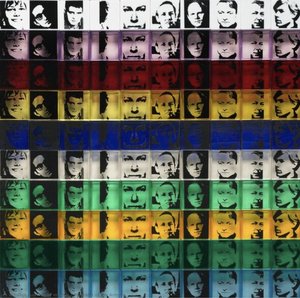
Andy Warhol’s “Thirteen Most Wanted Men,” conceived for the 1964 New York World’s Fair, wasn't merely a decorative commission; it was a deliberate act of disruption and a profound commentary on American culture. Born Andrew Warhola Jr. in Pittsburgh, Warhol’s early life, marked by illness and an immersion in popular imagery—comic books, Hollywood magazines—laid the groundwork for his later exploration of mass media and celebrity. The assignment to adorn the New York State Pavilion, a starkly modern structure designed by Philip Johnson, presented him with a unique challenge: to transform a mundane architectural space into a powerful visual statement. Rejecting the celebratory spirit expected of such commissions, Warhol chose instead to confront viewers with a series of unsettling images – enlarged mugshots of thirteen notorious criminals, plucked from a 1962 NYPD booklet.
The selection itself was deliberately provocative. These weren’t glamorous villains; they were figures associated with organized crime and the darker undercurrents of American society. Warhol's decision to utilize silkscreen printing—a technique he had previously employed for commercial illustration—elevated these images, lending them a cool, detached aesthetic that contrasted sharply with their inherent menace. The choice of black and white further intensified this effect, stripping away any romantic notions associated with crime and presenting the men as faceless, anonymous figures.
The unveiling of “Thirteen Most Wanted Men” at the World’s Fair was met with immediate resistance. Governor Nelson Rockefeller, concerned about potential offense to his constituents—particularly Italian-Americans who comprised a significant portion of the electorate—ordered the mural's hasty removal and subsequent obliteration with silver paint just days before the fair opened. This swift action underscored the anxieties surrounding cultural representation and the sensitivities of public opinion at the time. Warhol, ever the astute observer of social dynamics, reportedly accepted the decision with a shrug, suggesting that he would have replaced the mural with portraits of Robert Moses, the Fair’s director – a subtle critique of bureaucratic power.
Despite its brief existence, the incident cemented “Thirteen Most Wanted Men” as a pivotal moment in Warhol's career and a landmark work of Pop Art. It demonstrated his willingness to challenge conventions, provoke debate, and engage with complex social issues through his art. The subsequent creation of the silkscreen paintings based on the original mural further solidified its impact, transforming a fleeting public installation into a lasting testament to Warhol’s artistic vision.
Beyond its immediate controversy, “Thirteen Most Wanted Men” offers a rich tapestry of symbolic meaning. The repetition of the mugshots—each face rendered with meticulous precision—highlights the dehumanizing effects of the criminal justice system and the pervasive surveillance state. The grid-like arrangement evokes the sterile uniformity of advertising and mass media, suggesting that even individuals deemed “outlaws” are ultimately reduced to commodities in the American image machine. The use of black and white further amplifies this sense of detachment, stripping away any emotional connection to the subjects.
Furthermore, the title itself—"Most Wanted"—carries a double meaning, referencing both criminal pursuit and the relentless desire for fame and attention that characterized Warhol’s era. The mural can be interpreted as an exploration of the American obsession with celebrity, highlighting the blurred lines between criminality, notoriety, and public fascination.
Today, “Thirteen Most Wanted Men” continues to resonate with audiences worldwide, reproduced in high-quality prints that capture the essence of Warhol’s groundbreaking work. The stark simplicity of the composition—the black and white faces arranged in a grid—makes it an ideal subject for interior design, adding a touch of provocative elegance to any space. The artwork's enduring appeal lies not only in its historical significance but also in its timeless exploration of themes such as identity, surveillance, and the nature of celebrity. A reproduction offers a powerful reminder of Warhol’s revolutionary approach to art and his lasting influence on contemporary culture.
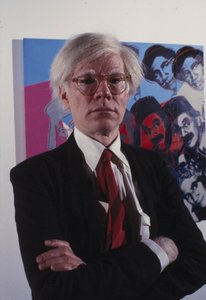
1928 - 1987 , 미국

Explore the provocative world of Aggressive Pop Art. Discover how confrontational imagery, bold saturated hues, and mass media deconstruction redefined modern aesthetics through an expert art-historical lens.


최신 미술 뉴스, 특별 혜택 및 인테리어 아이디어를 가장 먼저 만나보세요.
프로젝트에 대해 알려주시면 저희 미술 전문가들이 맞춤형 아트 제안 3가지를 전달해 드립니다.
당신만을 위한 맞춤형 옵션 3가지를 무료로 추천해 드립니다!


 미리보기
미리보기
 공유하기
공유하기 공유하기
공유하기
 상세 정보
상세 정보

 다운로드
다운로드
 유사 작품
유사 작품 X-레이
X-레이 슬라이드 쇼

 더 보기
더 보기









 유리 옵션은 110cm 미만 크기에서만 선택 가능합니다.