x

원하는 크기와 액자로 주문 제작되는, 작가들이 직접 캔버스에 손으로 그린 유화 작품입니다. ( 프린트 주문으로 전환 이미지로 전환)
작품의 원본 비율을 유지하는 미리 설정된 크기 중에서 선택하세요.

특정 프레임이나 공간에 맞도록 직접 크기를 입력할 수 있습니다. 선택하신 크기가 원본 이미지의 비율과 일치하지 않는 경우, 작품을 자르거나 추가적인 손으로 그린 요소를 사용하여 그림을 확장합니다. 제작 시작 전 승인을 위해 디지털 목업을 보내드립니다.
화면 미리 보기는 실제 자르기 또는 확장을 반영하지 않습니다. 최종 구성은 목업을 통해서만 정확하게 확인하실 수 있습니다.
맞춤 크기 제작도 가능하지만, 원본 비율을 유지하기 위해 사전 정의된 목록에서 크기를 선택하시는 것을 권장합니다.

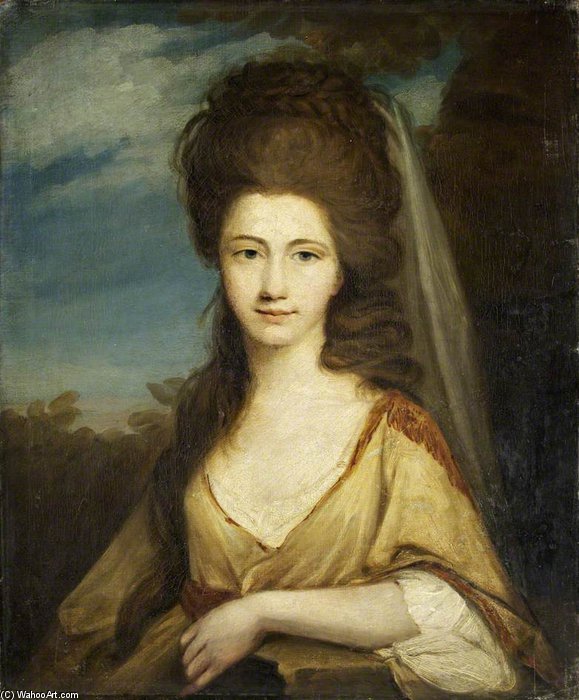
Lady Elizabeth Compton
복제본 크기

In the grand tapestry of the eighteenth century, few artists captured the profound transition from colonial tension to national identity as poignantly as Robert Edge Pine. Born in London in 1730, Pine was a man of two worlds, an Anglo-American painter whose life and work bridged the gap between the established elegance of the British Enlightenment and the raw, burgeoning spirit of the American Revolution. His artistic lineage was rooted in the meticulous precision of his father, John Pine, a renowned engraver and cartographer. This early exposure to the disciplined world of printmaking instilled in Robert a foundational reverence for detail and an uncanny ability to translate complex narratives into visual reality, a skill that would later serve him as he documented the faces of history.
Pine’s early career in London was marked by significant prestige, as his talent for portraiture earned him the attention of the era's most influential figures. He moved within the sophisticated circles of the Society of Artists and the Free Society of Artists, painting luminaries such as George II and the celebrated actor David Garrick. His work during this period was characterized by a refined mastery of character, capturing not just the physical likeness of his subjects but the subtle psychological nuances that defined the European elite. Yet, beneath this polished exterior lay an artist deeply attuned to the shifting political tides of the Atlantic world, a sensitivity that would eventually draw him across the ocean to the shores of a new nation.
The final chapter of Pine’s life saw him relocate to Philadelphia, where he became an essential visual chronicler of the American struggle for independence. During these transformative years, his art transcended mere portraiture to embrace the profound weight of history painting. His masterpiece, “America,” painted in 1778, stands as a breathtaking testament to his allegorical prowess. In this work, Pine did not merely paint a landscape or a person; he painted an idea. By depicting America as a suffering figure receiving solace from symbols of liberty, concord, plenty, and peace, he provided a visual language for the very ideals that fueled the revolution, offering hope and moral clarity to a nation in the throes of war.
Beyond his allegorical triumphs, Pine’s commitment to documenting the American cause is perhaps most famously realized in his ambitious, though unfinished, work, “Congress Voting Independence.” This monumental composition sought to immortalize the interior of Independence Hall, populating it with the portraits of the signers of the Declaration of Independence. Through this project, Pine attempted to weave together the individual identities of the Founding Fathers into a singular, cohesive narrative of democratic birth. His ability to capture figures like George Washington—specifically in his rare, mature portrait executed at Mt. Vernon—demonstrates his unique capacity to document the human element behind the political icons.
Though his life was cut short in 1788, the legacy of Robert Edge Pine remains an indispensable part of the American artistic canon. He occupied a critical historical interlude, a period between the departure of masters like Copley and the return of Stuart, where his work served as a precious record of a society on the precipice of change. His contributions can be summarized through several enduring impacts:
Today, the works of Robert Edge Pine are cherished not merely as beautiful objects of art, but as historical windows. They allow us to peer into the very heart of the eighteenth century, witnessing the faces of those who shaped a continent and feeling the pulse of a revolution through the evocative strokes of his brush.

1730 - 1788 , United Kingdom


최신 미술 뉴스, 특별 혜택 및 인테리어 아이디어를 가장 먼저 만나보세요.
프로젝트에 대해 알려주시면 저희 미술 전문가들이 맞춤형 아트 제안 3가지를 전달해 드립니다.
당신만을 위한 맞춤형 옵션 3가지를 무료로 추천해 드립니다!


 미리보기
미리보기
 공유하기
공유하기 공유하기
공유하기
 상세 정보
상세 정보

 다운로드
다운로드
 유사 작품
유사 작품 X-레이
X-레이 슬라이드 쇼
 더 보기
더 보기






































 유리 옵션은 110cm 미만 크기에서만 선택 가능합니다.