


x

 Expressionism
 99.0 x 81.0 cm
원하는 크기와 액자로 주문 제작되는, 작가들이 직접 캔버스에 손으로 그린 유화 작품입니다. ( Switch to Print Switch to Image)
작품의 원본 비율을 유지하는 미리 설정된 크기 중에서 선택하세요.

특정 프레임이나 공간에 맞도록 직접 크기를 입력할 수 있습니다. 선택하신 크기가 원본 이미지의 비율과 일치하지 않는 경우, 작품을 자르거나 추가적인 손으로 그린 요소를 사용하여 그림을 확장합니다. 제작 시작 전 승인을 위해 디지털 목업을 보내드립니다.
화면 미리 보기는 실제 자르기 또는 확장을 반영하지 않습니다. 최종 구성은 목업을 통해서만 정확하게 확인하실 수 있습니다.
맞춤 크기 제작도 가능하지만, 원본 비율을 유지하기 위해 사전 정의된 목록에서 크기를 선택하시는 것을 권장합니다.

Abstract Composition
복제본 크기

In the vibrant tapestry of twentieth-century Asian art, few threads shine as brightly or as uniquely as those woven by Cheong Soo Pieng. A visionary who bridged the vast distance between the ancient traditions of the East and the avant-garde movements of the West, Cheong stands as a monumental figure in Singaporean art history. Born in 1917 in Amoy, China, his early life was marked by a profound connection to the classical aesthetics of his heritage, yet his spirit was destined for the tropical rhythms of Southeast Asia. His formative education at the Xiamen Academy of Fine Art and later in Shanghai provided him with a rigorous foundation in Chinese ink painting, but it was his move to Singapore in 1946 that would ignite his true artistic revolution.
Cheong did not merely adopt a new landscape; he reimagined it through a lens of modernism. Alongside contemporaries like Chen Wen Hsi, he became a primary architect of the Nanyang style—a movement that sought to capture the soul of the Malay Peninsula and the Indonesian archipelago. This was not a mere imitation of European trends, but a sophisticated fusion. He took the structural lessons of Cubism and the dreamlike qualities of Surrealism and breathed into them the warmth, color, and cultural vitality of Southeast Asian life. His work became a dialogue between the geometric precision of the West and the organic, flowing essence of the tropics.
To gaze upon a Cheong Soo Pieng masterpiece is to witness a masterful command of both line and light. His technique was characterized by an extraordinary ability to use bold, saturated colors and thick black contours to delineate forms that felt both grounded and ethereal. He possessed a signature way of depicting indigenous tribal people, often portraying figures with elongated limbs and almond-shaped eyes—a stylistic choice that lent his subjects a graceful, almost mythic quality. This rhythmic approach to the human figure allowed him to transform everyday scenes into something timeless and iconic.
His subject matter served as a love letter to the regional identity. Through his brush, the mundane became magnificent:
As his career progressed, Cheong’s experimentation knew no bounds. He was never content with staying within the safety of oil or watercolor; he fearlessly pushed the limits of his medium by exploring metal reliefs, lacquer, Masonite, and mixed media. This relentless pursuit of innovation ensured that his work remained dynamic, evolving from the figurative clarity of his early Nanyang years toward more complex, layered, and abstract compositions. His later works, such as Abstract Composition, demonstrate a profound depth where texture and color take center stage, reflecting a mature artist grappling with the very essence of spatial relationships.
Cheong Soo Pieng passed away in 1983, but his influence remains an indelible part of the global art canon. He did more than create paintings; he helped forge a visual identity for a region in transition. By rejecting rigid European academic conventions in favor of a style that honored local textures and rhythms, he gave Southeast Asia a modern voice. Today, his works reside in prestigious collections such as the National Gallery Singapore, serving as a permanent testament to a man who saw the beauty in the fragmented, the strength in the stylized, and the eternal in the everyday.

1917 - 1983

Explore 10 iconic paintings bathed in captivating rosy brown tones! From Rembrandt to Titian, discover the stories behind these masterpieces & their warm color palettes. Find museum-quality art reproductions and decor inspiration at .
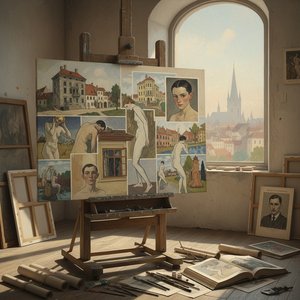
에곤 시엘레 최고 걸작 25선을 만나보세요. 표현주의 화가 시엘레의 삶과 죽음, 불안을 담은 인물화 작품들을 감상하고 그 의미를 탐구합니다. Most-Famous-Paintings에서 명작 복제본으로 예술적인 공간을 완성하세요. 지금 바로 컬렉션을 확인하세요!
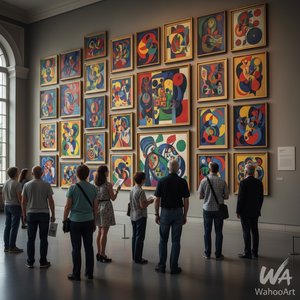
Journey through Wassily Kandinsky's 25 most iconic abstract paintings. Explore his revolutionary use of color, form & spiritual expressionism. Find museum-quality Kandinsky reproductions and elevate your home decor with Most-Famous-Paintings.com. Discover all masterpieces on Most-Famous-Paintings.com!

Explore the groundbreaking abstract expressionism of Morris Louis, a pioneer of Color Field painting. Discover his innovative techniques, influential series & lasting legacy in post-war American art. Learn more at Most-Famous-Paintings.

Explore the captivating world of Beatrice Parsons, a pioneering British abstract expressionist. Discover her journey from garden watercolors to evocative color field paintings and learn about her place within art history.


최신 미술 뉴스, 특별 혜택 및 인테리어 아이디어를 가장 먼저 만나보세요.
프로젝트에 대해 알려주시면 저희 미술 전문가들이 맞춤형 아트 제안 3가지를 전달해 드립니다.
당신만을 위한 맞춤형 옵션 3가지를 무료로 추천해 드립니다!


 Preview
 공유하기
공유하기 공유하기
공유하기
 상세 정보
상세 정보

 다운로드
다운로드
 유사 작품
유사 작품 X-레이
X-레이 슬라이드 쇼
 더 보기
더 보기






































 유리 옵션은 110cm 미만 크기에서만 선택 가능합니다.


