x
 Giclée PrintDigitalContemporary Realism
 1922Modern
 20.0 x 24.0 cm
작품의 원본 비율을 유지하는 미리 설정된 크기 중에서 선택하세요.

특정 프레임이나 공간에 맞도록 직접 크기를 입력할 수 있습니다. 선택하신 크기가 원본 이미지의 비율과 일치하지 않는 경우, 작품을 자르거나 추가적인 손으로 그린 요소를 사용하여 그림을 확장합니다. 제작 시작 전 승인을 위해 디지털 목업을 보내드립니다.
화면 미리 보기는 실제 자르기 또는 확장을 반영하지 않습니다. 최종 구성은 목업을 통해서만 정확하게 확인하실 수 있습니다.
맞춤 크기 제작도 가능하지만, 원본 비율을 유지하기 위해 사전 정의된 목록에서 크기를 선택하시는 것을 권장합니다.

East Side Interior
복제본 크기
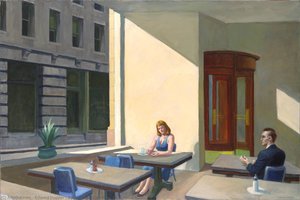
Edward Hopper’s “East Side Interior,” rendered in 1922, is more than just a depiction of a room; it’s a distilled essence of American loneliness and the poignant beauty found within moments of solitary contemplation. This meticulously crafted black and white drawing captures a scene brimming with understated drama – a woman seated by a window, lost in observation, surrounded by the quiet formality of an upper-class dining space. The image immediately evokes a sense of detachment, a feeling that is central to Hopper’s enduring appeal and a hallmark of American art during the early 20th century.
Hopper's technique in “East Side Interior” is characterized by a precise realism, honed through his training under William Merritt Chase. The drawing showcases a remarkable attention to detail – the texture of the fabric on the chairs, the sheen of the vase, the subtle variations in light and shadow. This meticulous approach isn’t merely about accurate representation; it's about capturing the *essence* of the scene, imbuing it with a palpable sense of atmosphere. Hopper’s style aligns perfectly with the broader Realist movement, but he elevates it through his ability to convey complex emotional states within seemingly simple compositions.
The use of black and white further intensifies the drawing's impact, stripping away any distractions and focusing attention on form, light, and shadow. This monochrome palette contributes significantly to the artwork’s melancholic mood, a signature element of Hopper’s oeuvre.
"East Side Interior" was created during a period of significant social and cultural change in America – the rise of industrialization, urbanization, and increasing mobility. Hopper's work reflects this shift by portraying individuals grappling with feelings of alienation and displacement within modern urban environments. The dining room itself can be interpreted as a symbol of domesticity and tradition, yet the woman’s solitary presence suggests a disconnect from these values. The clock, a recurring motif in Hopper’s art, adds another layer of symbolism – a reminder of the relentless passage of time and the inevitability of mortality.
“East Side Interior” resonates with viewers precisely because it taps into universal human emotions – loneliness, contemplation, and a yearning for connection. Hopper’s ability to evoke these feelings through seemingly mundane scenes is what has cemented his place as one of America's most important artists. This drawing exemplifies the quiet power of Hopper’s vision, offering a timeless meditation on the complexities of modern life and the enduring human need for solace and understanding. Its compact size (20 x 24 cm) makes it an ideal addition to any collection or interior space, providing a constant reminder of Hopper's profound insights.

1931 - 1967 , 미국

Explore the profound artistry of black and white photography. From the chemistry of gelatin silver to the chiaroscuro of the Old Masters, discover how monochrome captures the eternal essence of light, form, and emotion for the discerning art collector.


최신 미술 뉴스, 특별 혜택 및 인테리어 아이디어를 가장 먼저 만나보세요.
프로젝트에 대해 알려주시면 저희 미술 전문가들이 맞춤형 아트 제안 3가지를 전달해 드립니다.
당신만을 위한 맞춤형 옵션 3가지를 무료로 추천해 드립니다!


 프린트 구매
 공유하기
공유하기 공유하기
공유하기
 상세 정보
상세 정보

 다운로드
다운로드
 유사 작품
유사 작품 슬라이드 쇼
 더 보기
더 보기






































 유리 옵션은 110cm 미만 크기에서만 선택 가능합니다.