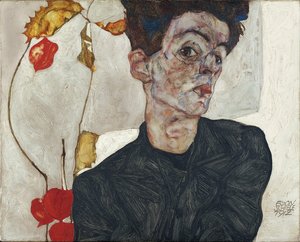
A Burst of Color: Exploring Egon Schiele’s ‘Fuchsia’
‘Fuchsia,’ painted in 1910, offers a captivating glimpse into Egon Schiele's burgeoning artistic voice – a voice that would soon become synonymous with the raw emotionality and expressive power of early Expressionism. This artwork isn’t merely a depiction of flowering bougainvillea; it’s an *experience* of its vibrant energy, translated onto canvas with bold confidence.
Subject & Style: Botanical Intensity
The painting presents a stylized vine, almost certainly bougainvillea, rendered in a manner that prioritizes feeling over photographic accuracy. Schiele moves away from strict representation, embracing simplification and abstraction to capture the *essence* of the plant’s flourishing life. The composition is dominated by warm hues – fuchsias, golds, and oranges – creating a visually arresting spectacle. While rooted in observation, ‘Fuchsia’ leans heavily towards Post-Impressionist and early Fauvist principles, sharing affinities with artists like Matisse in its daring use of color and flattened perspective.
Technique & Materiality: Impasto and Energetic Brushwork
Schiele's masterful technique is immediately apparent. The artwork showcases a generous application of oil paint – an *impasto* technique – that lends incredible texture and depth to the surface. Thick, visible brushstrokes dance across the canvas, conveying a sense of movement and vitality. These aren’t delicate touches; they are assertive marks that emphasize the materiality of the paint itself. The background's solid gold tone isn’t merely decorative; it acts as a foil, intensifying the brilliance of the floral hues and creating a harmonious yet dynamic contrast.
Historical Context: A Young Artist Finding His Voice
Painted in 1910, ‘Fuchsia’ falls within a pivotal period for Schiele. He was still developing his signature style, experimenting with different approaches to form and color. This work predates the intensely psychological portraits that would later define his oeuvre, but it already demonstrates his willingness to challenge conventional artistic norms. Schiele was deeply influenced by Gustav Klimt, initially working in his workshop, yet he quickly forged his own path, rejecting Klimt’s decorative tendencies for a more direct and emotionally charged expression.
Symbolism & Emotional Impact: Beauty and Transience
While seemingly straightforward as a botanical study, ‘Fuchsia’ invites deeper contemplation. The vibrant blooms can be interpreted as symbols of beauty, vitality, and the fleeting nature of life itself. Schiele's expressive brushwork imbues the painting with an emotional intensity that transcends mere representation.
The asymmetrical composition and energetic lines suggest a sense of unrestrained growth and passionate energy. It’s a celebration of color and form, but also a subtle meditation on the ephemeral quality of beauty.
Considerations for Collectors & Designers
- Color Palette: The warm, vibrant tones make ‘Fuchsia’ an excellent choice for spaces seeking to evoke energy and optimism.
- Stylistic Versatility: Its blend of Post-Impressionism and early Expressionism allows it to complement a range of interior styles – from modern minimalist to eclectic bohemian.
- Emotional Resonance: The painting’s emotional depth adds a layer of sophistication and intrigue to any collection or design scheme.
- Historical Significance: Owning a reproduction of ‘Fuchsia’ is an opportunity to connect with the legacy of one of the 20th century's most important artists.
‘Fuchsia’ stands as a testament to Schiele’s early artistic explorations, showcasing his remarkable talent for capturing not just what he saw, but how it *felt*.