x
 캔버스에 유채월아트Expressionism
 1907근대
 32.0 x 31.0 cm




























작품의 원본 비율을 유지하는 미리 설정된 크기 중에서 선택하세요.

특정 프레임이나 공간에 맞도록 직접 크기를 입력할 수 있습니다. 선택하신 크기가 원본 이미지의 비율과 일치하지 않는 경우, 작품을 자르거나 추가적인 손으로 그린 요소를 사용하여 그림을 확장합니다. 제작 시작 전 승인을 위해 디지털 목업을 보내드립니다.
화면 미리 보기는 실제 자르기 또는 확장을 반영하지 않습니다. 최종 구성은 목업을 통해서만 정확하게 확인하실 수 있습니다.
맞춤 크기 제작도 가능하지만, 원본 비율을 유지하기 위해 사전 정의된 목록에서 크기를 선택하시는 것을 권장합니다.

Self Portrait, Facing Right
복제본 크기
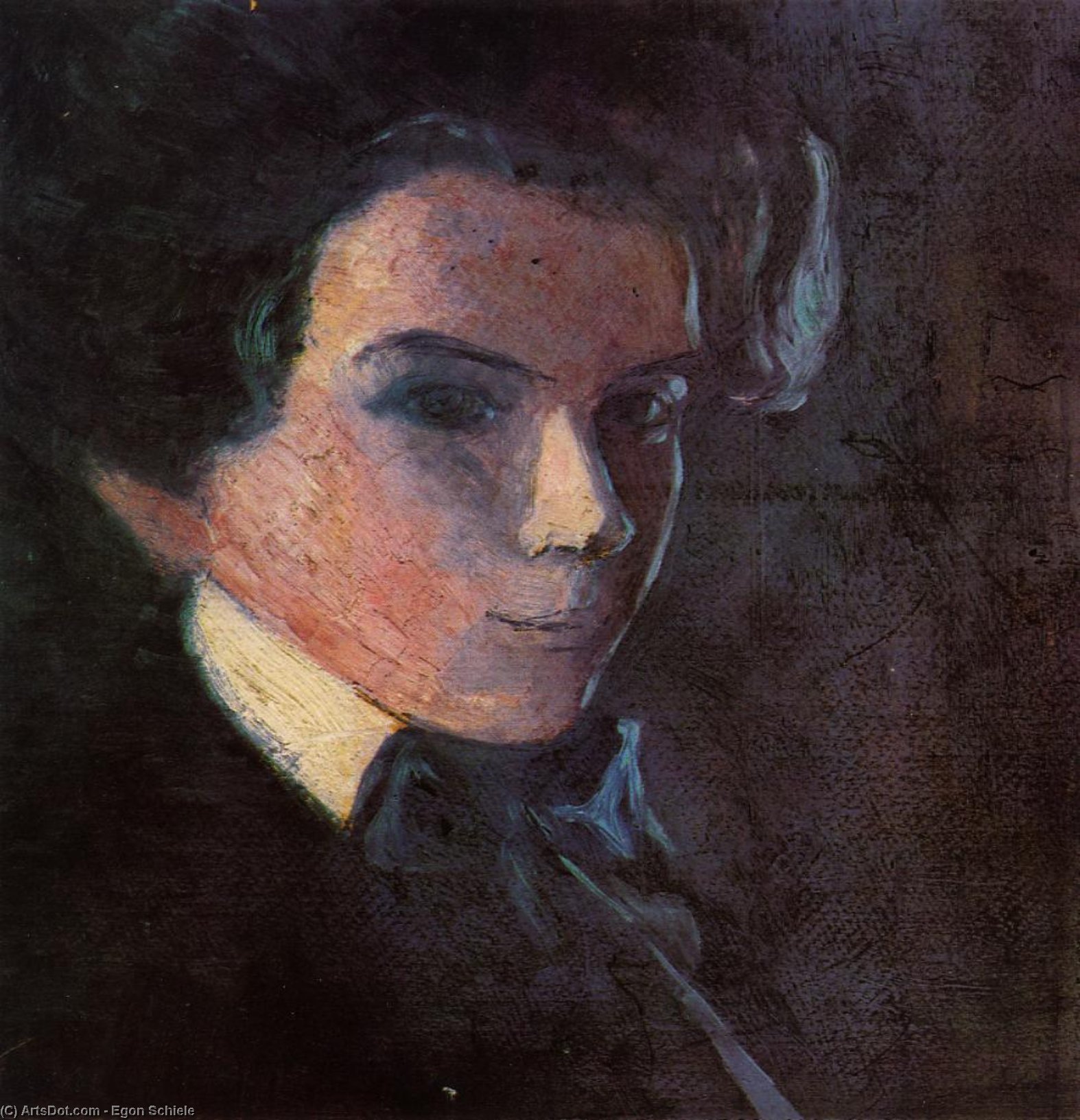
Egon Schiele’s Self Portrait, Facing Right, created in 1907, is a poignant and revealing work that encapsulates the artist’s burgeoning Expressionist style. Measuring 32 x 31 cm and rendered in oil on canvas, this self-portrait offers an intimate glimpse into the psyche of a young man grappling with complex emotions during a pivotal moment in his artistic development.
The portrait depicts Schiele himself, positioned facing right. His gaze is direct yet contemplative, drawing the viewer into a silent dialogue. The composition is strikingly simple; the subject fills most of the frame, eliminating extraneous details and focusing attention solely on his face and upper torso. This deliberate framing intensifies the sense of intimacy and vulnerability. Schiele’s technique in this piece demonstrates a move away from traditional academic realism towards the expressive distortions characteristic of Expressionism. The brushstrokes are visible and energetic, contributing to a raw and immediate feel. He employs a limited color palette dominated by dark blues, purples, and browns, punctuated by warmer tones in the skin. This restricted range enhances the somber mood and emphasizes the play of light and shadow.
Light plays a crucial role in shaping the emotional impact of Self Portrait, Facing Right. The dark background serves to isolate and highlight Schiele’s face, creating a dramatic chiaroscuro effect – a technique utilizing strong contrasts between light and dark to model forms and create depth. This deliberate use of light not only emphasizes the subject's features but also contributes to an atmosphere of introspection and melancholy. It echoes the influence of earlier masters while simultaneously forging a distinctly modern aesthetic. The way Schiele manipulates light underscores his desire to convey psychological truth rather than mere visual representation.
Created in 1907, this self-portrait emerged during a period of significant artistic upheaval. Vienna at the turn of the century was a hotbed of intellectual and cultural innovation, but also social unrest. Schiele’s work reflects this complex environment. He was deeply influenced by Gustav Klimt, his mentor at the Vienna School of Arts and Crafts, yet he quickly developed his own distinct style that pushed beyond Klimt's decorative aesthetic towards a more raw and psychologically probing exploration of human emotion. Self Portrait, Facing Right exemplifies this shift, foreshadowing the intense emotionality and psychological depth that would characterize Schiele’s later works. It stands as an early but powerful statement of his commitment to Expressionism – a movement dedicated to conveying subjective feelings and experiences through distorted forms and exaggerated colors.
Self Portrait, Facing Right is just one facet of Egon Schiele’s prolific output. His artistic legacy includes numerous other significant works that explore themes of sexuality, identity, and mortality with unflinching honesty. Notable examples include:
Self Portrait, Facing Right remains a compelling testament to Egon Schiele's artistic genius – a window into the soul of an artist grappling with profound questions about life, identity, and the human condition.

1890 - 1918 , 오스트리아 크로아티아

Explore the profound history and technical brilliance of oil on panel painting. From Renaissance masters to modern techniques, discover why this rigid support offers unparalleled precision and permanence for fine art lovers and collectors.

Explore the profound emotional depth of Expressionist portraiture. From Edvard Munch to Francis Bacon, discover how masters used distortion and color to reveal inner truths. Learn about this pivotal movement and find museum-quality oil reproductions for your collection.


최신 미술 뉴스, 특별 혜택 및 인테리어 아이디어를 가장 먼저 만나보세요.
프로젝트에 대해 알려주시면 저희 미술 전문가들이 맞춤형 아트 제안 3가지를 전달해 드립니다.
당신만을 위한 맞춤형 옵션 3가지를 무료로 추천해 드립니다!


 미리보기
미리보기
 프린트 구매
 공유하기
공유하기 공유하기
공유하기
 상세 정보
상세 정보

 다운로드
다운로드
 유사 작품
유사 작품 X-레이
X-레이 슬라이드 쇼
 더 보기
더 보기









 유리 옵션은 110cm 미만 크기에서만 선택 가능합니다.