


x
빠른 제작과 다양한 마감 옵션을 제공하는 박물관 품질의 지클레이 또는 캔버스 프린트. ( 손으로 그린 그림 구매 이미지 구매)





























작품의 원본 비율을 유지하는 미리 설정된 크기 중에서 선택하세요.

특정 프레임이나 공간에 맞춰 직접 치수를 입력하실 수 있습니다. 선택하신 사이즈가 원본 이미지의 비율과 일치하지 않을 경우, 작품을 크롭(자르기)하거나 이미지를 대칭 또는 단색 채우기로 확장하여 제작합니다. 제작 시작 전, 최종 확인을 위해 디지털 목업이 전송됩니다.
화면상의 미리보기는 실제 크롭이나 확장 상태를 반영하지 않으므로, 최종 구도는 오직 목업을 통해서만 정확하게 확인하실 수 있습니다.
맞춤 사이즈 제작도 가능하지만, 원본 비율을 유지하기 위해서는 사전 정의된 목록에서 치수를 선택하시는 것을 권장합니다.

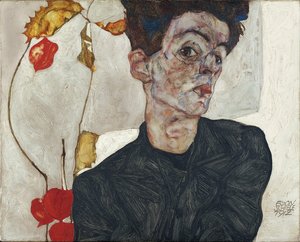
Self-Portrait with Eyelid Pulled Down, 1910
복제본 크기
Egon Schiele's 1910 self-portrait, “Self-Portrait with Eyelid Pulled Down,” is not merely a depiction of an individual; it’s a raw and unsettling excavation of the human psyche. Painted during a period of intense personal turmoil for the artist – a time marked by illness, loss, and a growing awareness of mortality – this watercolor captures a profound sense of vulnerability and introspection rarely found in portraiture of the era. The image immediately confronts us with an arresting visual: a man, his hand instinctively shielding his face, his eyelid deliberately lowered as if to shut out the world. This isn’t a pose of shame or concealment, but rather one of guarded sorrow, a deliberate act of self-protection against an overwhelming emotional burden.
Born in 1890 in Tulln an der Donau, Austria – a region steeped in both artistic tradition and personal tragedy – Schiele’s early life was profoundly shaped by loss. The untimely death of his father from syphilis at the age of fourteen cast a long shadow over his existence, fueling within him a preoccupation with themes of decay, illness, and the ephemeral nature of life. This experience is palpably present in “Self-Portrait,” manifesting not just as an intellectual concept but as a visceral emotional state. The lowered eyelid can be interpreted as a physical manifestation of this grief, a deliberate attempt to block out the pain and suffering that permeated his world. His sister Elvira’s early death further compounded these anxieties, contributing to the artist's increasingly dark and introspective artistic output.
Schiele’s mastery lies in his unconventional use of watercolor. He eschewed the smooth, polished surfaces favored by many of his contemporaries, opting instead for a technique characterized by loose washes, visible brushstrokes, and an almost frantic energy. The colors are muted – predominantly browns, grays, and ochres – reflecting the somber mood of the subject. Notice how he builds up layers of pigment, creating a sense of depth and texture that is both unsettling and captivating. The lack of precise detail forces the viewer to focus on the emotional intensity conveyed through the artist’s expressive lines and the subtle shifts in color. The watercolor medium itself lends an immediacy and fragility to the image, mirroring the vulnerability he seems to embody.
Beyond the immediate depiction of a man shielding his face, “Self-Portrait” is rich with symbolic meaning. The hand covering the mouth or nose suggests a suppression of words, an inability to articulate the depths of his suffering. It’s a gesture of isolation and withdrawal from the world. The downward-turned eyelid itself is particularly potent – it can be seen as representing a shutting down of perception, a refusal to confront reality. The overall composition feels claustrophobic, drawing the viewer into Schiele's internal landscape. Interestingly, recurring motifs of trains appear in his work, perhaps symbolizing journeys—both literal and metaphorical—through life’s uncertainties and dangers. This self-portrait stands as a testament to Schiele’s willingness to expose the darkest corners of the human experience, offering a glimpse into an artist grappling with profound personal demons.
Most-Famous-Paintings offers meticulously crafted hand-painted reproductions of “Self-Portrait with Eyelid Pulled Down,” allowing you to bring this powerful and emotionally resonant artwork into your home or office. Each reproduction captures the nuances of Schiele’s technique and the haunting beauty of his vision, providing a tangible connection to one of the most significant figures in early 20th-century Expressionism.

1890 - 1918 , 오스트리아 크로아티아
에곤 시엘레 최고 걸작 25선을 만나보세요. 표현주의 화가 시엘레의 삶과 죽음, 불안을 담은 인물화 작품들을 감상하고 그 의미를 탐구합니다. Most-Famous-Paintings에서 명작 복제본으로 예술적인 공간을 완성하세요. 지금 바로 컬렉션을 확인하세요!

Journey through 10 legendary watercolor masterpieces by Sargent, Turner & Homer! Explore iconic landscapes, portraits & floral art that redefined history. Find museum-quality reproductions and curated decor ideas at Most-Famous-Paintings.com.

Explore the emotionally charged world of Egon Schiele (1890-1918). Discover his Expressionist masterpieces, psychological themes, and lasting impact on modern art. A comprehensive guide for collectors & enthusiasts.

Explore the captivating world of watercolor painting! Discover its rich history, essential techniques, influential artists & collecting tips. A comprehensive guide for art enthusiasts from Most-Famous-Paintings.

Explore the captivating history of watercolor painting, from ancient techniques to modern masters like Kandinsky & Blake. Discover essential artists, collecting tips & the emotional power of this luminous medium. Expert insights for art enthusiasts.


최신 미술 뉴스, 특별 혜택 및 인테리어 아이디어를 가장 먼저 만나보세요.
프로젝트에 대해 알려주시면 저희 미술 전문가들이 맞춤형 아트 제안 3가지를 전달해 드립니다.
당신만을 위한 맞춤형 옵션 3가지를 무료로 추천해 드립니다!


 미리보기
미리보기
 공유하기
공유하기 공유하기
공유하기
 상세 정보
상세 정보

 다운로드
다운로드
 유사 작품
유사 작품 X-레이
X-레이 슬라이드 쇼


 더 보기
더 보기









 유리 옵션은 110cm 미만 크기에서만 선택 가능합니다.


