x





























작품의 원본 비율을 유지하는 미리 설정된 크기 중에서 선택하세요.

특정 프레임이나 공간에 맞도록 직접 크기를 입력할 수 있습니다. 선택하신 크기가 원본 이미지의 비율과 일치하지 않는 경우, 작품을 자르거나 추가적인 손으로 그린 요소를 사용하여 그림을 확장합니다. 제작 시작 전 승인을 위해 디지털 목업을 보내드립니다.
화면 미리 보기는 실제 자르기 또는 확장을 반영하지 않습니다. 최종 구성은 목업을 통해서만 정확하게 확인하실 수 있습니다.
맞춤 크기 제작도 가능하지만, 원본 비율을 유지하기 위해 사전 정의된 목록에서 크기를 선택하시는 것을 권장합니다.

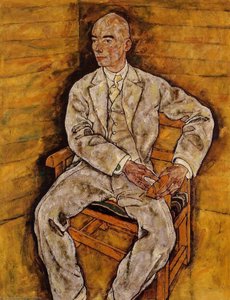
untitled (258)
복제본 크기
Egon Schiele's untitled work, designated as (258), is not merely a drawing; it’s a visceral exploration of the human condition rendered with an unflinching honesty that defines his place within the Expressionist movement. The monochromatic figure, seated and withdrawn, immediately draws the viewer into a space of profound introspection. It’s a study in vulnerability, a raw depiction of emotional turmoil communicated through the very lines that construct its form. The power of this piece lies not in what is explicitly shown, but in what is powerfully *felt* – a sense of confinement, perhaps even despair, emanating from the subject's posture and intense gaze.
Schiele’s technique here is particularly striking. He eschews smooth transitions and delicate modeling, instead embracing a frenetic energy conveyed through dense, scribbled lines. This isn’t about replicating reality; it’s about dissecting the emotional core of his subject. The jagged strokes aren't imperfections but deliberate choices that create a dynamic surface, suggesting movement and an underlying instability. The use of charcoal or graphite – judging by the grainy texture – further enhances this sense of rawness and immediacy. Light plays a subtle role, diffused across the figure to emphasize contours without offering solace. The flattened perspective contributes to the work’s two-dimensionality, intensifying the feeling of being pressed against the picture plane, almost as if we are intruding upon a private moment of suffering.
To understand this drawing fully, one must consider the life and times of Egon Schiele. Born in 1890 into a world grappling with societal upheaval and psychological anxieties, Schiele’s art became a mirror reflecting these turbulent emotions. His early life was marked by loss – the death of his father to syphilis when he was just fourteen – and a complex relationship with his uncle and guardian, Leopold Czihaczek. These experiences undoubtedly shaped his artistic vision, imbuing it with a sense of melancholy and an obsession with mortality. Schiele’s work often challenged conventional notions of beauty and propriety, pushing boundaries in both subject matter and style. He was a protégé of Gustav Klimt, but quickly surpassed his mentor's decorative aesthetic to forge a uniquely personal and unsettling artistic language.
The figure’s pose – leaning forward with arms wrapped tightly around its legs – is laden with symbolism. It speaks of self-protection, isolation, and perhaps even a desperate attempt at finding comfort within oneself. The intense gaze, directed outward yet seemingly inward, invites us to confront uncomfortable truths about the human psyche. Schiele was fascinated by self-portraiture, often using his own image as a vehicle for exploring themes of identity, sexuality, and mortality. While this particular work isn’t explicitly a self-portrait, it shares that same spirit of unflinching self-examination. It's a powerful reminder of the fragility of the human condition and the enduring search for meaning in a chaotic world.

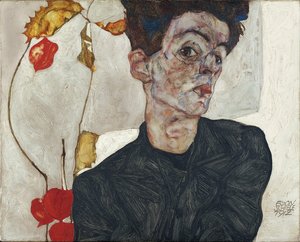
1890 - 1918 , 오스트리아 크로아티아

Explore the profound history and technical mastery of charcoal art. From prehistoric origins to Renaissance chiaroscuro, learn the essential additive and subtractive techniques used by masters to capture light, shadow, and raw emotional depth in monochrome fine art.

Explore the profound history of drawing techniques, from Dürer's precision to the alchemy of graphite. Discover how masters use line, weight, and contour to capture the human spirit in this expert guide to art history and technical mastery.


최신 미술 뉴스, 특별 혜택 및 인테리어 아이디어를 가장 먼저 만나보세요.
프로젝트에 대해 알려주시면 저희 미술 전문가들이 맞춤형 아트 제안 3가지를 전달해 드립니다.
당신만을 위한 맞춤형 옵션 3가지를 무료로 추천해 드립니다!


 미리보기
미리보기
 프린트 구매
 공유하기
공유하기 공유하기
공유하기
 상세 정보
상세 정보

 다운로드
다운로드
 유사 작품
유사 작품 X-레이
X-레이 슬라이드 쇼

 더 보기
더 보기









 유리 옵션은 110cm 미만 크기에서만 선택 가능합니다.