x
 Contemporary Realism
 2010
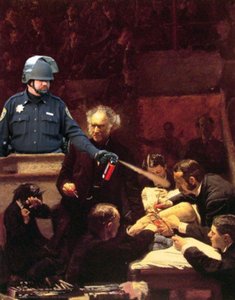
2010 457.0 x 335.0 cm
작품의 원본 비율을 유지하는 미리 설정된 크기 중에서 선택하세요.

특정 프레임이나 공간에 맞도록 직접 크기를 입력할 수 있습니다. 선택하신 크기가 원본 이미지의 비율과 일치하지 않는 경우, 작품을 자르거나 추가적인 손으로 그린 요소를 사용하여 그림을 확장합니다. 제작 시작 전 승인을 위해 디지털 목업을 보내드립니다.
화면 미리 보기는 실제 자르기 또는 확장을 반영하지 않습니다. 최종 구성은 목업을 통해서만 정확하게 확인하실 수 있습니다.
맞춤 크기 제작도 가능하지만, 원본 비율을 유지하기 위해 사전 정의된 목록에서 크기를 선택하시는 것을 권장합니다.

The Path
복제본 크기
To encounter the work of Enrique Martínez Celaya is to step into a space where the boundaries between the empirical and the ethereal dissolve. Born in Havana, Cuba, in 1964, his life has been a series of profound migrations—not merely across geographic borders from Cuba to Spain and Puerto Rico, but across disciplines. Before he was an acclaimed painter and sculptor, Celaya was a man of science, a trained laser physicist who navigated the rigorous, mathematical certainties of Cornell University and the University of California, Berkeley. This scientific foundation remains an invisible architecture within his art; there is a precision in his compositions that suggests the structural integrity of the physical universe, even when he is exploring the most nebulous territories of human emotion.
His creative evolution is a testament to the tension between logic and lyricism. While his early years were marked by the discipline of physics—even patenting several laser devices—the pull of narrative and figurative painting proved irresistible. This transition was not a rejection of science, but rather an expansion of it. In his canvases, the "big gears of nature" meet the "small gears of human experience." He utilizes a technique that often marries meticulous observation with expressive, tactile layers, frequently employing oil, wax, and charcoal to create surfaces that feel as much like geological strata as they do emotional landscapes. His work does not merely depict a scene; it excavates it, pulling themes of memory, exile, and the passage of time from beneath the surface of the pigment.
The imagery in Celaya’s oeuvre often evokes vast, desolate terrains that serve as metaphors for the internal state. His landscapes are rarely just topographical studies; they are psychological maps. Through expansive vistas and symbolic motifs, he explores the exilic imagination—the sense of displacement and the search for authenticity that characterizes much of his work. There is a haunting quality to his compositions, where a single figure or an isolated object might stand against a sweeping sky, embodying the profound solitude of individual consciousness. He approaches themes of loss and attachment not by offering easy resolutions, but by posing existential questions that resonate with a universal vulnerability.
This mastery of symbolism allows him to bridge the gap between the semi-autobiographical and the mythic. In works such as The Puppet or The Fiery Wound, the viewer is invited to contemplate the fragility of existence. His use of color is equally evocative, often employing palettes that feel both ancient and immediate, grounding his philosophical inquiries in a visceral, sensory reality. By blending the precision of his scientific training with the fluidity of contemporary painting, he creates an immersive experience where the viewer is encouraged to linger in the ambiguity of the unknown.
The significance of Enrique Martínez Celaya’s contribution to contemporary art lies in his ability to resist the fragmentation of modern disciplines. He remains a polymath, working seamlessly across painting, sculpture, installation, and even literature as an accomplished author of nine books. His work has achieved immense institutional recognition, finding permanent homes in some of the world's most prestigious collections, including:
As a scholar and educator—serving as the first Provost Professor of Humanities and Arts at the University of Southern California—his influence extends far beyond the studio. He continues to shape the discourse on how art can serve as a vessel for philosophical inquiry, proving that the most profound truths are often found in the delicate intersection of what we can measure and what we can only feel.

1964 - , Cuba


최신 미술 뉴스, 특별 혜택 및 인테리어 아이디어를 가장 먼저 만나보세요.
프로젝트에 대해 알려주시면 저희 미술 전문가들이 맞춤형 아트 제안 3가지를 전달해 드립니다.
당신만을 위한 맞춤형 옵션 3가지를 무료로 추천해 드립니다!


 미리보기
미리보기
 프린트 구매
 공유하기
공유하기 공유하기
공유하기
 상세 정보
상세 정보

 다운로드
다운로드
 유사 작품
유사 작품 X-레이
X-레이 슬라이드 쇼
 더 보기
더 보기






































 유리 옵션은 110cm 미만 크기에서만 선택 가능합니다.