


x
 DrawingWallArt
 1940Modern
 30.0 x 22.0 cm
 Ben Uri Gallery and Museum
온라인 미리보기보다 훨씬 뛰어난 품질의 고해상도 디지털 이미지를 구매해 보세요.
각 파일은 사내 전문가가 고급 도구와 숙련된 수동 리터칭 기술을 사용하여 세심하게 준비합니다. 우리는 모든 이미지가 탁월한 선명도, 정확한 색상 재현력, 그리고 미세한 디테일까지 완벽하게 갖추도록 보장합니다.
최종 파일은 전문적인 편집 및 인쇄 환경에서 즉시 사용할 수 있도록 최적화되어 72시간 이내에 이메일로 발송됩니다. 이는 세계적인 디자인 스튜디오, 출판사 및 갤러리가 신뢰하는 것과 동일한 품질입니다.
개인 소장 및 전시, 인쇄, 창작 프로젝트를 위한 고해상도 파일을 다운로드하세요. ( 프린트 구매 손으로 그린 그림 구매)
Most-Famous-Paintings.com를 선택하시면 단순히 이미지를 받는 것을 넘어, 정밀한 보정 과정을 거친 전문적인 디지털 예술 작품을 만나보실 수 있습니다. 모든 작품에는 만족 보장 서비스가 함께 제공되며, 주문 시 다음과 같은 사항들이 자동으로 포함됩니다:

주문 후 72시간 이내에 고해상도 디지털 이미지 파일이 이메일로 발송되며, 즉시 사용하실 수 있습니다.

귀하의 작품은 고급 AI 도구와 수동 편집 과정을 거쳐 전문적으로 최적화되며, 이를 통해 디테일과 선명도, 색상의 정확도를 극대화합니다.

파일을 실수로 삭제하거나 분실하셨나요? 걱정 마세요. 언제든 무료로 다시 보내드립니다.

관세나 부가세, 배송비 부담 없이 작품을 즉시 감상하세요 - 디지털 다운로드는 언제나 면세 혜택이 적용됩니다.

전문적인 도구와 색상 관리 시스템을 통해 디지털 이미지가 원본의 색상을 최대한 정확하게 구현하도록 보장합니다.

구매하신 디지털 이미지에 만족하지 못하실 경우, 60일 이내에 수정 또는 100% 환불을 진행해 드립니다 - 어떠한 문의도 필요 없습니다.

만족하지 못하셨나요? 디지털 파일을 수령하신 후 60일 이내라면 별도의 이유를 밝힐 필요 없이 전액 환불해 드립니다.

이미지 3매 구매 시 10% 할인 - 5매 구매 시 15% 할인 - 10매 이상 구매 시 20% 할인. 크리에이티브 프로젝트, 갤러리, 에이전시에 매우 유용합니다.
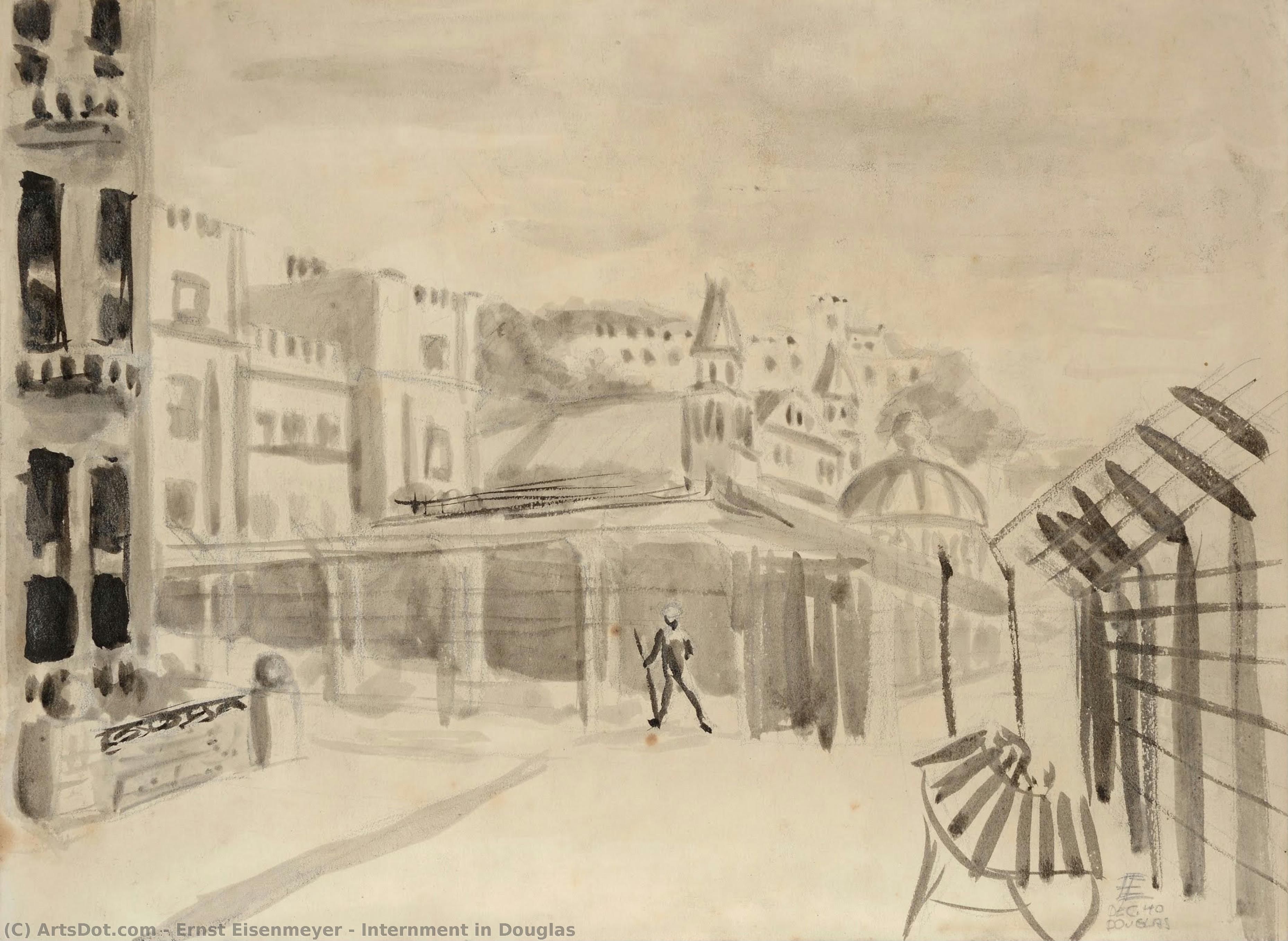
In the delicate, monochromatic strokes of Internment in Douglas, we are invited to witness a moment frozen in the amber of history. Created in 1940 by the Austrian master Ernst Eisenmeyer, this evocative drawing serves as more than just a depiction of an urban street; it is a profound psychological landscape. The scene captures a bustling city thoroughfare, yet beneath the surface of daily activity lies a heavy layer of historical tension. As Eisenmeyer navigated the turbulent waters of displacement following the Anschluss, his work became a vessel for the anxieties of an era. Here, the rhythmic movement of figures—a man traversing the street with his belongings, the quiet presence of passersby—contrasts sharply with the underlying reality of confinement and the uncertainty of life during the Second World War.
The technique employed in this piece is a masterclass in tonal control and atmospheric depth. Utilizing the stark, honest medium of black and white, Eisenmeyer utilizes light and shadow to sculpt the architecture of the street. The fine lines that define the buildings and the hanging clock create a sense of structural permanence, which stands in poignant opposition to the transient nature of the human figures moving through the frame. Every element, from the parked bicycle to the scattered street furniture, is rendered with a precision that grounds the viewer in this specific time and place. For the collector, this drawing offers a sophisticated interplay of texture and contrast, making it an intellectually stimulating addition to any curated collection.
Beyond its technical prowess, Internment in Douglas resonates through its deep emotional symbolism. The street, while appearing functional, acts as a metaphor for the liminal space inhabited by those in internment—a world that is visible yet unreachable, a life continuing just out of grasp. The presence of personal items, like the suitcase carried by the central figure, speaks to the weight of baggage, both literal and emotional, carried by those fleeing persecution. This piece does not merely document a setting; it captures the very essence of resilience in the face of upheaval. It is an evocative work that invites contemplation on the fragility of peace and the enduring strength of the human spirit.
For interior designers and art enthusiasts alike, a high-quality reproduction of this work offers a unique opportunity to introduce a sense of historical gravity and contemplative elegance into a space. The monochromatic palette allows it to integrate seamlessly into modern, minimalist, or classical settings, providing a focal point that sparks conversation and invites deep reflection. Owning a piece of Eisenmeyer’s legacy is an act of preserving a vital chapter of twentieth-century history, bringing the profound empathy and haunting beauty of his vision into the contemporary home.

To encounter the work of Ernst Eisenmeyer is to witness a profound dialogue between the fragility of human existence and the indomitable strength of the spirit. Born in Vienna in 1920 to a Jewish family of Austro-Hungarian descent, Eisenmeyer’s early years were shadowed by the rising tides of antisemitism that swept through Europe. The annexation of Austria in 1938 did more than just alter his nationality; it shattered his world, thrusting him into a harrowing odyssey of displacement and survival. His journey from the streets of Vienna to the grim confines of the Dachau concentration camp at the age of eighteen remains one of the most poignant chapters of his life. It was within this crucible of unimaginable suffering that Eisenmeyer first grasped the power of the pencil as a tool for bearing witness, producing seminal drawings that captured the dehumanizing reality of the camp with a raw, unflinching honesty.
The trajectory of his life, marked by both peril and resilience, eventually led him to England. After escaping the horrors of the concentration camp through the intervention of family in London, he found himself once again caught in the machinery of war as an "enemy alien" on the Isle of Man. Yet, even amidst the isolation of internment, his artistic impulse flourished. During this period, he turned his gaze toward his fellow detainees, creating a series of intimate portraits that served as a testament to human connection in the face of adversity. These works from the Isle of Man are not merely records of a time; they are soulful explorations of identity and endurance, reflecting a deep empathy for the displaced and the forgotten.
Eisenmeyer’s artistic evolution was shaped by a unique confluence of European traditions and personal upheaval. His formal training at the Slade School of Fine Art and later at the Camberwell School of Arts introduced him to the rich textures of British Impressionism and Expressionism. He found a kindred spirit in the unsettling, emotive anatomical explorations of Egon Schiele, whose influence can be seen in Eisenmeyer’s ability to render the human form with both meticulous precision and a palpable sense of vulnerability. This stylistic duality—the marriage of technical mastery with emotional depth—became the hallmark of his oeuvre.
As his career progressed, Eisenmeyer expanded his creative vocabulary far beyond the two-dimensional plane. While he established himself as a significant painter in London during the late 1940s, the mid-1960s saw his emergence as an international sculptor. His sculptural works, crafted from materials such as bronze, stone, and wrought steel, offered a more tactile dimension to his explorations of space and memory. Whether through the delicate line of a drawing or the heavy presence of a metal sculpture, his work consistently grappled with themes of place, encounter, and the indelible marks left by history upon the individual soul.
The significance of Ernst Eisenmeyer lies in his ability to transform personal trauma into universal art. His life was a testament to the complex, multi-sited trajectories of the twentieth-century émigré, and his work serves as a bridge between the shattered landscapes of pre-war Europe and the reconstructed world that followed. Throughout his long career, which saw exhibitions spanning from London and Vienna to Osaka and New York, he remained a steadfast chronicler of the human condition.
His achievements were recognized not only by the art community but also by his homeland; receiving the Medal of Honour from the City of Vienna stands as a profound tribute to an artist who, despite being driven from his birthplace by hatred, returned through his art to honor its history. Today, Eisenmeyer’s legacy endures through:

1920 - 2018 , Austria


최신 미술 뉴스, 특별 혜택 및 인테리어 아이디어를 가장 먼저 만나보세요.
프로젝트에 대해 알려주시면 저희 미술 전문가들이 맞춤형 아트 제안 3가지를 전달해 드립니다.
당신만을 위한 맞춤형 옵션 3가지를 무료로 추천해 드립니다!


 미리보기
미리보기
 공유하기
공유하기 공유하기
공유하기
 상세 정보
상세 정보

 다운로드
다운로드
 유사 작품
유사 작품 X-레이
X-레이 슬라이드 쇼
 더 보기
더 보기


