


x
작품의 원본 비율을 유지하는 미리 설정된 크기 중에서 선택하세요.

특정 프레임이나 공간에 맞도록 직접 크기를 입력할 수 있습니다. 선택하신 크기가 원본 이미지의 비율과 일치하지 않는 경우, 작품을 자르거나 추가적인 손으로 그린 요소를 사용하여 그림을 확장합니다. 제작 시작 전 승인을 위해 디지털 목업을 보내드립니다.
화면 미리 보기는 실제 자르기 또는 확장을 반영하지 않습니다. 최종 구성은 목업을 통해서만 정확하게 확인하실 수 있습니다.
맞춤 크기 제작도 가능하지만, 원본 비율을 유지하기 위해 사전 정의된 목록에서 크기를 선택하시는 것을 권장합니다.

The proof that the Man descent monkey
복제본 크기
Fernand Léger's 1916 painting, "The Proof That Man Descended From Monkeys," is far more than a whimsical depiction of a man perched atop a ladder. It’s a pivotal work in the evolution of early 20th-century art, a bold statement about modernity, and a surprisingly poignant reflection on humanity's place within the natural world. Created during the tumultuous years of World War I, this piece embodies Léger’s innovative “Tubism” style – a movement he pioneered alongside Pablo Picasso and Georges Braque – that sought to capture the dynamism of industrial life through simplified, geometric forms.
The scene itself is instantly arresting. A man, rendered in Léger's signature blocky style, sits precariously on a ladder, chains encircling his neck. He’s not a heroic figure; rather, he appears bewildered and slightly absurd, a symbol of the disorientation felt by many during this period of rapid social and technological change. Below him, a chaotic scene unfolds – soldiers, engineers, and laborers engage in various tasks, all depicted with a raw, almost brutal honesty. The composition is deliberately fragmented, mirroring the shattered sense of order that war had brought to Europe.
Léger’s Tubism was born out of a desire to translate the impact of machinery and urban life onto canvas. Rejecting traditional representational techniques, he employed simplified forms – cylinders, cones, and cubes – to capture the essence of industrial objects and processes. This wasn't simply an aesthetic choice; it was a philosophical one. Léger believed that these geometric shapes represented a new way of seeing the world, a world dominated by technology and industry.
The painting’s palette is deliberately restrained, utilizing bold primary colors – reds, yellows, blues – punctuated by black and white. This stark contrast emphasizes the forms and creates a sense of visual energy. Léger's brushwork is loose and expressive, adding to the dynamism of the composition. Notice how he uses overlapping planes and fragmented perspectives to create a feeling of movement and instability.
The title itself – “The Proof That Man Descended From Monkeys” – immediately introduces a layer of complex symbolism. It’s a direct reference to Darwin's theory of evolution, which was gaining traction at the time. Léger wasn't simply illustrating scientific theory; he was using it as a metaphor for humanity’s relationship with nature and technology. The man on the ladder can be interpreted as representing mankind’s struggle to adapt to this new world, a world increasingly shaped by forces beyond our control.
Furthermore, the painting's creation coincided with the horrors of World War I. Léger’s depiction of industrial labor reflects the widespread mobilization of men and resources for war production. The chaotic scene below the ladder can be seen as a commentary on the senselessness and brutality of conflict. It is important to note that this artwork was created during a time of immense social upheaval, reflecting anxieties about progress, identity, and humanity's future.
"The Proof That Man Descended From Monkeys" remains a significant work in the history of modern art. It’s a testament to Léger’s innovative approach to form and color, and his ability to capture the spirit of modernity with remarkable clarity. Reproductions of this artwork offer a unique opportunity to experience this pivotal moment in artistic expression – a bold exploration of symbolism, technology, and the human condition.
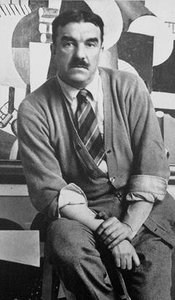
1881 - 1955 , 프랑스

Explore the revolutionary world of Cubism. Discover how masters Pablo Picasso and Georges Braque dismantled reality through geometric abstraction to redefine modern art history.


최신 미술 뉴스, 특별 혜택 및 인테리어 아이디어를 가장 먼저 만나보세요.
프로젝트에 대해 알려주시면 저희 미술 전문가들이 맞춤형 아트 제안 3가지를 전달해 드립니다.
당신만을 위한 맞춤형 옵션 3가지를 무료로 추천해 드립니다!


 미리보기
미리보기
 프린트 구매
 공유하기
공유하기 공유하기
공유하기
 상세 정보
상세 정보

 다운로드
다운로드
 유사 작품
유사 작품 X-레이
X-레이 슬라이드 쇼

 더 보기
더 보기






































 유리 옵션은 110cm 미만 크기에서만 선택 가능합니다.


