x
 1912
1912 115.0 x 78.0 cm
빠른 제작과 다양한 마감 옵션을 제공하는 박물관 품질의 지클레이 또는 캔버스 프린트. ( 손으로 그린 그림 구매 이미지 구매)
작품의 원본 비율을 유지하는 미리 설정된 크기 중에서 선택하세요.

특정 프레임이나 공간에 맞춰 직접 치수를 입력하실 수 있습니다. 선택하신 사이즈가 원본 이미지의 비율과 일치하지 않을 경우, 작품을 크롭(자르기)하거나 이미지를 대칭 또는 단색 채우기로 확장하여 제작합니다. 제작 시작 전, 최종 확인을 위해 디지털 목업이 전송됩니다.
화면상의 미리보기는 실제 크롭이나 확장 상태를 반영하지 않으므로, 최종 구도는 오직 목업을 통해서만 정확하게 확인하실 수 있습니다.
맞춤 사이즈 제작도 가능하지만, 원본 비율을 유지하기 위해서는 사전 정의된 목록에서 치수를 선택하시는 것을 권장합니다.

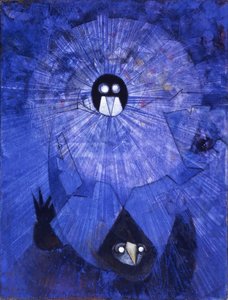
Refuge
복제본 크기

In the vibrant tapestry of late nineteenth-century American art, few threads are as intricately woven or as whimsically colored as those spun by Frederick Stuart Church. Born in Grand Rapids, Michigan, on December 1, 1842, Church was a man whose life trajectory defied the conventional paths laid out by his prominent lineage. The son of a distinguished lawyer and politician, his early years were marked by a departure from the structured world of commerce. At just thirteen, he abandoned formal schooling to join the American Express Company in Chicago—a move intended by his parents to steer him toward a stable business career. Yet, the call of destiny was far more profound than the lure of ledger books. The onset of the Civil War provided a transformative crucible; serving in the Union Army, Church experienced a depth of human experience that would later infuse his work with a unique sense of empathy and moral weight.
Church’s artistic legacy is most profoundly felt in his mastery of the allegorical depiction. He possessed a rare, almost supernatural ability to imbue the animal kingdom with human emotion and moral complexity. His illustrations, which graced the pages of prestigious publications such as Harper's and Century Magazine, were never merely decorative; they were narratives of the soul. Through his delicate use of line and color, a tiger was rarely just a predator, and a bird was never just a creature of flight. Instead, they became vessels for exploring themes of innocence, power, and the delicate balance of nature. In works like Maiden with Flamingos or his evocative etchings such as A Symphony, one finds a serene yet tension-filled world where every tilt of a head or outstretched paw tells a story of profound significance.
His technique often danced between the realms of Impressionism and fine line illustration, creating a dreamlike atmosphere that captivated the Gilded Age audience. His fascination with certain motifs—such as the majestic tiger or the delicate songbird—allowed him to explore the duality of existence: the predator and the prey, the powerful and the vulnerable. This era of his work reflected the broader cultural shifts of the time, capturing a sense of lightness and whimsy while simultaneously touching upon deeper, often more somber, social allegories. To look upon a Church original is to enter a realm where the boundaries between the natural world and the human psyche dissolve into a beautiful, symbolic haze.
The historical significance of Frederick Stuart Church lies in his ability to bridge the gap between commercial illustration and fine art. He elevated the medium of the periodical illustration to a level of high symbolism, proving that even within the constraints of mass media, an artist could achieve profound depth. His life, spanning from the mid-nineteenth century through the dawn of the twentieth, mirrored the evolution of the American identity itself—moving from the ruggedness of the Civil War era to the sophisticated, ornamental elegance of the Gilded Age.
Today, his work remains a testament to the power of empathy in art. His ability to find the "human" within the animal and the "divine" within the mundane continues to resonate with collectors and historians alike. As we revisit his catalog, we see more than just beautiful images; we encounter the enduring spirit of an artist who believed that through the lens of nature, we might most clearly see ourselves.

1842 - 1924


최신 미술 뉴스, 특별 혜택 및 인테리어 아이디어를 가장 먼저 만나보세요.
프로젝트에 대해 알려주시면 저희 미술 전문가들이 맞춤형 아트 제안 3가지를 전달해 드립니다.
당신만을 위한 맞춤형 옵션 3가지를 무료로 추천해 드립니다!


 미리보기
미리보기
 공유하기
공유하기 공유하기
공유하기
 상세 정보
상세 정보

 다운로드
다운로드
 유사 작품
유사 작품 X-레이
X-레이 슬라이드 쇼
 더 보기
더 보기






































 유리 옵션은 110cm 미만 크기에서만 선택 가능합니다.