


x
 1884
1884 33.0 x 41.0 cm
빠른 제작과 다양한 마감 옵션을 제공하는 박물관 품질의 지클레이 또는 캔버스 프린트. ( 손으로 그린 그림 구매 이미지 구매)
작품의 원본 비율을 유지하는 미리 설정된 크기 중에서 선택하세요.

특정 프레임이나 공간에 맞춰 직접 치수를 입력하실 수 있습니다. 선택하신 사이즈가 원본 이미지의 비율과 일치하지 않을 경우, 작품을 크롭(자르기)하거나 이미지를 대칭 또는 단색 채우기로 확장하여 제작합니다. 제작 시작 전, 최종 확인을 위해 디지털 목업이 전송됩니다.
화면상의 미리보기는 실제 크롭이나 확장 상태를 반영하지 않으므로, 최종 구도는 오직 목업을 통해서만 정확하게 확인하실 수 있습니다.
맞춤 사이즈 제작도 가능하지만, 원본 비율을 유지하기 위해서는 사전 정의된 목록에서 치수를 선택하시는 것을 권장합니다.

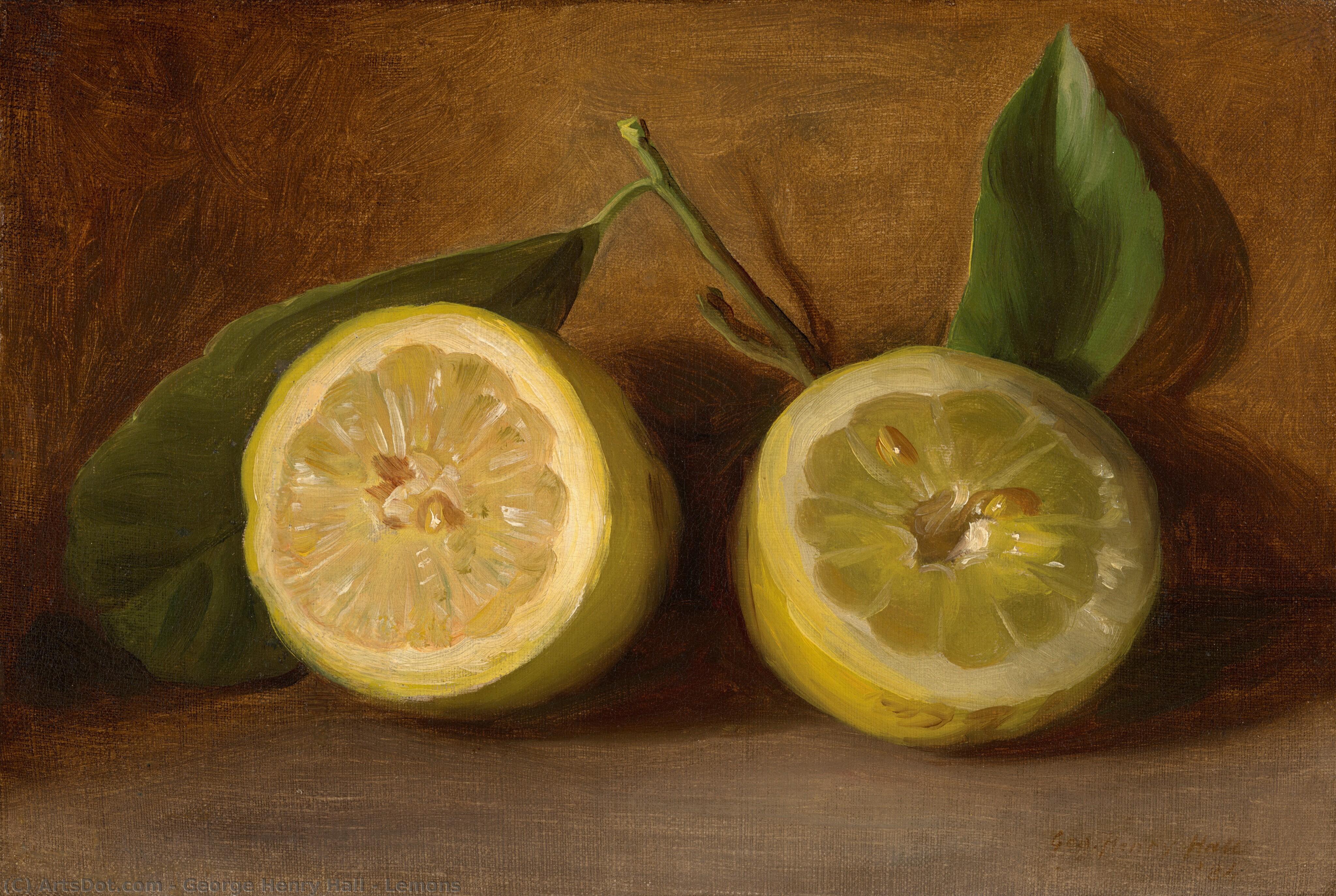
Lemons
복제본 크기
To step into the world of George Henry Hall is to enter a realm where time slows, and the ephemeral beauty of the natural world is captured with breathtaking permanence. Born in 1825, Hall was an artist whose life spanned the transformative decades of the nineteenth century, bridging the gap between American roots and European refinement. While his origins are often traced to Manchester, New Hampshire, and his early years were shaped by the cultural landscape of Boston, his artistic soul was forged in the great academies of Europe. His journey took him through the prestigious studios of Düsseldorf and Paris, allowing him to absorb the rigorous technical discipline of German realism and the atmospheric elegance of French painting. This international odyssey endowed his work with a unique versatility, making him one of the most respected still-life painters of his era, capable of rendering the simplest piece of fruit with the dignity of a classical masterpiece.
The essence of Hall’s artistry lies in his profound ability to marry scientific observation with Romantic sentiment. Influenced heavily by the writings of John Ruskin, Hall embraced a philosophy that sought truth in nature through meticulous detail and moral beauty. This influence is palpable in his approach to composition; he did not merely paint objects, but rather staged them within environments that felt alive and breathing. Whether he was depicting the rugged charm of a blacksmith's workshop in the Catskills or the delicate arrangement of Mediterranean flora, there is always an underlying sense of verisimilitude—a commitment to representing the world as it truly appears under the shifting play of light. His technique involved sophisticated glazing methods that allowed light to penetrate layers of oil paint, creating a luminous, inner glow that makes his peaches appear succulent and his grapes appear heavy with juice.
Hall’s oeuvre is a testament to the Victorian fascination with the tactile and the transient. He possessed an uncanny knack for capturing textures that invite the viewer to reach out and touch the canvas. In his celebrated still lifes, one can almost feel the velvet skin of a ripening peach or the cool, waxy surface of a leaf. This mastery extended beyond mere imitation; it was an exploration of symbolism and vitality. His paintings often served as celebrations of abundance and the fleeting perfection of the harvest. By placing his subjects in outdoor, natural settings rather than sterile studio interiors, he infused his still lifes with a sense of atmosphere, suggesting that these beautiful objects were part of a larger, interconnected ecosystem of light, air, and earth.
Throughout his prolific career, Hall achieved significant milestones that cemented his place in the annals of art history:
Ultimately, the historical significance of George Henry Hall resides in his ability to capture the spirit of an age. He lived through a period where the world was expanding through scientific discovery and industrial progress, yet he chose to focus his lens on the enduring, quiet wonders of the natural world. His paintings remain much more than mere records of botanical specimens; they are emotional evocations of peace, prosperity, and the sublime beauty found in the smallest details of life. Today, his works continue to enchant collectors and historians alike, serving as luminous windows into the heart of the nineteenth century.

1825 - 1913 , United Kingdom


최신 미술 뉴스, 특별 혜택 및 인테리어 아이디어를 가장 먼저 만나보세요.
프로젝트에 대해 알려주시면 저희 미술 전문가들이 맞춤형 아트 제안 3가지를 전달해 드립니다.
당신만을 위한 맞춤형 옵션 3가지를 무료로 추천해 드립니다!


 미리보기
미리보기
 공유하기
공유하기 공유하기
공유하기
 상세 정보
상세 정보

 다운로드
다운로드
 유사 작품
유사 작품 X-레이
X-레이 슬라이드 쇼
 더 보기
더 보기






































 유리 옵션은 110cm 미만 크기에서만 선택 가능합니다.


