


x
 Acrylic On CanvasWallArtBaroque
 1615
1615 129.0 x 94.0 cm
 국립미술관
국립미술관




























작품의 원본 비율을 유지하는 미리 설정된 크기 중에서 선택하세요.

특정 프레임이나 공간에 맞도록 직접 크기를 입력할 수 있습니다. 선택하신 크기가 원본 이미지의 비율과 일치하지 않는 경우, 작품을 자르거나 추가적인 손으로 그린 요소를 사용하여 그림을 확장합니다. 제작 시작 전 승인을 위해 디지털 목업을 보내드립니다.
화면 미리 보기는 실제 자르기 또는 확장을 반영하지 않습니다. 최종 구성은 목업을 통해서만 정확하게 확인하실 수 있습니다.
맞춤 크기 제작도 가능하지만, 원본 비율을 유지하기 위해 사전 정의된 목록에서 크기를 선택하시는 것을 권장합니다.

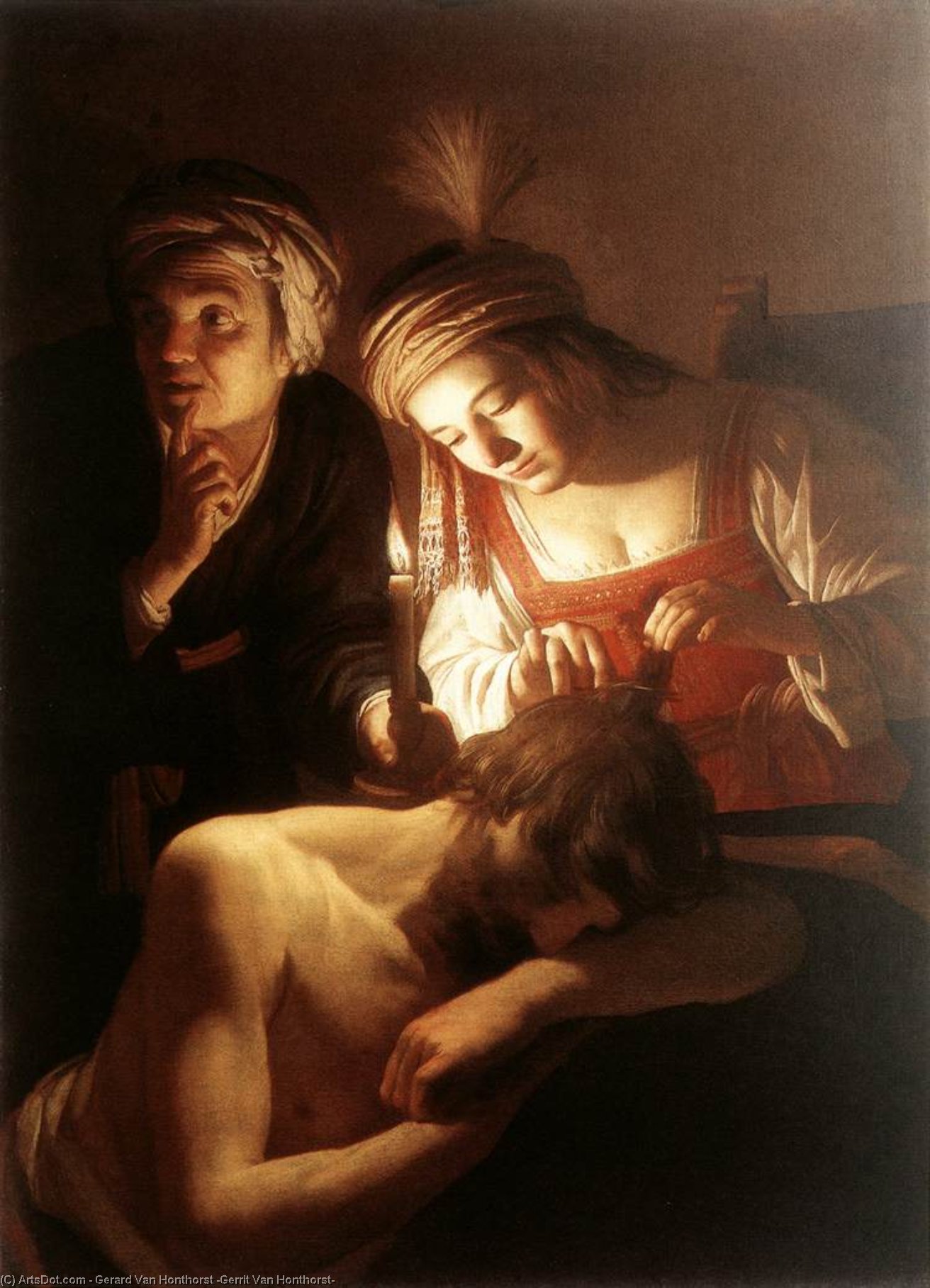
Samson and Delilah
복제본 크기
Gerard van Honthorst's "Samson and Delilah," painted in 1615, isn’t merely a depiction of a biblical tale; it’s a meticulously crafted tableau vivant—a stage set frozen in time. The painting immediately commands attention with its intensely focused composition, drawing the viewer into a small, intimate chamber dominated by a sprawling dining table. Three figures occupy this space: Samson, lying prone and vulnerable on the table, his body partially draped with a cloth; Delilah, her hand raised to her face in a gesture of both anguish and calculated seduction; and the enigmatic woman beside her, seemingly observing the unfolding drama with a mixture of concern and perhaps even complicity. The lighting, characteristic of Honthorst’s signature style—tenebrism—is masterful, plunging much of the scene into deep shadow while bathing the central figures in a dramatic, almost theatrical light source. This stark contrast amplifies the emotional intensity, creating an atmosphere thick with suspense and impending doom.
Van Honthorst’s artistic journey profoundly shaped this work, mirroring his encounter with the revolutionary techniques of Caravaggio in Rome. Like Caravaggio, Honthorst employed tenebrism to create a heightened sense of drama and psychological intensity. However, while Caravaggio often used stark, almost brutal contrasts of light and dark, Honthorst softens the effect slightly, creating a more nuanced and emotionally complex atmosphere. The careful placement of the light source—a single candle illuminating the central figures—is crucial, directing our attention to the key elements of the narrative and emphasizing the vulnerability of Samson. This technique wasn’t simply an aesthetic choice; it was a deliberate strategy for conveying the story's emotional core – the slow unraveling of strength and trust.
The painting is deeply rooted in the Baroque period, characterized by its dramatic intensity, theatricality, and focus on emotion and storytelling. Honthorst’s work exemplifies these qualities perfectly, showcasing his mastery of light, composition, and psychological realism.The story of Samson and Delilah is a potent allegory of betrayal, temptation, and the loss of innocence. The painting doesn't simply recount the biblical narrative; it delves into its emotional heart. Samson’s vulnerability as he lies exposed on the table speaks to his diminished strength—both physical and spiritual—while Delilah’s seductive gaze embodies the allure of deceit and the destructive power of manipulation. The woman beside her, often interpreted as Semadar, represents a silent witness to this tragic exchange, perhaps reflecting the wider community's complicity in Samson’s downfall. The act of shaving his hair, traditionally a symbol of strength and divine protection, becomes an emblem of utter defeat.
Historical Context:** The painting was created during a period of significant artistic innovation in the Netherlands, marked by a renewed interest in classical art and a growing emphasis on realism and emotional expression. Honthorst’s work reflects these trends, while also incorporating his own distinctive style and influences.Further research reveals that this painting is part of a larger collection of biblical scenes created by Honthorst during his time in Rome. The Cleveland Museum of Art holds a remarkably similar version, offering valuable insights into the artist’s technique and compositional choices. The Web Gallery of Art provides detailed images and historical information about Honthorst's life and work, while WikiArt offers a comprehensive overview of the painting itself. These resources highlight the enduring fascination with this dramatic narrative and the skill of the artist who brought it to life on canvas. High-quality reproductions capture the richness of color and detail, allowing viewers to appreciate the artistry of this Baroque masterpiece for generations to come.


1590 - 1656

Explore the profound mastery of light and shadow in Dutch Golden Age art. From Rembrandt's chiaroscuro to Vermeer's luminosity, discover the techniques that defined an era and learn how to bring these museum-quality masterpieces into your home through expert oil reproductions.


최신 미술 뉴스, 특별 혜택 및 인테리어 아이디어를 가장 먼저 만나보세요.
프로젝트에 대해 알려주시면 저희 미술 전문가들이 맞춤형 아트 제안 3가지를 전달해 드립니다.
당신만을 위한 맞춤형 옵션 3가지를 무료로 추천해 드립니다!


 미리보기
미리보기
 프린트 구매
 공유하기
공유하기 공유하기
공유하기
 상세 정보
상세 정보

 다운로드
다운로드
 유사 작품
유사 작품 X-레이
X-레이 슬라이드 쇼
 더 보기
더 보기









 유리 옵션은 110cm 미만 크기에서만 선택 가능합니다.


