작품 상세 설명
A Dream Weaver of Symbolism: Gustave Moreau’s ‘Samson and Dalila’
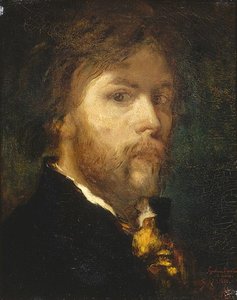
Gustave Moreau (1826-1898) stands apart from his contemporaries as a true visionary of Symbolist painting—a movement that prioritized emotion, imagination, and esoteric symbolism over the objective representation championed by Realism and Impressionism. His oeuvre delves into realms beyond mere visual perception, attempting to capture the intangible essence of myth, religion, and the human psyche through meticulously crafted imagery imbued with profound personal significance. ‘Samson and Dalila,’ completed in 1882, exemplifies this artistic philosophy perfectly, cementing Moreau’s position as a pivotal figure in shaping the aesthetic landscape of late nineteenth-century France.
The Mythic Narrative Embodied
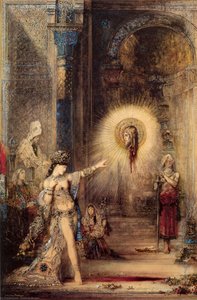
Moreau's depiction centers on the biblical tale of Samson and Delilah—a story rife with themes of betrayal, temptation, divine retribution, and ultimately, redemption through faith. Unlike traditional depictions focusing solely on dramatic action, Moreau’s canvas presents a tableau brimming with psychological complexity. The scene unfolds within a richly ornamented interior space reminiscent of opulent Byzantine churches, immediately establishing an atmosphere of grandeur and spiritual contemplation. Two women dominate the composition—Delilah, reclining languidly upon Samson's back, while another woman sits atop her, creating a posture vulnerable yet subtly defiant. This positioning isn’t merely aesthetic; it speaks to the narrative tension at its core – Delilah’s manipulative gaze and Samson’s impending downfall.
Symbolic Layers: Color, Texture & Decorative Detail
Moreau's masterful technique—characterized by meticulous layering of paint and painstaking attention to decorative detail—is crucial to conveying the painting’s symbolic weight. He employs a palette dominated by muted reds, golds, and blues, colors traditionally associated with royalty, piety, and divine illumination. These hues are juxtaposed against darker tones, creating dramatic chiaroscuro effects that heighten emotional intensity. The surface of the canvas is textured with intricate patterns—floral motifs interwoven with geometric designs—reflecting Moreau’s fascination with decorative arts and his desire to elevate painting beyond mere representation. These textures aren't merely ornamental; they contribute to the overall sense of mystery and enchantment, mirroring the dreamlike quality characteristic of Symbolist art.
Influence & Legacy: Beyond Impressionistic Horizons
Moreau’s artistic vision profoundly impacted subsequent generations of artists, notably Matisse and Rouault—who acknowledged his influence as a precursor to modern fantasy art. His exploration of psychological depth and symbolic language anticipated developments in Surrealism and Expressionism, demonstrating the enduring power of Symbolist principles to inspire creative innovation. ‘Samson and Dalila’ remains a cornerstone of Moreau's artistic legacy—a testament to his unwavering commitment to capturing the inner landscape of human experience through an exquisitely crafted visual idiom that continues to captivate audiences today. Its haunting beauty and evocative symbolism serve as a reminder of art’s capacity to transcend literal depiction, delving into realms of emotion and spiritual contemplation.