x
빠른 제작과 다양한 마감 옵션을 제공하는 박물관 품질의 지클레이 또는 캔버스 프린트. ( 손으로 그린 그림 구매 이미지 구매)
작품의 원본 비율을 유지하는 미리 설정된 크기 중에서 선택하세요.

특정 프레임이나 공간에 맞춰 직접 치수를 입력하실 수 있습니다. 선택하신 사이즈가 원본 이미지의 비율과 일치하지 않을 경우, 작품을 크롭(자르기)하거나 이미지를 대칭 또는 단색 채우기로 확장하여 제작합니다. 제작 시작 전, 최종 확인을 위해 디지털 목업이 전송됩니다.
화면상의 미리보기는 실제 크롭이나 확장 상태를 반영하지 않으므로, 최종 구도는 오직 목업을 통해서만 정확하게 확인하실 수 있습니다.
맞춤 사이즈 제작도 가능하지만, 원본 비율을 유지하기 위해서는 사전 정의된 목록에서 치수를 선택하시는 것을 권장합니다.

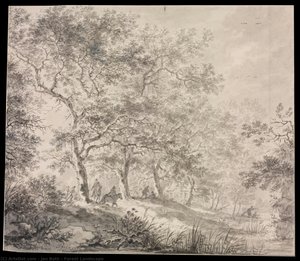
Forest Landscape
복제본 크기

In the grand, sweeping tapestry of the Flemish Baroque, where the names of Rubens and Rembrandt often command the spotlight, there exists a more intimate, contemplative thread woven by Hendrik van der Borcht. Born in Brussels around 1583, Van der Borcht was an artist of profound sensitivity, a master who found divinity not in grand historical spectacles, but in the quiet textures of the natural world and the silent stories told by forgotten relics. His life, spanning from the late sixteenth to the mid-seventeenth century, was one of movement and transition, as he carried the artistic traditions of his Belgian roots into the heart of Germany and beyond.
The early years of Van der Borcht’s development were shaped by a rigorous discipline of sight. Apprenticeship under Abraham Jansz van Basel in Antwerp provided him with a foundational mastery of light and color, teaching him how to manipulate shadow to create volume and atmosphere. This training instilled in him a lifelong devotion to precision. As he matured, his work began to reflect a unique duality: the ability to capture the expansive, breathing life of a forest landscape alongside the microscopic, frozen stillness of a vanitas still life. His journey was not merely one of stylistic evolution, but an intellectual pursuit, as he became an eminent antiquarian, finding deep inspiration in the ancient coins and artifacts that populated the collections of his era.
To step into a Van der Borcht landscape is to enter a sanctuary of dappled sunlight and emerald depths. Unlike the panoramic vistas that sought to overwhelm the viewer with scale, his forest interiors invite a closer, more spiritual engagement. He possessed an unparalleled ability to use chiaroscuro—the dramatic interplay between light and dark—to breathe life into the woodland floor. Through his brush, one can almost feel the humidity of the shaded thickets and the warmth of a stray sunbeam piercing through a dense canopy. These works were far more than mere scenery; they served as meditative spaces where the viewer could contemplate themes of regeneration and the eternal cycle of nature.
This mastery of atmosphere extended seamlessly into his celebrated still lifes, particularly his Rarity Collections. In these compositions, Van der Borcht transformed collections of objects into complex philosophical narratives. A single canvas might feature:
Each element was meticulously placed within a richly textured, dark background, ensuring that every glint of gold or curve of shell commanded absolute attention. His technique allowed these disparate objects to coalesce into a unified meditation on wealth, mortality, and the fleeting beauty of earthly possessions.
The historical significance of Hendrik van der Borcht lies in his ability to bridge the gap between the scientific observation of the Renaissance and the emotional intensity of the Baroque. While he may have been overshadowed by the titans of his age, his contribution to the genres of still life and landscape remains indispensable. He did not merely record the world; he interpreted it through a lens of profound reverence. His work stands as a testament to the power of detail, proving that the smallest snail shell or the most shadowed corner of a forest can hold as much weight as the grandest royal portrait.
Today, his legacy continues to resonate within the halls of museums and the hearts of art enthusiasts alike. He remains a pivotal figure whose work captures the very essence of the Dutch Golden Age—a period defined by an exquisite tension between the celebration of material abundance and a haunting awareness of its transience. Through his eyes, we are reminded that true beauty is often found in the quietest moments of observation.

1583 - 1655 , Belgium


최신 미술 뉴스, 특별 혜택 및 인테리어 아이디어를 가장 먼저 만나보세요.
프로젝트에 대해 알려주시면 저희 미술 전문가들이 맞춤형 아트 제안 3가지를 전달해 드립니다.
당신만을 위한 맞춤형 옵션 3가지를 무료로 추천해 드립니다!


 미리보기
미리보기
 공유하기
공유하기 공유하기
공유하기
 상세 정보
상세 정보

 다운로드
다운로드
 유사 작품
유사 작품 X-레이
X-레이 슬라이드 쇼
 더 보기
더 보기






































 유리 옵션은 110cm 미만 크기에서만 선택 가능합니다.