x





























작품의 원본 비율을 유지하는 미리 설정된 크기 중에서 선택하세요.

특정 프레임이나 공간에 맞도록 직접 크기를 입력할 수 있습니다. 선택하신 크기가 원본 이미지의 비율과 일치하지 않는 경우, 작품을 자르거나 추가적인 손으로 그린 요소를 사용하여 그림을 확장합니다. 제작 시작 전 승인을 위해 디지털 목업을 보내드립니다.
화면 미리 보기는 실제 자르기 또는 확장을 반영하지 않습니다. 최종 구성은 목업을 통해서만 정확하게 확인하실 수 있습니다.
맞춤 크기 제작도 가능하지만, 원본 비율을 유지하기 위해 사전 정의된 목록에서 크기를 선택하시는 것을 권장합니다.

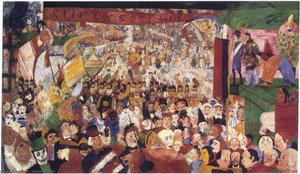
La musique russe
복제본 크기
James Ensor’s “La Musique Russe,” painted circa 1896, is not merely a depiction of a musical gathering; it’s a meticulously crafted exploration of psychological tension and the unsettling undercurrents lurking beneath the surface of social interaction. This captivating work, rendered in Ensor's signature dark palette and characterized by its almost claustrophobic composition, immediately draws the viewer into a world of veiled emotions and unspoken anxieties. The scene unfolds within a richly detailed interior – a dining room bathed in shadow – populated with figures engaged in an ostensibly joyful activity: a man playing the piano while a woman observes him. However, the overall effect is profoundly unsettling, a testament to Ensor’s masterful ability to evoke discomfort rather than simply represent reality.
Ensor's work is deeply rooted in Symbolism, a movement that sought to express subjective emotions and ideas rather than objective reality. “La Musique Russe” is replete with symbolic elements that contribute to its overall sense of unease. The dark color palette – dominated by blacks, browns, and muted greens – evokes feelings of melancholy, isolation, and perhaps even impending doom. The presence of carnival masks (implied through the souvenir shop setting in Ensor’s childhood) speaks to a fascination with disguise and the hidden identities that lie beneath social facades. The open book on the table suggests interrupted contemplation or a lost opportunity for connection – further reinforcing the theme of isolation.
Painted in 1896, “La Musique Russe” reflects the anxieties and uncertainties of the late 19th century. The rise of industrialization, urbanization, and social change contributed to a growing sense of alienation and disillusionment – themes that resonated deeply with Ensor’s artistic vision. Ensor was a pivotal figure in the development of modern art, particularly in Belgium, where he challenged academic conventions and paved the way for Expressionism. His unflinching exploration of psychological darkness and his rejection of traditional aesthetic values established him as one of the most important artists of his time.
Provenance & Reproduction Quality:** Most-Famous-Paintings offers a meticulously crafted hand-painted reproduction of “La Musique Russe,” ensuring that you experience the full impact of Ensor’s masterpiece. Our skilled artisans employ the same techniques and attention to detail as the original, capturing every nuance of color, texture, and composition. This is more than just an image; it's a tangible connection to one of art history’s most compelling and unsettling visions."La Musique Russe" would be a striking addition to any discerning collection or interior space. Its evocative atmosphere and powerful symbolism make it a conversation starter, while its timeless quality ensures that it will remain a captivating work of art for generations to come. Consider this piece as a focal point in a study, salon, or gallery – a testament to the enduring power of Ensor’s vision.

James Sidney Edouard, Baron Ensor (Ostend, 13 April 1860 – 19 November 1949) was a Belgian painter and printmaker who stands as one of the most influential figures in the development of Expressionism and Surrealism. Born into an English father and Belgian mother amidst the vibrant atmosphere of Ostend’s annual Carnival—a formative experience that profoundly shaped his artistic vision—Ensor embarked on a lifelong journey to explore the darker recesses of human psychology and challenge conventional aesthetic standards.
From a young age, Ensor demonstrated an innate talent for drawing and painting, nurtured by local instructors and fueled by an unwavering fascination with observation. His formative years were spent studying at the College of the Blessed Virgin in Ostend, where he honed his skills alongside fellow artists like Fernand Khnopff and Theo Van Rysselberghe—artists who would later become associated with the influential *Les XX* group.
Ensor’s artistic trajectory took a decisive turn in the late 1880s as he abandoned academic realism for a bold embrace of grotesque expressionism. Influenced by Rembrandt, Francisco Goya, and Japanese woodcuts—artists who championed emotional intensity and unsettling imagery—he began to populate his canvases with disturbing tableaux featuring skeletons battling over a hanged man, masks embodying hidden identities, and allegorical figures confronting existential anxieties.
Among Ensor’s most celebrated works are *The Scandalized Masks* (1883), which captures the pervasive influence of disguise and social critique; *Skeletons Fighting over a Hanged Man* (1891), a haunting meditation on mortality and decay; and *Christ's Entry into Brussels* (1888–89)—a monumental painting that satirizes religious hypocrisy with unflinching boldness. Recurring throughout Ensor’s oeuvre are explorations of death, social injustice, psychological torment, and the boundless potential for imaginative distortion—themes that continue to resonate powerfully with audiences today.
James Ensor's uncompromising artistic vision irrevocably altered the course of modern art. Rejecting academic conventions and embracing subjective experience, he paved the way for subsequent generations of artists who dared to confront uncomfortable truths and challenge established norms. His pioneering use of grotesque imagery—coupled with his masterful manipulation of color and line—established a distinctive stylistic vocabulary that profoundly impacted Expressionist painters like Edvard Munch and Ernst Ludwig Kirchner—artists who similarly sought to convey inner turmoil and psychological complexity.

1860 - 1949 , 벨기에

Explore the profound history and technical mastery of woodcut relief printing. From ancient origins to German Expressionism, discover how artists use the subtractive process to create iconic works. A definitive guide for art students, collectors, and historians.

Discover the technical mastery behind Most-Famous-Paintings.com's premium Giclée canvas prints. Our guide for elite collectors explores archival pigment inks, museum-grade substrates, and the science of high-fidelity reproduction to ensure lasting beauty and historical accuracy.


최신 미술 뉴스, 특별 혜택 및 인테리어 아이디어를 가장 먼저 만나보세요.
프로젝트에 대해 알려주시면 저희 미술 전문가들이 맞춤형 아트 제안 3가지를 전달해 드립니다.
당신만을 위한 맞춤형 옵션 3가지를 무료로 추천해 드립니다!


 미리보기
미리보기
 프린트 구매
 공유하기
공유하기 공유하기
공유하기
 상세 정보
상세 정보

 다운로드
다운로드
 유사 작품
유사 작품 X-레이
X-레이 슬라이드 쇼

 더 보기
더 보기









 유리 옵션은 110cm 미만 크기에서만 선택 가능합니다.