


x
원하는 크기와 액자로 주문 제작되는, 작가들이 직접 캔버스에 손으로 그린 유화 작품입니다. ( 프린트 주문으로 전환 이미지로 전환)
작품의 원본 비율을 유지하는 미리 설정된 크기 중에서 선택하세요.

특정 프레임이나 공간에 맞도록 직접 크기를 입력할 수 있습니다. 선택하신 크기가 원본 이미지의 비율과 일치하지 않는 경우, 작품을 자르거나 추가적인 손으로 그린 요소를 사용하여 그림을 확장합니다. 제작 시작 전 승인을 위해 디지털 목업을 보내드립니다.
화면 미리 보기는 실제 자르기 또는 확장을 반영하지 않습니다. 최종 구성은 목업을 통해서만 정확하게 확인하실 수 있습니다.
맞춤 크기 제작도 가능하지만, 원본 비율을 유지하기 위해 사전 정의된 목록에서 크기를 선택하시는 것을 권장합니다.

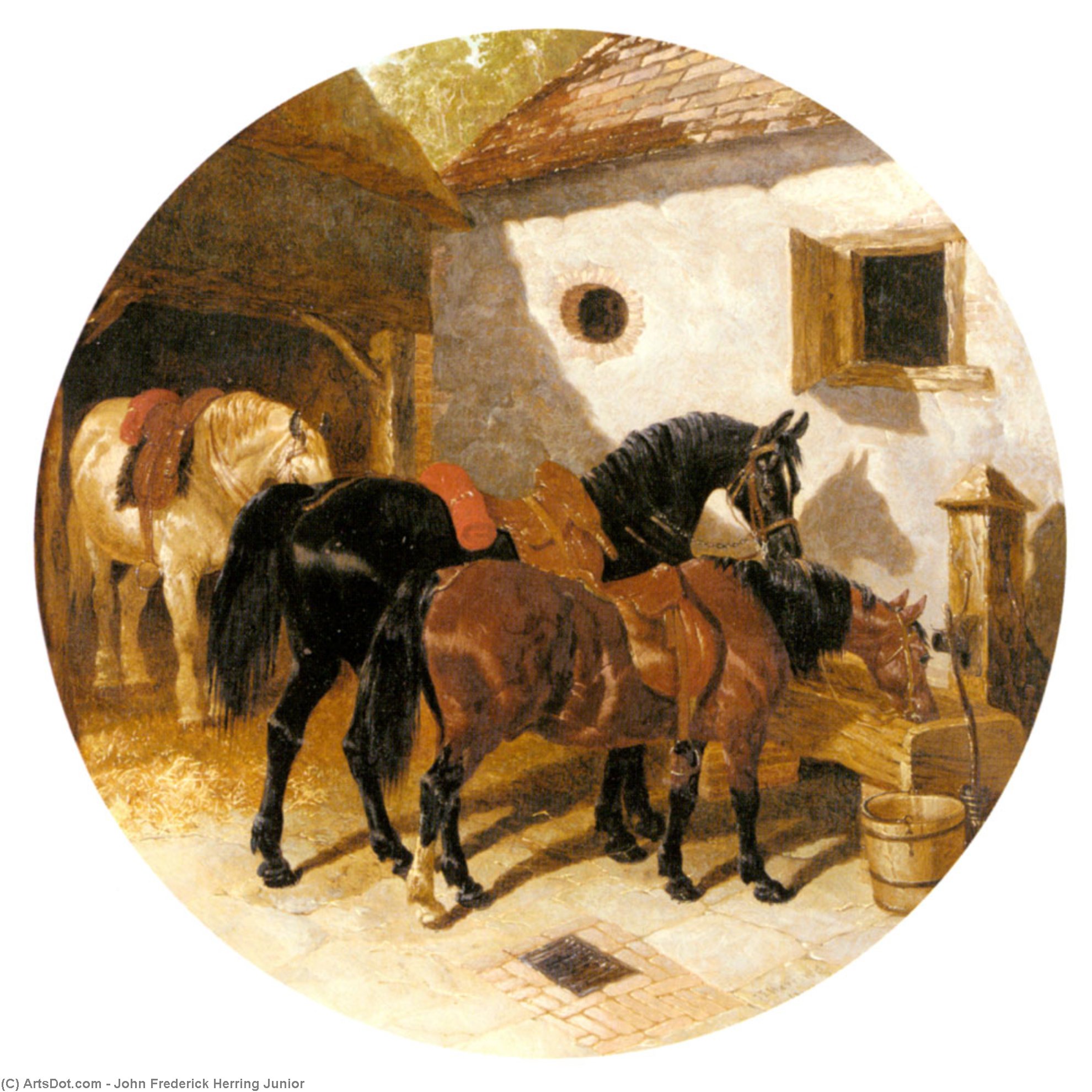
the farmyard
복제본 크기
In the heart of the Victorian era, a period defined by both rapid industrial expansion and a profound nostalgia for the pastoral, the works of John Frederick Herring Junior offered a window into a vanishing world. Born in Doncaster, Yorkshire, around 1820, Herring Jr. was destined to become a master of the British landscape, carrying forward a profound artistic lineage. He emerged from a family deeply rooted in equestrian tradition; his father, Edmund Herring Sr., was already a celebrated painter of horses, a man whose meticulous eye for equine anatomy provided the foundational blueprint for his son’s future triumphs. This heritage was more than mere profession—it was a shared language of observation, movement, and a deep-seated reverence for the rural English countryside.
While his lineage provided the subject matter, Herring Jr.’s formal education provided the refinement. His journey through Eton College and subsequently Oxford University instilled in him a classical scholarship that would later lend a certain dignity and structural integrity to his compositions. However, the true metamorphosis of his style occurred during his apprenticeship with George Petrie, a renowned watercolorist and illustrator. Under Petrie’s tutelage, Herring Jr. moved beyond simple representation, mastering the delicate nuances of tonal harmony and atmospheric perspective. These technical skills allowed him to breathe life into his canvases, transforming static scenes of the countryside into living, breathing environments where light seemed to dance across the meadows and mist clung to the edges of the woods.
The true brilliance of Herring Jr.’s oeuvre lies in his ability to navigate the spectrum between high-energy sporting art and the quiet, contemplative moments of rural industry. He achieved unparalleled renown for capturing the visceral excitement of equestrian pursuits. In his depictions of fox hunts, races, and carriage journeys, one can almost hear the thundering hooves and feel the spray of turf. His mastery of motion allowed him to portray horses and riders in mid-gallop, utilizing a sense of kinetic energy that made his work a favorite among the Victorian sporting aristocracy. Yet, even within these intense scenes, there remains a profound respect for the anatomy and grace of the animals themselves.
Conversely, Herring Jr. possessed a tender capacity for the pastoral. He was equally adept at rendering the stillness of a village afternoon or the rhythmic labor of the peasantry. His celebrated work, ‘The Village Blacksmith,’ serves as a poignant testament to this side of his artistry, offering a soulful portrayal of craftsmanship and the dignity of manual toil. Through his brush, the English landscape became more than just a backdrop; it became a character in its own right—a place of both rugged vitality and peaceful endurance. His ability to weave together these disparate themes—the adrenaline of the chase and the tranquility of the hearth—is what elevates his work from mere illustration to true fine art.
As the nineteenth century progressed, the world began to shift away from the agrarian rhythms that Herring Jr. so lovingly documented. However, his paintings remained a vital cultural touchstone, preserving an idealized vision of England that resonated deeply with a society grappling with the complexities of modernity. His contribution to the genre of sporting art and landscape painting is marked by a unique blend of technical precision and emotional resonance. He did not merely paint what he saw; he painted the spirit of an era.
Today, the legacy of John Frederick Herring Junior continues to endure through his presence in prestigious collections, such as the Tate, where his works serve as essential windows into the Victorian psyche. His life’s work stands as a monumental achievement in British art, characterized by:
Through his dedication to his craft and his unwavering connection to his roots, Herring Jr. ensured that the beauty of the English countryside and the majesty of the horse would remain eternally captured in the amber of fine oil painting.

1820 - 1907 , United Kingdom


최신 미술 뉴스, 특별 혜택 및 인테리어 아이디어를 가장 먼저 만나보세요.
프로젝트에 대해 알려주시면 저희 미술 전문가들이 맞춤형 아트 제안 3가지를 전달해 드립니다.
당신만을 위한 맞춤형 옵션 3가지를 무료로 추천해 드립니다!


 미리보기
미리보기
 공유하기
공유하기 공유하기
공유하기
 상세 정보
상세 정보

 다운로드
다운로드
 유사 작품
유사 작품 X-레이
X-레이 슬라이드 쇼
 더 보기
더 보기






































 유리 옵션은 110cm 미만 크기에서만 선택 가능합니다.


