


x
 2004
2004 140.0 x 80.0 cm
 Cholamandal Artists' Village
빠른 제작과 다양한 마감 옵션을 제공하는 박물관 품질의 지클레이 또는 캔버스 프린트. ( 손으로 그린 그림 구매 이미지 구매)
작품의 원본 비율을 유지하는 미리 설정된 크기 중에서 선택하세요.

특정 프레임이나 공간에 맞춰 직접 치수를 입력하실 수 있습니다. 선택하신 사이즈가 원본 이미지의 비율과 일치하지 않을 경우, 작품을 크롭(자르기)하거나 이미지를 대칭 또는 단색 채우기로 확장하여 제작합니다. 제작 시작 전, 최종 확인을 위해 디지털 목업이 전송됩니다.
화면상의 미리보기는 실제 크롭이나 확장 상태를 반영하지 않으므로, 최종 구도는 오직 목업을 통해서만 정확하게 확인하실 수 있습니다.
맞춤 사이즈 제작도 가능하지만, 원본 비율을 유지하기 위해서는 사전 정의된 목록에서 치수를 선택하시는 것을 권장합니다.

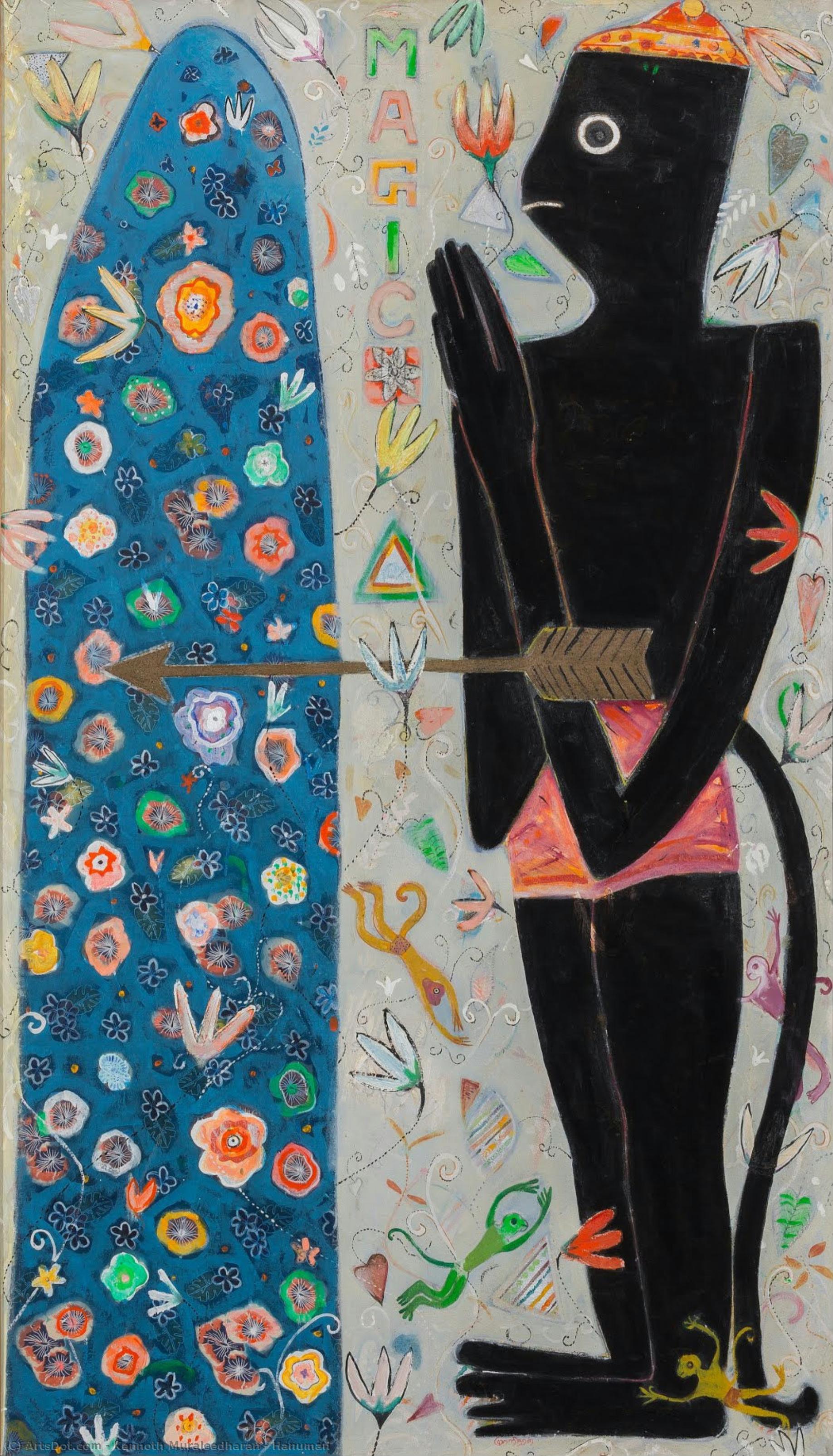
Hanuman
복제본 크기

Kannoth Muraleedharan, often referred to as K. Muralidharan, is a compelling figure in contemporary Indian art and politics. Born in Thrissur, India, in 1957, his life has been inextricably linked to both the vibrant world of Hindu mythology and the dynamic currents of Kerala’s political scene. While initially recognized primarily for his powerful depictions of Hanuman – images that resonate with a deeply rooted devotional sensibility – Muraleedharan's artistic journey is interwoven with a significant career as a politician, shaping his perspective and informing his art.
Muraleedharan’s early life was shaped by the legacy of his father, K. Karunakaran, a prominent former Chief Minister of Kerala. This familial connection instilled in him a strong sense of social justice and a commitment to serving the people. He began his artistic career with a focus on traditional themes, drawing inspiration from the rich tapestry of Hindu mythology. His works frequently feature Hanuman, not merely as a deity but as an embodiment of strength, devotion, and righteousness – qualities that he sought to capture through bold colors, dynamic compositions, and expressive brushwork. The choice of Hanuman is particularly significant; it’s a figure deeply revered in Kerala, representing courage and protection, and Muraleedharan's interpretations imbue the iconography with a contemporary urgency.
Muraleedharan’s artistic style is characterized by its intensity and emotional depth. He employs a vibrant palette – reds, oranges, yellows – to convey energy and passion, often utilizing thick impasto techniques that create a tactile surface. His figures are rendered with a remarkable degree of physicality, conveying both the divine and the human aspects of Hanuman. There’s a deliberate roughness in his brushstrokes, suggesting an immediacy and raw emotion that contrasts sharply with more polished or idealized representations. This approach reflects not just a technical skill but also a deeply felt spiritual connection to the subject matter.
While Muraleedharan’s artistic career gained prominence in the late 20th and early 21st centuries, his life has been equally defined by his involvement in Indian politics. He entered the political arena first as a worker for the Seva Dal, a youth wing of the Indian National Congress, demonstrating an early commitment to public service. He steadily rose through the ranks, holding positions such as District Chairman and State Chief of Kerala Seva Dal before being elected to the Lok Sabha in 1989, representing the Kozhikode constituency. This marked the beginning of a long and impactful political career, spanning multiple terms and encompassing roles within the Congress party and later the Nationalist Congress Party (NCP).
His political career was not without its complexities. He faced periods of internal conflict within the Congress party, particularly following disagreements with his father, K. Karunakaran, and subsequent shifts in allegiance. These experiences undoubtedly influenced his artistic output, adding layers of social commentary and perhaps a subtle critique of power dynamics to his work. Notably, he served as Minister of Power under the AK Antony government, an unusual circumstance for an MP, highlighting his dedication to public service.
Muraleedharan’s most celebrated body of work undoubtedly revolves around his depictions of Hanuman. The “Hanuman” series is not simply a collection of paintings; it's a profound exploration of faith, devotion, and the human condition. He doesn’t shy away from portraying Hanuman in moments of intense struggle or vulnerability – images that resonate deeply with the devotional practices prevalent in Kerala. These aren’t idealized representations; they are raw, emotionally charged depictions of a figure who embodies both strength and humility.
The symbolism within these paintings is rich and layered. Hanuman represents loyalty, courage, and selfless service—qualities highly valued in Hindu culture. Muraleedharan's use of color and composition amplifies this symbolic weight, creating images that are not just visually striking but also deeply evocative of spiritual meaning. The artwork’s popularity speaks to the enduring power of these mythological narratives within Kerala society.
A key example is his work Hanuman , available on Most-Famous-Paintings.com, which exemplifies his signature style and thematic concerns. The dynamic pose, vibrant colors, and expressive brushwork combine to create a powerful image that captures the essence of Hanuman’s legendary status.
Despite facing challenges and setbacks throughout his career – both in art and politics – Kannoth Muraleedharan remains an influential figure. His artistic legacy is secured by his distinctive style, his profound engagement with Hindu mythology, and the emotional resonance of his works. He continues to be active in Kerala’s political landscape, advocating for social justice and representing the interests of his constituents.
Muraleedharan's story is a testament to the interconnectedness of art and life, demonstrating how personal experiences, cultural heritage, and political engagement can shape an artist’s vision and leave a lasting impact on both the artistic world and the broader community.

1957 - , India


최신 미술 뉴스, 특별 혜택 및 인테리어 아이디어를 가장 먼저 만나보세요.
프로젝트에 대해 알려주시면 저희 미술 전문가들이 맞춤형 아트 제안 3가지를 전달해 드립니다.
당신만을 위한 맞춤형 옵션 3가지를 무료로 추천해 드립니다!


 미리보기
미리보기
 공유하기
공유하기 공유하기
공유하기
 상세 정보
상세 정보

 다운로드
다운로드
 유사 작품
유사 작품 X-레이
X-레이 슬라이드 쇼
 더 보기
더 보기






































 유리 옵션은 110cm 미만 크기에서만 선택 가능합니다.


