


x
빠른 제작과 다양한 마감 옵션을 제공하는 박물관 품질의 지클레이 또는 캔버스 프린트. ( 손으로 그린 그림 구매 이미지 구매)





























작품의 원본 비율을 유지하는 미리 설정된 크기 중에서 선택하세요.

특정 프레임이나 공간에 맞춰 직접 치수를 입력하실 수 있습니다. 선택하신 사이즈가 원본 이미지의 비율과 일치하지 않을 경우, 작품을 크롭(자르기)하거나 이미지를 대칭 또는 단색 채우기로 확장하여 제작합니다. 제작 시작 전, 최종 확인을 위해 디지털 목업이 전송됩니다.
화면상의 미리보기는 실제 크롭이나 확장 상태를 반영하지 않으므로, 최종 구도는 오직 목업을 통해서만 정확하게 확인하실 수 있습니다.
맞춤 사이즈 제작도 가능하지만, 원본 비율을 유지하기 위해서는 사전 정의된 목록에서 치수를 선택하시는 것을 권장합니다.

Four Square
복제본 크기
Kazimir Malevich’s Four Square, painted in 1915, is not merely an artwork; it's a declaration. A pivotal moment in the history of abstraction, this deceptively simple composition – four squares arranged in a grid of black and white, subtly punctuated with hints of red, green, and yellow – represents a complete break from representational art and a bold step into what Malevich termed ‘Suprematism’. To gaze upon Four Square is to confront the very essence of painting itself, stripped bare of illusion and narrative. It’s an invitation not to *see* something, but to *feel* something – pure sensation divorced from objective reality.
Born in Ukraine in 1878, Malevich was a restless innovator who initially explored Impressionism, Symbolism, and Cubism before forging his own revolutionary path. He wasn’t interested in depicting the world as it appeared; he sought to express pure feeling, a spirituality unbound by earthly forms. This quest culminated in Suprematism, an aesthetic philosophy centered on basic geometric shapes – squares, circles, lines – floating within an infinite white space. Four Square embodies this principle perfectly. The stark contrast between black and white isn’t simply a visual choice; it's a symbolic representation of opposing forces, of dynamism and stillness, of the material and the spiritual. The subtle inclusion of color—a fleeting touch of red, a whisper of green—prevents the composition from becoming sterile, hinting at the underlying energy that animates these fundamental forms.
While seemingly minimalist, Four Square is a testament to Malevich’s meticulous technique. Executed in oil on canvas, the painting's surface is remarkably smooth, devoid of visible brushstrokes. This deliberate suppression of texture reinforces the sense of flatness and emphasizes the geometric precision of the squares. The lines are crisp and defined, creating an almost architectural structure within the composition. It’s a testament to Malevich’s skill that he could imbue such simple elements with so much power and resonance. He wasn't simply painting shapes; he was constructing a new reality, a non-objective world where form and color reigned supreme. The even lighting further contributes to this effect, eliminating shadows and highlighting the two-dimensional quality of the work.
Four Square isn’t just an important artwork within Malevich's oeuvre; it’s a cornerstone of 20th-century art. It challenged conventional notions of beauty, representation, and artistic skill, paving the way for countless abstract artists who followed. Its influence can be seen in Minimalism, geometric abstraction, and even contemporary digital art. For collectors and interior designers alike, a reproduction of Four Square offers more than just aesthetic appeal; it’s an opportunity to own a piece of history, a symbol of artistic innovation, and a powerful statement about the enduring power of pure form. It's a work that invites contemplation, sparks conversation, and elevates any space with its quiet yet profound presence.

1878 - 1935 , 우크라이나
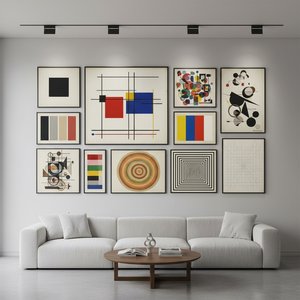
몬드리안, 말레비치 등 거장들의 기하학적 추상 미술 명작 10선을 만나보세요. 각 작품의 예술사적 의미와 색채, 구성을 탐구하고 Most-Famous-Paintings.com에서 고품질 아트 프린트를 소장하세요. 지금 바로 온라인 컬렉션을 확인하세요!

Explore the revolutionary art of Kazimir Malevich & his groundbreaking Suprematism movement. Discover the origins, core principles, and lasting impact of this pivotal force in modern abstract painting.
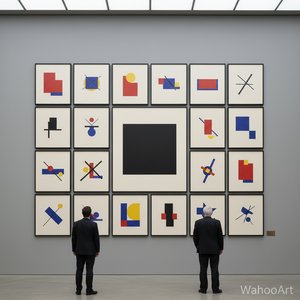
카지미르 말레비치의 최고작 25선을 만나보세요. 추상 미술의 혁신적인 세계, 슈프레마티즘의 정수를 담은 작품들의 이야기와 영감을 Most-Famous-Paintings에서 경험하세요. 고품질 아트 프린트와 인테리어 데코 아이디어를 지금 바로 확인하세요! Most-Famous-Paintings.com

Explore the evolution of geometric abstraction from Cubism to contemporary art. Discover key artists like Malevich & Mondrian, investment insights, and expert collecting advice at Most-Famous-Paintings.
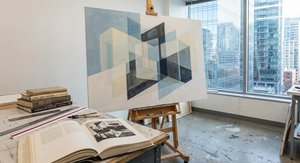
Explore the captivating world of geometric abstraction! Discover its origins, key artists like Malevich & Mondrian, and why this movement remains highly valued by art collectors today. Expert insights at Most-Famous-Paintings.


최신 미술 뉴스, 특별 혜택 및 인테리어 아이디어를 가장 먼저 만나보세요.
프로젝트에 대해 알려주시면 저희 미술 전문가들이 맞춤형 아트 제안 3가지를 전달해 드립니다.
당신만을 위한 맞춤형 옵션 3가지를 무료로 추천해 드립니다!


 미리보기
미리보기
 공유하기
공유하기 공유하기
공유하기
 상세 정보
상세 정보

 다운로드
다운로드
 유사 작품
유사 작품 X-레이
X-레이 슬라이드 쇼

 더 보기
더 보기









 유리 옵션은 110cm 미만 크기에서만 선택 가능합니다.


