x
빠른 제작과 다양한 마감 옵션을 제공하는 박물관 품질의 지클레이 또는 캔버스 프린트. ( 손으로 그린 그림 구매 이미지 구매)





























작품의 원본 비율을 유지하는 미리 설정된 크기 중에서 선택하세요.

특정 프레임이나 공간에 맞춰 직접 치수를 입력하실 수 있습니다. 선택하신 사이즈가 원본 이미지의 비율과 일치하지 않을 경우, 작품을 크롭(자르기)하거나 이미지를 대칭 또는 단색 채우기로 확장하여 제작합니다. 제작 시작 전, 최종 확인을 위해 디지털 목업이 전송됩니다.
화면상의 미리보기는 실제 크롭이나 확장 상태를 반영하지 않으므로, 최종 구도는 오직 목업을 통해서만 정확하게 확인하실 수 있습니다.
맞춤 사이즈 제작도 가능하지만, 원본 비율을 유지하기 위해서는 사전 정의된 목록에서 치수를 선택하시는 것을 권장합니다.

Sonata
복제본 크기
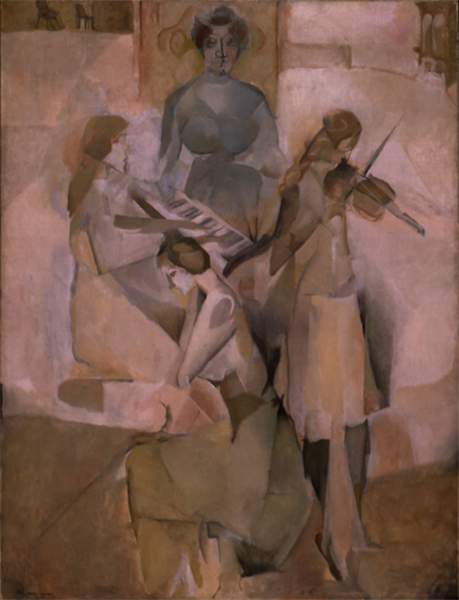
In the quiet evolution of modernism, few moments capture the tension between tradition and revolution as poignantly as Marcel Duchamp’s 1911 watercolor, Sonata. At first glance, the viewer is invited into an intimate domestic scene—a musical gathering where four women are immersed in the rhythmic beauty of performance. Yet, as the eye lingers, the familiar boundaries of reality begin to dissolve. This is not merely a depiction of a concert; it is a profound exploration of proto-Cubist thought, where the artist begins to dismantle the physical world to reveal its underlying geometric soul. The composition breathes with a sense of spatial dynamism, as if the very air in the room is vibrating in harmony with the instruments being played.
Duchamp’s technique in Sonata serves as a bridge between the soft, atmospheric legacies of Impressionism and the sharp, intellectual rigor of Cubism. Using the delicate medium of watercolor, he employs a palette of muted, earthy tones—predominantly browns and whites—interspersed with strategic, luminous yellow accents that guide the viewer through the fractured landscape. The artist utilizes orthogonal lines and intersecting planes to break the figures into geometric segments, creating a visual puzzle that challenges the eye to reconstruct the scene. This deliberate fragmentation allows for a simultaneous viewpoint, where the depth of the room and the solidity of the chairs are reimagined through a lens of abstraction, offering a sense of movement that feels both structured and ethereal.
Beyond its technical brilliance, Sonata carries a deep symbolic weight, representing the transition from "retinal art"—art intended only for the eye—to a more conceptual mode of expression. The musical theme is not incidental; it serves as a metaphor for the mathematical and rhythmic precision found within the Cubist movement. Just as a sonata is composed of structured movements that coalesce into a unified whole, Duchamp arranges his subjects—the violinist, the pianist, and their companions—into a carefully orchestrated arrangement of shapes and shadows. The presence of the two chairs, positioned to anchor the composition, provides a structural counterpoint to the fluid, breaking forms of the musicians, grounding the experimental abstraction in a recognizable human experience.
For the discerning collector or interior designer, this piece offers an unparalleled opportunity to introduce a sense of intellectual depth and historical significance into a space. Sonata is more than a decorative element; it is a conversation starter that evokes the avant-garde spirit of early 20th-century Paris. Its sophisticated use of neutral tones and geometric rhythm makes it a versatile masterpiece, capable of complementing both minimalist contemporary settings and richly textured classical interiors. To possess a reproduction of this work is to hold a fragment of the moment when art decided to break free from the mirror of reality and begin dreaming in geometry.


1887 - 1968 , 프랑스

Explore the profound history and technical mastery of watercolor painting. From medieval manuscripts to the luminous works of John Singer Sargent, discover how artists capture light and transparency through this delicate, enduring medium.

Master the complexities of Cubism with our expert guide. Explore how Picasso and Braque revolutionized modern art through fragmentation, multiple perspectives, and geometric innovation. Perfect for art students and collectors seeking deep historical insight.

Explore the revolutionary world of Cubism. Discover how Pablo Picasso and Georges Braque dismantled perspective to redefine modern art through geometric innovation and analytical mastery. An essential guide for art students, collectors, and history enthusiasts.

Explore the revolutionary world of Cubism. Discover how masters Pablo Picasso and Georges Braque dismantled reality through geometric abstraction to redefine modern art history.


최신 미술 뉴스, 특별 혜택 및 인테리어 아이디어를 가장 먼저 만나보세요.
프로젝트에 대해 알려주시면 저희 미술 전문가들이 맞춤형 아트 제안 3가지를 전달해 드립니다.
당신만을 위한 맞춤형 옵션 3가지를 무료로 추천해 드립니다!


 미리보기
미리보기
 공유하기
공유하기 공유하기
공유하기
 상세 정보
상세 정보

 다운로드
다운로드
 유사 작품
유사 작품 X-레이
X-레이 슬라이드 쇼

 더 보기
더 보기









 유리 옵션은 110cm 미만 크기에서만 선택 가능합니다.