


x
 Acrylic On CanvasWallArtBaroque Rome
 1621
1621 39.0 x 38.0 cm
 메트로폴리탄 미술관
빠른 제작과 다양한 마감 옵션을 제공하는 박물관 품질의 지클레이 또는 캔버스 프린트. ( 손으로 그린 그림 구매 이미지 구매)





























작품의 원본 비율을 유지하는 미리 설정된 크기 중에서 선택하세요.

특정 프레임이나 공간에 맞춰 직접 치수를 입력하실 수 있습니다. 선택하신 사이즈가 원본 이미지의 비율과 일치하지 않을 경우, 작품을 크롭(자르기)하거나 이미지를 대칭 또는 단색 채우기로 확장하여 제작합니다. 제작 시작 전, 최종 확인을 위해 디지털 목업이 전송됩니다.
화면상의 미리보기는 실제 크롭이나 확장 상태를 반영하지 않으므로, 최종 구도는 오직 목업을 통해서만 정확하게 확인하실 수 있습니다.
맞춤 사이즈 제작도 가능하지만, 원본 비율을 유지하기 위해서는 사전 정의된 목록에서 치수를 선택하시는 것을 권장합니다.

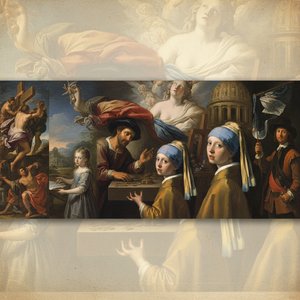
A Cardinal's Procession
복제본 크기
Ottavio Leoni, a name that whispers through the corridors of the early Baroque era, remains one of the most intriguing enigmas of the Roman art scene. Born in Rome around 1578, Leoni emerged from a lineage of artistic talent, being the son of the respected painter Lodovico Leoni. This familial foundation provided him with more than just technical instruction; it immersed him in the rich, evolving traditions of Venetian-influenced painting that were then sweeping through Italy. While history has often relegated him to the shadows of his more famous contemporaries, a closer examination of his surviving works reveals an artist of profound elegance and a master of the psychological depth required for true portraiture.
Leoni’s artistic journey was defined by a remarkable ability to capture the dignity and spiritual weight of his subjects. His training allowed him to navigate the complex textures of the era, blending the soft light of the Venetian school with the dramatic, emerging intensity of the Roman Baroque. This duality is perhaps most evident in his religious commissions, where he demonstrated a command over chiaroscroll—the masterful use of light and shadow to create volume and emotional resonance. In works such as the Annunciation for Sant’Eustachio and the Virgin and Child with St. Giacomo for Santa Maria della Minerva, Leoni does not merely depict sacred figures; he breathes a palpable sense of reverence into them, using light to illuminate the divine within the human form.
Beyond the altarpieces that adorned Rome's great churches, Leoni found his true calling in the intimate realm of portraiture and printmaking. He possessed a rare gift for translating the social standing and inner character of his sitters onto canvas and copper. His portraits, such as the striking depiction of Cardinal Domenico Toschi, are studies in texture and status, where the heavy, rich red robes of the clergy are rendered with such meticulous detail that one can almost feel the weight of the fabric. This technical precision was matched by an ability to convey a sense of presence, making his subjects appear as living entities frozen in a moment of quiet contemplation.
Leoni’s versatility extended into the delicate medium of engraving, where he achieved a level of fame that briefly bridged the gap between obscurity and recognition. His groundbreaking engraving of Caravaggio's work serves as a testament to his ability to interpret the most revolutionary visual language of his time. Whether working on large-scale oil paintings or the fine surface of copper, Leoni’s hand was characterized by a certain rhythmic grace. Even in his Self-Portrait, we see an artist deeply aware of his place in history, presenting himself with a dignified presence that reflects both his personal pride and the professional standard he maintained as the president of the Accademia di San Luca.
The life of Ottavio Leoni was tragically cut short in 1630, leaving behind a body of work that serves as a vital link in the evolution of Roman Baroque art. Though he may have slipped into relative obscurity following his death, the rediscovery of his oeuvre offers invaluable insights into the artistic ecosystem of 17th-century Rome. His ability to synthesize different regional styles—the luminosity of Venice and the drama of Rome—helped pave the way for the full flowering of the Baroque period.
To study Leoni is to witness the transition of an era. His contributions can be summarized through several key artistic pillars:
Today, as scholars and art enthusiasts continue to peel back the layers of his forgotten history, Ottavio Leoni stands not just as a footnote, but as a vital protagonist in the grand narrative of Italian art.

1578 - 1630 , Italy
화려함과 극적인 표현이 압권! 바로크 미술을 대표하는 10대 걸작의 숨겨진 이야기를 만나보세요. 베르니니, 루벤스 등 거장의 작품부터 바로크 색감, 예술적 기법까지 – Most-Famous-Paintings.com에서 명품 복제 & 인테리어 영감을 얻으세요! 지금 바로 컬렉션을 탐험해보세요.

Explore the Italian Renaissance! Discover humanist ideals, iconic masterpieces by Leonardo, Michelangelo & Raphael, and lasting artistic innovations. A comprehensive guide for art enthusiasts.

Explore the life & legacy of Sir Anthony van Dyck, the leading court painter of his era. Discover his innovative portraiture, Baroque masterpieces, and investment potential for discerning collectors. Learn more at Most-Famous-Paintings.

Explore the grandeur of Baroque portraiture! Discover Rubens, Van Dyck & the masters of 17th-century art. Uncover symbolism, techniques & lasting influence. Expert insights for collectors and enthusiasts.

Commission a unique, hand-painted portrait that captures your story & cherished memories. Expert artists, personalized service & museum-quality results. Explore the art of bespoke portraiture today!


최신 미술 뉴스, 특별 혜택 및 인테리어 아이디어를 가장 먼저 만나보세요.
프로젝트에 대해 알려주시면 저희 미술 전문가들이 맞춤형 아트 제안 3가지를 전달해 드립니다.
당신만을 위한 맞춤형 옵션 3가지를 무료로 추천해 드립니다!


 미리보기
미리보기
 공유하기
공유하기 공유하기
공유하기
 상세 정보
상세 정보

 다운로드
다운로드
 유사 작품
유사 작품 X-레이
X-레이 슬라이드 쇼
 더 보기
더 보기









 유리 옵션은 110cm 미만 크기에서만 선택 가능합니다.


