x
 Acrylic On CanvasWallArtPost-Impressionism
 1885Modern
 21.0 x 12.0 cm
빠른 제작과 다양한 마감 옵션을 제공하는 박물관 품질의 지클레이 또는 캔버스 프린트. ( 손으로 그린 그림 구매 이미지 구매)





























작품의 원본 비율을 유지하는 미리 설정된 크기 중에서 선택하세요.

특정 프레임이나 공간에 맞춰 직접 치수를 입력하실 수 있습니다. 선택하신 사이즈가 원본 이미지의 비율과 일치하지 않을 경우, 작품을 크롭(자르기)하거나 이미지를 대칭 또는 단색 채우기로 확장하여 제작합니다. 제작 시작 전, 최종 확인을 위해 디지털 목업이 전송됩니다.
화면상의 미리보기는 실제 크롭이나 확장 상태를 반영하지 않으므로, 최종 구도는 오직 목업을 통해서만 정확하게 확인하실 수 있습니다.
맞춤 사이즈 제작도 가능하지만, 원본 비율을 유지하기 위해서는 사전 정의된 목록에서 치수를 선택하시는 것을 권장합니다.

Blue Flowerpot
복제본 크기
Paul Cézanne, born on January 19, 1839, in Aix-en-Provence, France, was a pivotal figure in the transition from late 19th-century Impressionism to early 20th-century Cubism. His father was a successful hatmaker who later became a banker, providing Cézanne with financial security that allowed him to pursue his artistic passions without immediate economic pressure. Initially intended to follow in his father’s footsteps and enter the legal profession, Cézanne eventually abandoned these plans to dedicate himself fully to art.
Early influences included Romanticism and the Barbizon school of landscape painting. He studied briefly at the Académie Suisse in Paris but largely developed his style independently. The works of Paul Gauguin and Georges Seurat, particularly their explorations of color and form, also played a significant role in shaping Cézanne’s artistic direction.
“Blue Flowerpot” (1885) exemplifies Cézanne's Post-Impressionist style, characterized by bold brushstrokes and vivid colours. The painting measures 21 x 12 cm and is executed in watercolour, a medium that allows for delicate yet expressive strokes. The blue flower pot, placed on a table or countertop, is the central focus of the composition. Surrounding it are several potted plants and grasses, creating a lively and cozy indoor scene.
Cézanne’s Post-Impressionist style sought to move beyond Impressionism's fleeting impressions of light and atmosphere by emphasizing underlying structure and form. He achieved this through thick, textured brushstrokes—often applying paint in parallel strokes—that built up layers of colour to create a sense of solidity and depth. The watercolour medium was particularly suited to capturing these effects, allowing for subtle gradations of tone and hue that conveyed the essence of his subjects.
The blue flower pot itself can be seen as a symbol of domesticity and tranquility. Cézanne’s careful arrangement of plants and grasses around it wasn't merely decorative; it served to create visual harmony and balance, mirroring the artist’s belief that art should reflect the natural world with an honest gaze. The use of watercolour allowed for subtle variations in colour and light, enhancing the overall sense of serenity.
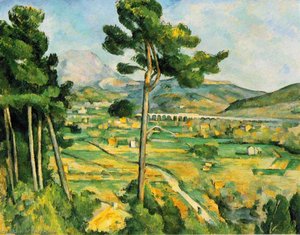
Cézanne's work was influenced by his contemporaries, including Paul Gauguin, who also explored Post-Impressionism. Gauguin's “Landscape with Cows in an Orchard” (available at /art/list/?Filter=8EWPBQ-Paul-Gauguin-Landscape-with-Cows-in-an-Orchard) showcases a similar blend of vibrant colours and everyday subjects. Cézanne’s legacy extends beyond his own works. His influence can be seen in the development of Cubism, with artists like Pablo Picasso drawing inspiration from his compositions. For example, Cézanne's “La Montagne Sainte-Victoire” (available at /art/list/?Filter=D47V82-Paul-Cezanne-La-Montagne-Sainte-Victoire) demonstrates his innovative approach to landscape painting.
“Blue Flowerpot” by Paul Cézanne is a testament to the artist’s skill in capturing the beauty of everyday life. The painting, with its vibrant colours and delicate strokes, invites viewers to appreciate the tranquility of a well-arranged indoor space. For those interested in exploring more of Cézanne's works, Most-Famous-Paintings.com offers high-quality reproductions that bring his artistry into your home.

1839 - 1906 , 프랑스

Explore the transformative era of Post-Impressionism. Discover how masters like Van Gogh moved beyond light to embrace emotion, structure, and vibrant color, redefining modern art history through expressive brushwork and symbolic depth.


최신 미술 뉴스, 특별 혜택 및 인테리어 아이디어를 가장 먼저 만나보세요.
프로젝트에 대해 알려주시면 저희 미술 전문가들이 맞춤형 아트 제안 3가지를 전달해 드립니다.
당신만을 위한 맞춤형 옵션 3가지를 무료로 추천해 드립니다!


 미리보기
미리보기
 공유하기
공유하기 공유하기
공유하기
 상세 정보
상세 정보

 다운로드
다운로드
 유사 작품
유사 작품 X-레이
X-레이 슬라이드 쇼
 더 보기
더 보기









 유리 옵션은 110cm 미만 크기에서만 선택 가능합니다.