St Victoire
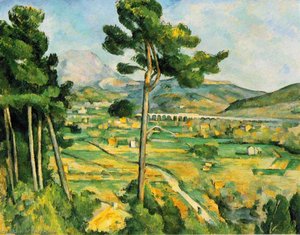
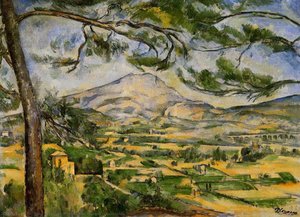
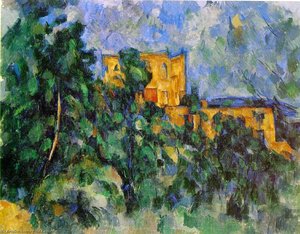
Paul Cézanne’s “St Victoire,” completed in 1885, stands as an emblem of Post-Impressionism's audacious departure from Impressionistic conventions and its profound influence on the subsequent artistic landscape. More than just a depiction of a mountain range—the iconic Sainte-Victoire dominating Aix-en-Provence—it’s a meticulously crafted exploration of form, color, and spatial perception that continues to captivate viewers today. Cézanne wasn't merely attempting to capture what he saw; he was striving to distill the essence of nature itself into a visual language that prioritized underlying structure over fleeting impressions.
Composition and Technique
The painting’s panorama unfolds across a tranquil valley, punctuated by the imposing presence of Sainte-Victoire. Cézanne eschewed traditional perspective—a hallmark of academic art—favoring instead a flattened plane where contours merge and overlap, creating an illusionistic depth that defies conventional representation. This technique is characterized by repetitive, exploratory brushstrokes – a deliberate rejection of Impressionist spontaneity – which build up complex fields of color with remarkable precision. Cézanne’s masterful use of pigment allows for subtle tonal variations and shimmering surfaces, capturing the atmospheric qualities of Provence with breathtaking subtlety. The inclusion of trees—both foreground and background—adds textural richness to the composition and reinforces Cézanne's commitment to portraying objects as they exist in reality rather than as idealized representations.
Artistic Influence
“St Victoire” served as a pivotal bridge between Impressionism and Cubism, profoundly impacting artists like Henri Matisse and Pablo Picasso who recognized Cézanne’s pioneering approach as foundational to their own artistic endeavors. Picasso famously declared Cézanne “the father of us all,” acknowledging his transformative influence on the development of fragmented forms and multiple viewpoints—elements that would become central to Cubist aesthetics. Cézanne's exploration of geometric abstraction paved the way for a radical reimagining of visual perception, establishing him as one of the most influential figures in modern art history.
Museum Collections
The painting resides within the Von Der Heydt Museum in Wuppertal, Germany, where it is admired alongside other masterpieces of European art from the late nineteenth century. Similarly, The Metropolitan Museum of Art in New York City houses a substantial collection of Cézanne’s works—including numerous landscapes and still lifes—providing visitors with unparalleled access to his artistic legacy. Examining these artworks allows for a deeper appreciation of Cézanne's contribution to the evolution of art and its enduring fascination with capturing the beauty and complexity of the natural world.
Conclusion
“St Victoire” transcends mere visual representation; it embodies Cézanne’s unwavering dedication to formal experimentation and his profound understanding of how color and form interact to convey emotion and meaning. For those seeking inspiration or desiring a stunning reproduction of this iconic artwork, visit
https://Most-Famous-Paintings.com for exceptional handmade oil painting reproductions—bringing Cézanne’s vision into your home. To delve further into the life and artistic achievements of Paul Cézanne, consult Wikipedia:
Paul Cézanne.