A Surreal Stage: Unveiling Paul Klee’s ‘Botanical Theater’
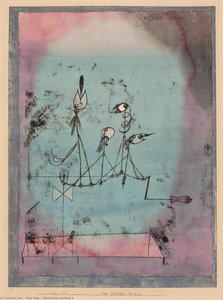
Paul Klee's *Botanical Theater*, painted in 1924, is a captivating journey into the artist’s uniquely imaginative world. This work isn’t merely a painting; it’s a meticulously constructed stage for fantastical beings and organic forms, inviting viewers to participate in a silent, dreamlike performance. Klee, a master of color and form, seamlessly blends elements of Expressionism, Cubism, and Surrealism into a visual language all his own.
Decoding the Composition & Style
The painting presents a densely layered composition, reminiscent of both stage sets and intricate botanical illustrations. It’s not a realistic depiction of nature but rather an *interpretation* – a playful arrangement of abstracted plants, geometric shapes, and enigmatic figures. The style is characterized by delicate lines, vibrant yet harmonious colors, and a sense of rhythmic balance despite the apparent complexity. Klee's use of oil paint creates a rich texture, with visible brushstrokes adding to the artwork’s tactile quality. Notice how forms seem to float and interact within a shallow pictorial space, enhancing the theatrical feel.
Technique & Materials
Klee employed an innovative technique involving thin washes of color layered over a prepared ground. This allowed him to build up depth and luminosity while maintaining a sense of transparency. The impasto application in certain areas adds emphasis and texture, drawing the eye to key elements within the composition. His mastery of color theory is evident in the carefully chosen palette – earthy tones are punctuated by bursts of brighter hues, creating visual interest and emotional resonance.
Historical Context & Bauhaus Influence
Created during Klee’s influential years at the Bauhaus school, *Botanical Theater* reflects the institution's emphasis on experimentation and integration of art, craft, and technology. The Bauhaus encouraged artists to explore new materials and techniques, fostering a spirit of innovation that profoundly impacted Klee’s work. This period also saw Klee developing his theoretical writings on form and design – ideas that parallel Leonardo da Vinci’s influence during the Renaissance.
Symbolism & Interpretation
The symbolism within *Botanical Theater* is deliberately ambiguous, inviting multiple interpretations. The figures could represent archetypes or personifications of natural forces. The plants are not botanically accurate but rather symbolic representations of growth, life, and transformation. Some scholars suggest the painting alludes to themes of ritual, mythology, or even the subconscious mind.
Ultimately, Klee leaves room for individual interpretation, allowing each viewer to create their own narrative within this enchanting world.
Emotional Impact & Lasting Legacy
*Botanical Theater* evokes a sense of wonder, mystery, and childlike curiosity. The painting’s whimsical nature is balanced by an underlying current of melancholy or introspection. It's a work that rewards close observation, revealing new details and layers of meaning with each viewing. Klee’s influence on 20th-century art is undeniable, and *Botanical Theater* stands as a testament to his unique vision and enduring artistic genius.
It continues to inspire artists and captivate audiences today.
Bringing the Magic Home: Most-Famous-Paintings Reproductions
- Experience Klee’s masterpiece in your own space with a meticulously crafted, handmade oil painting reproduction from Most-Famous-Paintings.
- Our skilled artists faithfully recreate every detail of *Botanical Theater*, ensuring exceptional quality and accuracy.
- We offer affordable reproductions, making it possible to own a piece of art history without compromise.
- Explore our collection and discover valuable resources for art enthusiasts – articles, artist biographies, and collecting tips.