


x





























작품의 원본 비율을 유지하는 미리 설정된 크기 중에서 선택하세요.

특정 프레임이나 공간에 맞도록 직접 크기를 입력할 수 있습니다. 선택하신 크기가 원본 이미지의 비율과 일치하지 않는 경우, 작품을 자르거나 추가적인 손으로 그린 요소를 사용하여 그림을 확장합니다. 제작 시작 전 승인을 위해 디지털 목업을 보내드립니다.
화면 미리 보기는 실제 자르기 또는 확장을 반영하지 않습니다. 최종 구성은 목업을 통해서만 정확하게 확인하실 수 있습니다.
맞춤 크기 제작도 가능하지만, 원본 비율을 유지하기 위해 사전 정의된 목록에서 크기를 선택하시는 것을 권장합니다.

Children reading
복제본 크기
In the soft, amber glow of a fading afternoon, Pekka Halonen’s "Children Reading" invites the viewer into a sanctuary of stillness and shared discovery. Painted in 1916, this evocative oil masterpiece captures more than just a simple pastime; it encapsulates a profound sense of intimacy and the quiet sanctity of childhood. Two young girls are nestled closely together, their focus entirely consumed by the pages of a book held between them. The composition is masterfully arranged to draw the eye toward this central point of connection—the delicate interplay of small hands and the printed word. Through Halonen’s lens, we witness a moment where time seems to suspend itself, allowing the outside world to recede and leaving only the warmth of companionship and the allure of storytelling.
The painting is a triumph of National Romanticism blended with a gentle, impressionistic touch. While Halonen is celebrated for his sweeping Finnish landscapes, "Children Reading" demonstrates his extraordinary ability to find epic emotion within the domestic sphere. The technique involves a rich layering of oil paints on canvas, where visible, expressive brushstrokes lend a tactile quality to the scene. Light serves as the primary protagonist here; streaming from an unseen window to the right, it bathes the figures in a soft, ethereal radiance. This directional light creates subtle shadows and highlights the textures of fabric and skin, imbuing the work with a three-dimensional presence that feels remarkably lifelike. The slightly low perspective places the observer at eye level with the children, fostering an emotional closeness that makes the viewer feel like a silent participant in this private ritual.
Beyond its aesthetic beauty, the artwork serves as a poignant symbol of education, innocence, and the preservation of culture. During a period of significant national identity formation in Finland, Halonen’s focus on the simple, honest rhythms of life resonated deeply. The act of reading becomes a metaphor for the transmission of knowledge and the nurturing of the next generation. There is a nostalgic, almost bittersweet quality to the piece, suggesting a reverence for a way of life rooted in tradition and quiet contemplation. For the collector or interior designer, this painting offers more than mere decoration; it provides an emotional anchor for a room. Its warm palette and serene subject matter make it an ideal centerpiece for spaces designed for reflection, such as libraries, studies, or cozy living areas.
Whether viewed as a historical document of Finnish life or as a timeless study of human connection, "Children Reading" continues to captivate the modern heart. It is a work that speaks to the universal desire for peace and the enduring power of shared intellectual journeys. Owning a high-quality reproduction of this Halonen classic allows one to bring this sense of historical grace and domestic tranquility into a contemporary home, serving as a constant reminder of the beauty found in life's most quiet, unscripted moments.

To step into a painting by Pekka Halonen is to enter a world where the silence of the Finnish forest speaks as loudly as any human voice. A cornerstone of the National Romantic era, Halonen possessed a rare ability to capture not just the physical geography of his homeland, but its very spirit. His work serves as a profound visual chronicle of a nation finding its identity at the turn of the twentieth century, blending a meticulous realist eye with the ethereal, light-drenched sensibilities of Impressionism. Through his brush, the rugged landscapes of Finland—from the biting frost of winter to the golden warmth of summer—became symbols of resilience and national pride.
The seeds of Halonen’s artistic devotion were sown in the fertile soil of Linnasalmi, Lapinlahti. Born on September 23rd, 1865, he was raised in an environment where art and nature were inextricably linked. His father, Olli Halonen, was a farmer whose hands were equally skilled in the craft of decorative painting for local churches. Growing up alongside his father’s seasonal commissions, young Pekka learned to observe the subtle shifts in light and the intricate textures of the natural world. This early exposure to craftsmanship instilled in him a lifelong reverence for the organic beauty of the Finnish landscape and the quiet dignity of the people who inhabited it.
While his roots were firmly planted in Finnish soil, Halonen’s artistic horizons expanded far beyond the borders of his birthplace. After honing his foundational skills at the Helsinki Art Society's Drawing School, he sought the vibrant intellectual currents of Europe. His arrival in Paris in 1890 marked a pivotal metamorphosis in his style. Enrolling at the Académie Julian and later studying under the legendary Paul Gauguin at the Académie Vitti, Halonen was thrust into the heart of the Post-Impressionist movement. It was here that he encountered groundbreaking theories on color and expressive brushwork that would forever alter his approach to the canvas.
The influence of French masters allowed Halonen to move beyond mere topographical accuracy. He began to experiment with how light could dissolve form and how a palette of muted, atmospheric tones could evoke deep emotional resonance. Yet, despite the cosmopolitan allure of Paris, his heart remained tethered to the North. He did not seek to replicate the sun-soaked scenes of France; instead, he utilized these modern techniques to illuminate the unique, pearlesical light of the Finnish winter and the soft, amber glows of its summer twilights. This synthesis of international technique and local subject matter became his greatest artistic triumph.
Halonen’s oeuvre is a tapestry of Finnish life, ranging from grand landscapes to intimate domestic scenes. His mastery is perhaps most evident in works such as Washing on the Ice, where the rhythmic endurance of human labor is set against a crystalline, frozen backdrop. In this and other pieces, he captures a sense of "quiet resilience," portraying the Finnish people not as subjects of struggle, but as integral components of a beautiful, unforgiving wilderness. His ability to find sanctity in the mundane—whether in the focused stillness of Children Reading or the communal strength depicted in Pioneers in Karelia—cemented his role as a painter of the national soul.
The historical significance of Pekka Halonen cannot be overstated. As Finland navigated its path toward independence, his paintings provided a visual language for a burgeoning sense of self. He did not merely paint scenery; he painted a heritage. His legacy lives on in the way we perceive the Finnish landscape today—as a place of profound peace, strength, and enduring beauty. Through his life's work, Halonen ensured that the fleeting light of the North would be captured forever, inviting generations to witness the quiet majesty of the Finnish spirit.

1865 - 1933

Explore the captivating world of Akseli Gallen-Kallela, Finland's iconic National Romantic painter. Discover his symbolic landscapes, Kalevala illustrations & lasting impact on Finnish identity. Expert analysis & high-quality reproductions at Most-Famous-Paintings.
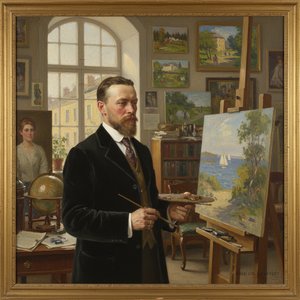
Explore the life & work of Albert Edelfelt, a pioneering Finnish Realist painter who bridged Impressionism & national identity. Discover his masterpieces and lasting influence on art history.

Explore the profound artistic responses to the tumultuous year of 1916. Discover how WWI shaped movements like Futurism & Expressionism, and delve into masterpieces by Kandinsky, Matisse, Nevinson & more. Learn about art history at Most-Famous-Paintings.

현실을 충실히 담아낸 리얼리즘 명작 10선! 쿠르베, 밀레 등 거장의 작품으로 미술사의 흐름을 만나보세요. 와후아트에서 고품질 예술 작품과 인테리어 영감을 얻고, 당신의 공간에 예술적 감성을 더하세요. 지금 바로 와후아트에서 모든 명작을 발견해보세요!

Elevate your artistry with our expert guide to mastering graphite pencil. Learn professional techniques for achieving profound depth, intricate textures, and hyper-realistic details through advanced shading, layering, and precision tool mastery designed for serious art students.


최신 미술 뉴스, 특별 혜택 및 인테리어 아이디어를 가장 먼저 만나보세요.
프로젝트에 대해 알려주시면 저희 미술 전문가들이 맞춤형 아트 제안 3가지를 전달해 드립니다.
당신만을 위한 맞춤형 옵션 3가지를 무료로 추천해 드립니다!


 미리보기
미리보기
 프린트 구매
 공유하기
공유하기 공유하기
공유하기
 상세 정보
상세 정보

 다운로드
다운로드
 유사 작품
유사 작품 X-레이
X-레이 슬라이드 쇼


 더 보기
더 보기









 유리 옵션은 110cm 미만 크기에서만 선택 가능합니다.


