x
 Oil On CanvasWallArtBaroque Painting
 1655
1655 108.0 x 86.0 cm
 프라도 미술관
빠른 제작과 다양한 마감 옵션을 제공하는 박물관 품질의 지클레이 또는 캔버스 프린트. ( 손으로 그린 그림 구매 이미지 구매)





























작품의 원본 비율을 유지하는 미리 설정된 크기 중에서 선택하세요.

특정 프레임이나 공간에 맞춰 직접 치수를 입력하실 수 있습니다. 선택하신 사이즈가 원본 이미지의 비율과 일치하지 않을 경우, 작품을 크롭(자르기)하거나 이미지를 대칭 또는 단색 채우기로 확장하여 제작합니다. 제작 시작 전, 최종 확인을 위해 디지털 목업이 전송됩니다.
화면상의 미리보기는 실제 크롭이나 확장 상태를 반영하지 않으므로, 최종 구도는 오직 목업을 통해서만 정확하게 확인하실 수 있습니다.
맞춤 사이즈 제작도 가능하지만, 원본 비율을 유지하기 위해서는 사전 정의된 목록에서 치수를 선택하시는 것을 권장합니다.

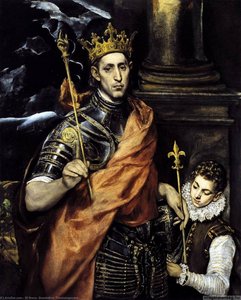
King Louis XIII
복제본 크기
Philippe de Champaigne’s “King Louis XIII” is more than just a royal portrait; it's a meticulously crafted distillation of power, authority, and the weighty responsibilities borne by a young king navigating a turbulent era. Painted in 1655 during the height of Louis XIII’s reign, this oil on canvas masterpiece offers a rare glimpse into the man behind the crown – a figure both formidable and subtly introspective. The painting resides within the esteemed collection of the Museo del Prado in Madrid, a testament to its enduring artistic merit and historical significance.
Champaigne's style is distinctly Baroque, characterized by dramatic lighting, rich textures, and an emphasis on realistic detail. He masterfully employs chiaroscuro – the interplay of light and shadow – to sculpt Louis XIII’s form, lending him a palpable sense of presence and gravitas. The king isn’t depicted in flamboyant splendor; rather, Champaigne favors a restrained elegance, focusing on conveying dignity and control through posture and expression. Note the deliberate positioning of his hands, resting calmly yet purposefully upon the armrest – a subtle display of authority that speaks volumes about his command over the kingdom.
Louis XIII’s reign was defined by constant challenges: the lingering threat of religious conflict between Catholics and Huguenots, the machinations of powerful Italian advisors like Cardinal Richelieu, and the ongoing struggle to consolidate royal authority after his father's assassination. This turbulent backdrop is subtly reflected in the painting’s composition. The somber palette – dominated by deep reds, browns, and blacks – evokes a sense of seriousness and responsibility. The carefully chosen details—the richly embroidered velvet robe, the ornate sword, the jeweled ring—are not merely decorative; they are symbols of his royal status and the burdens he carries.
Historical context is crucial to understanding this portrait. Louis XIII ascended the throne at a precarious age, inheriting a kingdom riddled with political intrigue and religious divisions. His early years were marked by instability and the constant need to balance competing factions. Champaigne’s decision to portray Louis XIII in a relatively austere manner—avoiding excessive ornamentation or theatrical gestures—suggests an awareness of this delicate situation. He sought to convey not just the king's power, but also his wisdom and restraint.
Beyond the obvious symbols of royalty, “King Louis XIII” is rich in subtle visual cues. The king’s gaze, direct and unwavering, conveys a sense of self-awareness and perhaps even melancholy. The inclusion of the sword – a traditional emblem of power and justice – underscores his role as protector of the realm. However, it's the small details—the slight furrow of his brow, the subtle tension in his muscles—that lend the portrait an unexpected intimacy. Champaigne doesn’t present us with a distant, idealized image of royalty; instead, he offers a glimpse into the inner life of a man grappling with immense responsibility.
Interestingly, the painting underwent a later transformation. Champaigne reworked it in 1662 to depict Louis XIII as Saint Louis, reflecting the growing influence of Jansenism within the French court and the king’s personal piety. This adaptation highlights Champaigne's versatility as an artist and his ability to respond to evolving cultural and religious currents. The original portrait remains a powerful testament to Louis XIII’s reign, while the later version offers a poignant reflection on the king’s spiritual life.
“King Louis XIII” by Philippe de Champaigne is a remarkable achievement of Baroque portraiture—a painting that transcends its historical context and continues to resonate with viewers today. Its masterful composition, evocative use of light and shadow, and subtle psychological insights combine to create an image of enduring power and beauty. Whether admired for its artistic merit or its historical significance, this portrait remains a captivating window into the life and times of one of France’s most complex and influential monarchs.


1602 - 1674 , 네덜란드

Explore the profound elegance of Baroque Classicism. Discover how 17th-century masters synthesized dramatic emotion with classical order through the lens of the Counter-Reformation and the works of legends like Carlo Maratta and Andrea Sacchi.

Explore the dramatic power of Baroque art through an expert guide to light, shadow, and emotion. Discover how the Counter-Reformation shaped 17th-century masterpieces and learn about the profound techniques used by the Old Masters to inspire awe.

Explore the dramatic world of Baroque portraiture. Discover how masters used chiaroscuro and light to evoke profound emotion during the Counter-Reformation. A definitive guide for art enthusiasts seeking to understand the power of 17th-century masterpieces.

Explore the profound differences between Baroque drama and Rococo elegance. Our expert guide delves into art history, chiaroscuro, and the evolution of European masterpieces for collectors and enthusiasts seeking deep historical context.

Explore the dramatic evolution from Mannerist distortion to Baroque grandeur. Discover how light, shadow, and emotion redefined art history through a masterclass in technical mastery and religious fervor.


최신 미술 뉴스, 특별 혜택 및 인테리어 아이디어를 가장 먼저 만나보세요.
프로젝트에 대해 알려주시면 저희 미술 전문가들이 맞춤형 아트 제안 3가지를 전달해 드립니다.
당신만을 위한 맞춤형 옵션 3가지를 무료로 추천해 드립니다!


 미리보기
미리보기
 공유하기
공유하기 공유하기
공유하기
 상세 정보
상세 정보

 다운로드
다운로드
 유사 작품
유사 작품 X-레이
X-레이 슬라이드 쇼
 더 보기
더 보기









 유리 옵션은 110cm 미만 크기에서만 선택 가능합니다.