x






























작품의 원본 비율을 유지하는 미리 설정된 크기 중에서 선택하세요.

특정 프레임이나 공간에 맞도록 직접 크기를 입력할 수 있습니다. 선택하신 크기가 원본 이미지의 비율과 일치하지 않는 경우, 작품을 자르거나 추가적인 손으로 그린 요소를 사용하여 그림을 확장합니다. 제작 시작 전 승인을 위해 디지털 목업을 보내드립니다.
화면 미리 보기는 실제 자르기 또는 확장을 반영하지 않습니다. 최종 구성은 목업을 통해서만 정확하게 확인하실 수 있습니다.
맞춤 크기 제작도 가능하지만, 원본 비율을 유지하기 위해 사전 정의된 목록에서 크기를 선택하시는 것을 권장합니다.

Composition, V
복제본 크기
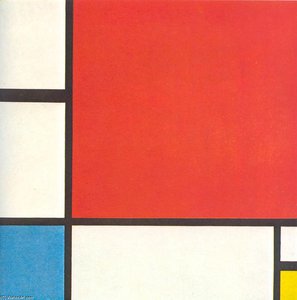
Piet Mondrian's "Composition No. V," painted in 1914, isn’t merely a painting; it’s an architectural blueprint for pure abstraction, a distillation of the artist’s lifelong quest to reveal the underlying structure of reality through geometric forms and elemental colors. This seminal work, housed within the MoMA's collection, offers a profound glimpse into the genesis of Neoplasticism – Mondrian’s revolutionary approach to art that sought to transcend representational imagery and capture the essence of universal harmony.
The canvas itself is dominated by a carefully orchestrated grid of black lines bisecting fields of vibrant color: assertive reds, cool blues, and sunny yellows. These aren't arbitrary choices; they are meticulously selected hues representing fundamental forces – red for energy and passion, blue for tranquility and spirituality, and yellow for intellect and illumination. The composition isn’t chaotic, despite its seemingly simple arrangement. Instead, it possesses a dynamic equilibrium, a visual tension that draws the eye across the surface while simultaneously suggesting an underlying order.
Mondrian's journey to this iconic composition was paved with experimentation. Initially trained as a landscape painter in the Dutch Impressionist tradition – evidenced by works like “The Red Mill” – he gradually moved away from depicting the external world, recognizing its inherent limitations in conveying spiritual truth. His early explorations of Pointillism and Fauvism provided valuable lessons in color theory and expressive brushwork, but ultimately proved insufficient to his artistic goals. He sought a more rigorous, intellectual approach, one that would strip away all superfluous detail and reveal the essential elements of art.
Crucially, Mondrian’s thinking was deeply influenced by Theosophy, a spiritual philosophy emphasizing the interconnectedness of all things. This belief informed his desire to create an art form that reflected this underlying unity – a visual language capable of communicating universal values beyond the limitations of individual experience. The influence of Japanese art, particularly its emphasis on asymmetry and negative space, also played a significant role in shaping his evolving style.
“Composition No. V” is a textbook example of Neoplasticism – Mondrian’s systematic reduction of form to its most basic elements. He abandoned traditional perspective and representation, opting instead for a strictly orthogonal grid composed of horizontal and vertical lines. These lines aren't merely decorative; they define the spatial relationships within the painting, creating a sense of depth and structure. The colors themselves are applied in flat planes, devoid of shading or modeling, further emphasizing their purity and essential nature.
The black lines act as both dividers and connectors, delineating distinct areas while simultaneously linking them together to form a cohesive whole. This deliberate simplification wasn’t an exercise in minimalism; it was a conscious effort to reveal the underlying structure of reality – a world composed of fundamental geometric forms and elemental colors.
“Composition No. V” is more than just a visually striking artwork; it’s an invitation to contemplate the nature of beauty, order, and spirituality. The painting's stark simplicity and harmonious balance evoke a sense of calm and serenity, while its bold colors and assertive lines convey a feeling of energy and dynamism. It’s a testament to Mondrian’s belief that art could be a powerful tool for achieving spiritual enlightenment.
Today, “Composition No. V” continues to resonate with audiences around the world, serving as an enduring symbol of modernism and abstract art. Its influence can be seen in countless works of art, design, and architecture – a testament to Mondrian’s pioneering vision and his profound impact on the course of artistic history. Reproductions of this iconic piece offer a beautiful way to bring a touch of Mondrian's harmonious aesthetic into any space.
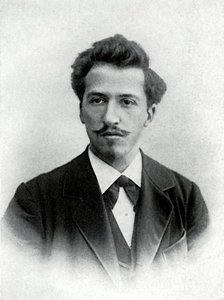
1872 - 1944 , 네덜란드
몬드리안, 말레비치 등 거장들의 기하학적 추상 미술 명작 10선을 만나보세요. 각 작품의 예술사적 의미와 색채, 구성을 탐구하고 Most-Famous-Paintings.com에서 고품질 아트 프린트를 소장하세요. 지금 바로 온라인 컬렉션을 확인하세요!
Journey through Wassily Kandinsky's 25 most iconic abstract paintings. Explore his revolutionary use of color, form & spiritual expressionism. Find museum-quality Kandinsky reproductions and elevate your home decor with Most-Famous-Paintings.com. Discover all masterpieces on Most-Famous-Paintings.com!
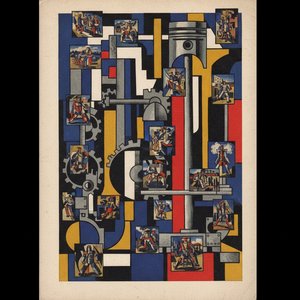
페르낭 레제의 최고 걸작 25선을 만나보세요. 큐비즘, 추상 미술의 거장이 그린 명작들의 탄생 비화와 예술적 의미를 탐구합니다. Most-Famous-Paintings에서 고품질 아트 프린트와 인테리어 액자로 공간에 예술을 더하세요. 지금 바로 컬렉션을 확인하세요!
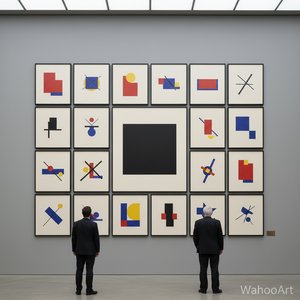
카지미르 말레비치의 최고작 25선을 만나보세요. 추상 미술의 혁신적인 세계, 슈프레마티즘의 정수를 담은 작품들의 이야기와 영감을 Most-Famous-Paintings에서 경험하세요. 고품질 아트 프린트와 인테리어 데코 아이디어를 지금 바로 확인하세요! Most-Famous-Paintings.com

뉴욕 메트로폴리탄 미술관 최고 걸작 25선을 만나보세요. 반 고흐, 모네 등 거장들의 숨겨진 이야기와 예술의 정수를 감상하세요. 홈 데코를 위한 명화 복제 작품은 Most-Famous-Paintings에서! 지금 바로 컬렉션을 탐험하세요.


최신 미술 뉴스, 특별 혜택 및 인테리어 아이디어를 가장 먼저 만나보세요.
프로젝트에 대해 알려주시면 저희 미술 전문가들이 맞춤형 아트 제안 3가지를 전달해 드립니다.
당신만을 위한 맞춤형 옵션 3가지를 무료로 추천해 드립니다!


 프린트 구매하기
 공유하기
공유하기 공유하기
공유하기
 상세 정보
상세 정보

 다운로드
다운로드
 유사 작품
유사 작품 X-레이
X-레이 슬라이드 쇼
 더 보기
더 보기









 유리 옵션은 110cm 미만 크기에서만 선택 가능합니다.