


x
 AcrylicWallArtHigh Renaissance
 1502
1502 31.0 x 46.0 cm
 Museo Poldi Pezzoli




























작품의 원본 비율을 유지하는 미리 설정된 크기 중에서 선택하세요.

특정 프레임이나 공간에 맞도록 직접 크기를 입력할 수 있습니다. 선택하신 크기가 원본 이미지의 비율과 일치하지 않는 경우, 작품을 자르거나 추가적인 손으로 그린 요소를 사용하여 그림을 확장합니다. 제작 시작 전 승인을 위해 디지털 목업을 보내드립니다.
화면 미리 보기는 실제 자르기 또는 확장을 반영하지 않습니다. 최종 구성은 목업을 통해서만 정확하게 확인하실 수 있습니다.
맞춤 크기 제작도 가능하지만, 원본 비율을 유지하기 위해 사전 정의된 목록에서 크기를 선택하시는 것을 권장합니다.

Processioned Cross with Franciscan Saints (recto)
복제본 크기

Born in Brooklyn, New York City, in December 1960 to a Haitian father, Gerard Basquiat, and a Puerto Rican mother, Matilde Fernández, Jean-Michel Basquiat’s life was one of profound contrasts – privilege alongside struggle, artistic promise shadowed by personal demons. He navigated the vibrant, often turbulent, streets of New York during a period of immense social and political change, an environment that would indelibly shape his art. His early years were marked by a complex family dynamic; after his parents separated when he was just three years old, he spent much of his childhood with his paternal grandmother in Washington Heights, a predominantly Black neighborhood known for its tight-knit community and rich cultural heritage. This experience instilled within him a deep awareness of racial inequality and the complexities of identity – themes that would become recurring motifs in his work.
Basquiat’s artistic journey began with graffiti art in the late 1970s, a movement he quickly embraced as a means of expression and rebellion. Alongside Al Diaz, he formed the duo SAMO (Seeking Artistic Maturity Organization), tagging subway cars throughout Manhattan with cryptic phrases and symbols. These early works were not merely vandalism; they were a deliberate challenge to established artistic norms and a commentary on urban life. The collaboration with Diaz proved short-lived, however, as Basquiat soon asserted his own voice and began to develop his distinctive style – a potent blend of raw emotion, social critique, and neo-expressionist techniques.
By the early 1980s, Jean-Michel Basquiat had emerged as a singular force in the New York art scene. His work quickly gained recognition for its bold imagery, fragmented narratives, and incorporation of text – often borrowed from encyclopedias, historical documents, and personal reflections. He drew heavily on his Haitian heritage, exploring themes of race, identity, power, and social injustice with unflinching honesty. His canvases were layered with symbols—skulls, crowns, musical instruments, and anatomical studies—creating a visual language that was both unsettling and deeply compelling.
Basquiat’s rise coincided with the burgeoning neo-expressionist movement, characterized by its rejection of minimalist abstraction and return to figurative painting. Artists like Frank Auerbach, Anselm Kiefer, and Rudolf Baranik were exploring similar themes of personal experience and social commentary. However, Basquiat's work possessed a unique urgency and immediacy that set him apart. His art wasn’t simply about depicting reality; it was about interrogating it, exposing its contradictions, and challenging the viewer to confront uncomfortable truths.
Basquiat’s artistic vision was profoundly shaped by his diverse influences – from the street art of New York to the works of artists like Picasso, Warhol, and Bas-Ksi. He was particularly fascinated by the writings of Haitian poet Jean Dubois, whose work explored themes of colonialism, identity, and resistance. His interest in history, particularly the legacy of slavery and racial oppression, fueled his desire to create art that spoke to the complexities of the African American experience.
Furthermore, Basquiat’s fascination with music—particularly jazz and blues—permeated his work. He frequently incorporated musical instruments into his paintings, often depicting them as symbols of struggle, resilience, and cultural identity. His use of text was similarly influenced by the rhythms and patterns of spoken word poetry and hip-hop lyrics – a reflection of the vibrant urban culture that surrounded him.
Tragically, Jean-Michel Basquiat’s life was cut short at the age of 27 in August 1988. He died from a heroin overdose in his New York apartment, a devastating loss for the art world and a poignant reminder of the personal struggles that often accompany artistic genius. Despite his untimely death, Basquiat's legacy endures. His work continues to be exhibited around the world, celebrated for its raw emotion, social commentary, and innovative approach to painting.
His paintings command staggering prices at auction, a testament to their enduring value and cultural significance. Basquiat’s influence can be seen in the work of countless contemporary artists, who continue to draw inspiration from his fearless exploration of identity, power, and social justice. He remains a powerful symbol of artistic rebellion, a voice for the marginalized, and an unforgettable figure in the history of art.

1978 - , Switzerland
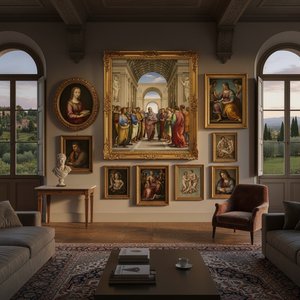
라파엘의 걸작 25선을 만나보세요. 르네상스 시대 예술가의 섬세한 기법과 영혼을 담은 명화들을 감상하고, 아테네 학당, 천사의 학교 등 대표 작품의 숨겨진 이야기를 Most-Famous-Paintings에서 확인하세요. 고급 아트 프린트로 공간에 우아함을 더해보세요! 지금 바로 컬렉션을 탐험하세요.

Explore the life & art of Henri Edmond Cross, a pivotal Neo-Impressionist painter. Discover his innovative divisionist technique, political affiliations, and lasting influence on modern art movements like Fauvism. Learn about key works & legacy.

Explore the life & art of Pietro Perugino, a pivotal Renaissance master and Raphael’s influential teacher. Discover his serene compositions, Sistine Chapel frescoes, and lasting legacy with Most-Famous-Paintings.

Embark on a profound journey through art history with our exploration of Saint Francis's most iconic works. Discover Giotto’s revolutionary frescoes and the spiritual depth of Proto-Renaissance masterpieces through an expert lens for the true classic art enthusiast.

Elevate your home with the sublime harmony of Raphael’s masterpieces. Explore iconic High Renaissance works, from St. George to The School of Athens, and discover how premium, hand-painted reproductions can transform your space into a sanctuary of classical elegance and timeless beauty.


최신 미술 뉴스, 특별 혜택 및 인테리어 아이디어를 가장 먼저 만나보세요.
프로젝트에 대해 알려주시면 저희 미술 전문가들이 맞춤형 아트 제안 3가지를 전달해 드립니다.
당신만을 위한 맞춤형 옵션 3가지를 무료로 추천해 드립니다!


 미리보기
미리보기
 프린트 구매
 공유하기
공유하기 공유하기
공유하기
 상세 정보
상세 정보

 다운로드
다운로드
 유사 작품
유사 작품 X-레이
X-레이 슬라이드 쇼
 더 보기
더 보기









 유리 옵션은 110cm 미만 크기에서만 선택 가능합니다.


