x
빠른 제작과 다양한 마감 옵션을 제공하는 박물관 품질의 지클레이 또는 캔버스 프린트. ( 손으로 그린 그림 구매 이미지 구매)





























작품의 원본 비율을 유지하는 미리 설정된 크기 중에서 선택하세요.

특정 프레임이나 공간에 맞춰 직접 치수를 입력하실 수 있습니다. 선택하신 사이즈가 원본 이미지의 비율과 일치하지 않을 경우, 작품을 크롭(자르기)하거나 이미지를 대칭 또는 단색 채우기로 확장하여 제작합니다. 제작 시작 전, 최종 확인을 위해 디지털 목업이 전송됩니다.
화면상의 미리보기는 실제 크롭이나 확장 상태를 반영하지 않으므로, 최종 구도는 오직 목업을 통해서만 정확하게 확인하실 수 있습니다.
맞춤 사이즈 제작도 가능하지만, 원본 비율을 유지하기 위해서는 사전 정의된 목록에서 치수를 선택하시는 것을 권장합니다.

La pensée parfaite
복제본 크기
René Magritte's La Pensée Parfaite (1948) isn’t merely a painting; it’s an invitation to question the very foundations of perception. This deceptively simple image – a solitary, leafless tree silhouetted against a sky dominated by four distinct seasons – possesses a profound and unsettling power. It resides within the heart of Surrealism, a movement dedicated to unlocking the hidden realms of the unconscious mind, yet Magritte’s approach transcends mere dream imagery. Instead, he employs a meticulous logic, a calculated disruption of familiar visual cues that forces the viewer to confront their own assumptions about how they interpret the world.
The painting emerged during a period in Magritte's career marked by a shift towards a more restrained and evocative palette. Following his time in Paris, he returned to Brussels and established a studio with his brother, Paul. This return coincided with a renewed interest in Impressionism, particularly the soft, atmospheric qualities of Renoir’s work. Magritte consciously adopted this approach – the muted colors, the delicate light – to amplify the painting's dreamlike quality, creating an effect that is both alluring and subtly disorienting. The tree itself, rendered with a remarkable lack of detail, becomes a focal point, its stark silhouette acting as a visual anchor within this shifting landscape.
The most immediate element to grasp in *La Pensée Parfaite* is the juxtaposition of seasons. Each season – represented by distinct colors and textures – occupies a portion of the sky, creating an impossible, simultaneous tableau. This deliberate contradiction isn’t simply decorative; it's a core component of Magritte’s strategy for challenging our understanding of reality. He’s not depicting a literal scene but rather constructing a visual metaphor for the complexities of thought itself. The tree, often interpreted as representing the mind or intellect, stands at the center of this symbolic arrangement, seemingly contemplating – or perhaps struggling to reconcile – these disparate elements.
The leafless nature of the tree is particularly significant. Leaves are intrinsically linked to growth, change, and the passage of time. Their absence suggests a frozen state, a moment suspended in contemplation. It’s as if the mind has become trapped within its own processes, unable to fully embrace or understand the flow of experience. The white cloth draped over the tree's branches further obscures any clear definition, adding another layer of ambiguity and reinforcing the painting’s central theme: the difficulty of grasping complete knowledge or truth.
Despite its complex symbolism, *La Pensée Parfaite* is executed with remarkable precision. Magritte's technique relies heavily on meticulous detail and a careful manipulation of perspective. He employs a limited color palette – primarily blues, greens, and browns – to create a sense of harmony and restraint. The brushstrokes are subtle and controlled, contributing to the painting’s overall feeling of stillness and contemplation. Notably, Magritte often used a technique called “trompe-l'œil,” or trickery of the eye, to further blur the boundaries between reality and representation – a strategy he employed throughout his career.
The painting’s impact extends beyond its visual appeal; it invites introspection. It prompts us to consider how our perceptions are shaped by our experiences, memories, and unconscious biases. *La Pensée Parfaite* is not simply a beautiful image but a profound meditation on the nature of reality, perception, and the elusive quality of thought itself – a timeless masterpiece that continues to resonate with viewers today.
Most-Famous-Paintings offers meticulously crafted hand-painted reproductions of René Magritte’s *La Pensée Parfaite*, allowing you to bring this iconic Surrealist work into your home or office. Our artists replicate the painting's subtle nuances, color depth, and textural details with exceptional accuracy, ensuring a faithful representation of Magritte’s genius. Choose from a range of sizes and canvas materials to perfectly complement your décor. A reproduction of *La Pensée Parfaite* is more than just art; it’s an invitation to engage in a continuous dialogue with one of the 20th century's most influential artists.
René Magritte는 벨기에 레센네스에서 1898년 11월 21일에 태어났습니다. 그의 어린 시절은 충격적인 사건으로 시작되었습니다. 바로 어머니의 자살이었는데, 그는 열세 살 때였습니다. 그녀의 시체가 세브레 강에 발견되었고 그녀의 드레스가 얼굴을 가리는 모습이 눈앞에 펼쳐졌습니다. 이 초기의 트라우마는 그에게 미스터리함과 상실감 그리고 우리가 보지 못하는 힘에 대한 매혹감을 심어주었습니다. 그의 어린 시절에 대한 자세한 정보는 아직 명확하게 밝혀지지 않았지만 그는 삶 전체를 질문하는 방식으로 끊임없이 탐구하며 예술적 비전을 형성했습니다. 그는 열 살 때 그림 레슨을 시작했는데 이는 그에게 시각적 표현에 대한 타고난 기질을 드러냈습니다. 하지만 처음에는 인상주의로 탐구했지만 이후 그의 예술 경로는 서양 미술의 주요 인물 중 한 명으로 나아가기 위해 독특한 길을 택했습니다.
마그리트는 예술적 여정이 즉각적이고 간단하지 않았습니다. 그는 브뤼셀 왕립 미술 아카데미에서 공부했지만 전통적인 방법은 그에게 답답함을 안겨주었습니다. 그의 초기 작품은 미래주의와 입체주의를 실험했는데 이 두 현대 미술 운동의 형식을 흡수했지만 형식적인 우려에 대한 관심이 부족했습니다. 그는 1922년 지오르지오 드 치리코의 그림 *사랑의 노래*를 만나면서 새로운 시각을 발견했습니다. 드 치리코의 꿈 같은 풍경과 혼란스러운 대립은 마그리트에게 익숙한 것이 이상하게 변하고 평범함이 깊은 미스터리로 가득 차는 세계로 이끌었습니다. 이 만남은 그가 초현실주의에 대한 약속을 깨고 그의 동료 예술가들보다 더 자유로운 방식으로 탐구하는 것을 촉발했습니다. 그는 초현실주의의 심리적 또는 자동적인 접근 방식과 같은 방법으로 무의식 탐구를 추구하지 않았습니다.
1926년 마그리트는 초현실주의 원칙을 완전히 받아들였고 *로스트 조커*를 제작했는데 이 작품은 광범위하게 그의 첫 번째 진정한 초현실주의 작품으로 여겨집니다. 그러나 그의 초현실주의는 독특했습니다. 그는 미래주의와 같은 다른 예술가들의 방식과 달리 무의식 탐구에 대한 자유 연관이나 꿈 이미지 사용에 관심이 없었습니다. 대신 마그리트는 일반적인 물건을 예상치 못한 맥락에서 제시하여 관객에게 세계에 대한 가정에 대해 질문하도록 강요하는 방식으로 현실에 도전했습니다. 그는 초현실주의의 핵심은 이처럼 관객에게 새로운 시각을 제공하고 예술이 생각과 경외심을 불러일으키는 능력을 인정하는 것입니다.
마그리트는 초현실주의 원칙에 대한 약속을 깨고 *사랑의 노래*를 제작했는데 이 작품은 광범위하게 그의 첫 번째 진정한 초현실주의 작품으로 여겨집니다. 그는 미래주의와 같은 다른 예술가들의 방식과 달리 무의식 탐구에 대한 자유 연관이나 꿈 이미지 사용에 관심이 없었습니다. 대신 마그리트는 일반적인 물건을 예상치 못한 맥락에서 제시하여 관객에게 세계에 대한 가정에 대해 질문하도록 강요하는 방식으로 현실에 도전했습니다. 그는 초현실주의의 핵심은 이처럼 관객에게 새로운 시각을 제공하고 예술이 생각과 경외심을 불러일으키는 능력을 인정하는 것입니다.
마그리트는 초기 작품에서 미래주의와 입체주의를 실험했는데 이 두 현대 미술 운동의 형식을 흡수했지만 형식적인 우려에 대한 관심이 부족했습니다. 그는 초현실주의의 심리적 또는 자동적인 접근 방식과 같은 방법으로 무의식 탐구에 대한 자유 연관이나 꿈 이미지 사용에 관심이 없었습니다. 대신 마그리트는 일반적인 물건을 예상치 못한 맥락에서 제시하여 관객에게 세계에 대한 가정에 대해 질문하도록 강요하는 방식으로 현실에 도전했습니다. 그는 초현실주의의 핵심은 이처럼 관객에게 새로운 시각을 제공하고 예술이 생각과 경외심을 불러일으키는 능력을 인정하는 것입니다.
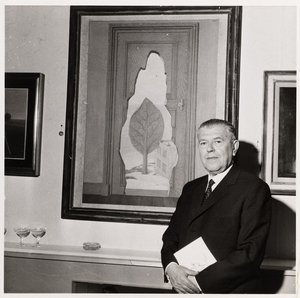
1898 - 1967 , 벨기에

Explore the profound mystery of René Magritte’s 'The Treachery of Images.' Dive into an expert analysis of his Surrealist philosophy, the paradox of representation, and how he challenged reality through the interplay of language and visual perception.

Explore the profound depths of Surrealism. From Dalí’s dreamscapes to Magritte’s enigmas, master the history of the subconscious mind through our expert art guide and discover museum-quality oil reproductions of the world's most iconic surrealist masterpieces.


최신 미술 뉴스, 특별 혜택 및 인테리어 아이디어를 가장 먼저 만나보세요.
프로젝트에 대해 알려주시면 저희 미술 전문가들이 맞춤형 아트 제안 3가지를 전달해 드립니다.
당신만을 위한 맞춤형 옵션 3가지를 무료로 추천해 드립니다!


 미리보기
미리보기
 공유하기
공유하기 공유하기
공유하기
 상세 정보
상세 정보

 다운로드
다운로드
 유사 작품
유사 작품 X-레이
X-레이 슬라이드 쇼
 더 보기
더 보기









 유리 옵션은 110cm 미만 크기에서만 선택 가능합니다.