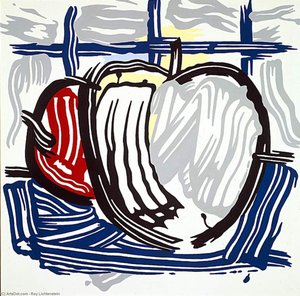
A Bold Statement of Domesticity: Roy Lichtenstein’s 1991 Interior
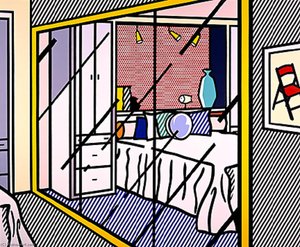
This monumental work, measuring an impressive 320 x 406 cm, exemplifies Roy Lichtenstein's enduring fascination with the interplay between fine art and popular culture. Created in 1991, *Interior with mirrored wall* isn’t merely a depiction of a living room; it’s a vibrant commentary on consumerism, representation, and the very act of looking.
Pop Art Reimagined: Style & Technique
Lichtenstein, a leading figure in the Pop Art movement, masterfully translates the domestic interior into his signature graphic style. The artwork immediately recalls Andy Warhol’s screen printing techniques – a deliberate homage and point of departure.
Bold black outlines define each object—sofas, tables, lamps, framed pictures—creating strong contours that are characteristic of Lichtenstein's work. These aren’t delicate lines; they assert the image as *constructed*, not observed. The use of flat, intensely saturated colors and simulated Ben-Day dots (achieved through digital rendering here, mimicking silkscreen) further emphasizes this constructed quality. Geometric shapes dominate – rectangles, squares, and circles – simplifying forms to their essential elements. This deliberate flattening of perspective and rejection of traditional modeling contribute to the artwork’s iconic, almost cartoonish aesthetic.
The Domestic Sphere as Subject
While seemingly straightforward in its subject matter—a typical living room scene—*Interior with mirrored wall* elevates the mundane to the level of high art. The inclusion of framed pictures *within* the picture adds a layer of self-reflexivity, questioning the nature of representation itself. What are we looking at? A real interior, or a stylized depiction of one?
The mirrored wall, though implied rather than explicitly rendered, is crucial; it suggests infinite regression and challenges our perception of space and reality. The furniture isn’t presented as comfortable or inviting but as objects to be *seen*, analyzed, and consumed – mirroring the broader themes of Pop Art's engagement with consumer culture.
Historical Context & Lichtenstein’s Legacy
Born in 1923, Roy Lichtenstein rose to prominence in the 1960s alongside Warhol, Jasper Johns, and Claes Oldenburg. His early work experimented with Abstract Expressionism before he fully embraced Pop Art's aesthetic. He famously appropriated imagery from comic books, transforming them into large-scale paintings that challenged conventional notions of artistic subject matter. While *Interior with mirrored wall* doesn’t directly borrow from comics, it retains the same spirit of appropriation and recontextualization. By 1991, Lichtenstein had established himself as a major force in contemporary art, and this work demonstrates his continued exploration of visual language and representation. His influence on subsequent generations of artists remains profound.
Emotional Impact & Interpretation
The emotional tone of *Interior with mirrored wall* is deliberately detached and playful. It’s not an attempt to evoke warmth or nostalgia, but rather a cool, analytical observation of modern life. The artwork's vibrancy and graphic energy are undeniably appealing, yet there’s also a sense of irony and distance.
It invites us to question our relationship with the objects that surround us, and the images we consume daily. This piece is more than just decoration; it’s a sophisticated visual statement about art, culture, and perception – perfect for collectors seeking impactful pieces or interior designers aiming to create spaces that spark conversation.
Key Features
- Size: 320 x 406 cm - A commanding presence in any space.
- Year: 1991 – Represents a mature phase in Lichtenstein’s career.
- Style: Pop Art – Bold, graphic, and instantly recognizable.
- Technique: Digital rendering mimicking silkscreen printing - Captures the essence of Lichtenstein's signature style.