Sandro Botticelli’s Crucifixion: A Meditation on Faith and Mortality
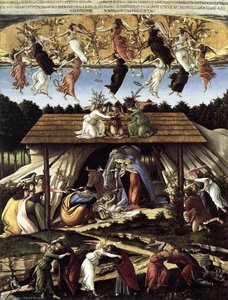
Botticelli's ‘Crucifixion,’ completed around 1497, stands as one of the most poignant expressions of Renaissance spirituality—a painting that transcends mere depiction to embody profound contemplation on faith, suffering, and the human condition. Measuring 73 x 50 cm and executed in tempera on canvas, it’s a deceptively simple composition brimming with symbolic richness, reflecting Botticelli's masterful grasp of artistic conventions while simultaneously conveying an emotional depth rarely achieved during his time.
Composition and Symbolism: A Dialogue Between Heaven and Earth
The central figure is Jesus Christ himself, suspended from the cross—a motif prevalent in Renaissance art but rendered here with exceptional sensitivity. His outstretched arms convey immense pain and vulnerability, mirroring the universal experience of human suffering. Surrounding him are angels, positioned strategically to illuminate the scene with ethereal light and offering solace – one angel stands close to Jesus, radiating compassion, while another observes from a distance, embodying contemplation. Two additional figures inhabit the background, adding depth to the narrative and hinting at the broader cosmic drama unfolding above. The careful arrangement of these elements underscores Botticelli’s intention: not merely to portray Christ's crucifixion but to initiate a dialogue between divine grace and human mortality.
Artistic Technique and Context: Embracing Classical Ideals Amidst Religious fervor
Botticelli’s technique is characterized by delicate linework and subtle color gradations—a stylistic hallmark of the Early Renaissance that distinguishes itself from the bolder styles emerging elsewhere in Italy. He skillfully employs tempera, a medium known for its luminosity and permanence, to achieve an astonishing level of detail within his restrained palette. The muted hues of red, blue, green, yellow, and white coalesce into harmonious shades that heighten the emotional impact of the artwork. This stylistic choice aligns perfectly with the broader artistic landscape of the period—Botticelli’s work echoes influences from Fra Angelico and Paolo Uccello, yet maintains a uniquely personal vision rooted in classical ideals. Notably, it shares thematic similarities with Botticelli's ‘Holy Trinity,’ demonstrating his consistent engagement with religious subjects and his ability to convey spiritual truths through visual artistry.
A Legacy of Representation: Botticelli’s Influence on Art History
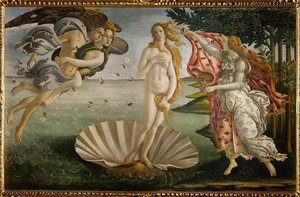
The depiction of the nude human body—a tradition stretching back to antiquity—finds a powerful expression in Botticelli’s oeuvre. From prehistoric sculptures to Renaissance masterpieces, artists throughout history have wrestled with how best to represent the human form, exploring its beauty and vulnerability as symbols of both earthly existence and divine grace. The concept of nudity evolved over time, reflecting shifting social values and philosophical perspectives. In Ancient Greece, idealized nude figures embodied perfection and harmony—a standard Botticelli consciously revived in his mythological paintings like ‘Primavera’ and ‘The Birth of Venus.’ During the Renaissance, artists sought to recapture classical beauty while simultaneously conveying Christian moral teachings; Botticelli exemplifies this synthesis perfectly. His enduring influence can be seen in subsequent artistic movements, where explorations of human anatomy and emotion continue to resonate with audiences today.
Further Exploration: Connecting to Broader Artistic Traditions
To appreciate Botticelli’s contribution fully, consider examining works by contemporaries like Leonardo da Vinci—a figure whose stylistic approach diverged significantly from Botticelli's refined aesthetic. Furthermore, delve into the history of the nude in art—tracing its evolution from ancient Greece to modern times—to understand how Botticelli’s artistic choices positioned him within a larger cultural conversation about beauty and spirituality. Finally, explore resources like
'Holy Trinity (Pala della Convertite)' and
https://en.wikipedia.org/wiki/History_of_the_nude_in_art to enrich your understanding of Botticelli’s artistic heritage and its enduring relevance. For more information on Sandro Botticelli and his works, visit
https://Most-Famous-Paintings.com.