


x
 1877
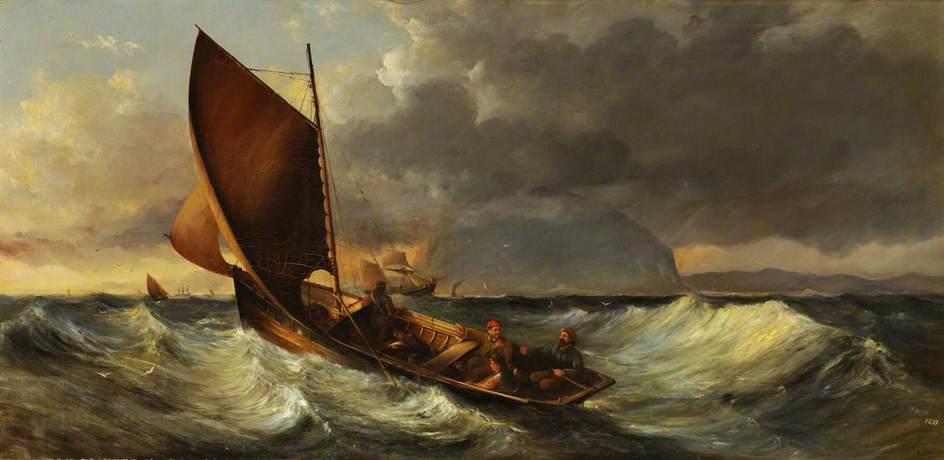
1877 60.0 x 121.0 cm
빠른 제작과 다양한 마감 옵션을 제공하는 박물관 품질의 지클레이 또는 캔버스 프린트. ( 손으로 그린 그림 구매 이미지 구매)
작품의 원본 비율을 유지하는 미리 설정된 크기 중에서 선택하세요.

특정 프레임이나 공간에 맞춰 직접 치수를 입력하실 수 있습니다. 선택하신 사이즈가 원본 이미지의 비율과 일치하지 않을 경우, 작품을 크롭(자르기)하거나 이미지를 대칭 또는 단색 채우기로 확장하여 제작합니다. 제작 시작 전, 최종 확인을 위해 디지털 목업이 전송됩니다.
화면상의 미리보기는 실제 크롭이나 확장 상태를 반영하지 않으므로, 최종 구도는 오직 목업을 통해서만 정확하게 확인하실 수 있습니다.
맞춤 사이즈 제작도 가능하지만, 원본 비율을 유지하기 위해서는 사전 정의된 목록에서 치수를 선택하시는 것을 권장합니다.

Squall off Ailsa Craig
복제본 크기

William Muir (1828 – 1910) remains a figure shrouded in artistic mystery, largely due to his self-taught status and the relative scarcity of biographical information. Yet, his distinctive landscapes—particularly those depicting the rugged coastline of Ayrshire and Tasmania—have secured him a place among Scotland’s most accomplished Romantic artists. His work possesses an unparalleled sensitivity to light and atmosphere, capturing the essence of coastal environments with remarkable precision and emotional depth. Born in Girvan, Ayrshire, into a family of farmers, Muir did not follow the traditional path of formal academy training. Instead, he honed his skills through intense observation and experimentation, primarily by studying the works of masters like Turner and Constable, whose techniques profoundly influenced his artistic vision.
Muir’s formative years were spent immersed in the Ayrshire landscape, a period that would define the soul of his early oeuvre. He meticulously documented the dramatic cliffs, windswept beaches, and turbulent seas surrounding Girvan and Troon. These paintings are far more than mere representations of scenery; they are imbued with a palpable sense of place—a feeling for the raw beauty and elemental power of the coast. His mastery is particularly evident in works such as “The Firth of Clyde” (1863), which showcases a Turnerian atmospheric perspective, and “Troon Harbour” (1870), which captures the bustling activity of a seaside town with a command of color and brushwork that prioritizes expressive gesture over photographic accuracy.
The trajectory of Muir’s career took an unexpected and transformative turn in 1875 when he emigrated to Tasmania. This relocation introduced him to a landscape that, while possessing a similar dramatic character to his beloved Ayrshire, offered much warmer hues and a softer, more luminous light. Inspired by this new environment, Muir began to embrace Impressionistic principles, gradually abandoning the heavier, Turnerian gloom of his youth in favor of brighter palettes and a more delicate touch. This evolution is beautifully captured in his later works, where the interplay of light on water and land becomes the central protagonist of the canvas.
His technical development can be observed through several key characteristics that define his most celebrated pieces:
Throughout his life, Muir’s work served as a bridge between the dramatic Romanticism of the early 19th century and the burgeoning Impressionist movements. His ability to translate the ruggedness of the Scottish coast and the vibrant light of Tasmania into oil on canvas has left an indelible mark on maritime and landscape art. Even today, his paintings—such as “Bend on the Water of Girvan” and “The Silver Strand”—continue to resonate with viewers, offering a window into a vanished era of coastal life and a profound meditation on the eternal beauty of the natural world.

1828 - 1910


최신 미술 뉴스, 특별 혜택 및 인테리어 아이디어를 가장 먼저 만나보세요.
프로젝트에 대해 알려주시면 저희 미술 전문가들이 맞춤형 아트 제안 3가지를 전달해 드립니다.
당신만을 위한 맞춤형 옵션 3가지를 무료로 추천해 드립니다!


 미리보기
미리보기
 공유하기
공유하기 공유하기
공유하기
 상세 정보
상세 정보

 다운로드
다운로드
 유사 작품
유사 작품 X-레이
X-레이 슬라이드 쇼
 더 보기
더 보기






































 유리 옵션은 110cm 미만 크기에서만 선택 가능합니다.


