


x

Rankiniu būdu tapytas aliejus ant droblio jūsų pageidaujamame dydį ir rėmuose – mūsų menininkų darbas pagal užsakymą. ( Pirkti spaudinį Pirkti vaizdą)





























Pasirinkite iš mūsų nustatytų dydžių, atitinkančių originalaus meno kūrinio proporcijas.

Galite įvesti savo matmenis, kad jie atitiktų konkretų rėmą ar erdvę. Jei pasirinktas dydis neatitinka originalaus paveikslėlio proporcijų, mes arba apkropsime meno kūrinį, arba papildysime tapybą rankomis dažytい elementais. Prieš pradėdami gamybą, jūsų patvirtinimui atsiųsime skaitmeninį maketą.
Atkreipkite dėmesį, kad ekrane rodomas vaizdas neatspindi tikrojo apkarpymo ar papildymo. Tik maketas tiksliai parodys galutinę kompoziciją.
Nors galima rinktis ir individualius dydžius, rekomenduojame pasirinkti matmenis iš nustatytos sąrašo, kad būtų išlaikytos originalios proporcijos.
Pristatymas visame pasaulyje () per 3–4 savaites, o ne įprastai – per 5 savaites. (21 rugpjūtis). Kokybė lieka nepakeičiama.


Girl in Black
Reprodukcijos matmenys
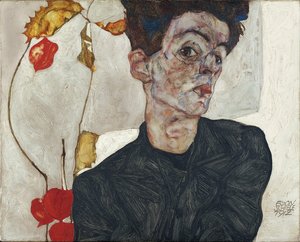
Egon Schiele's "Girl in Black," painted in 1911, isn’t merely a portrait; it’s a distilled essence of the artist’s turbulent inner world. Born in Vienna amidst a landscape of burgeoning modernity and profound personal sorrow – his father succumbing to syphilis at fourteen, followed by the loss of his sister – Schiele's life was inextricably linked with themes of mortality, vulnerability, and the unsettling beauty of the human form. This painting emerges from that crucible, reflecting a young man grappling with grief, isolation, and an increasingly acute awareness of his own precarious existence. The year 1911 marked a pivotal point in Schiele’s career, as he navigated the complexities of his burgeoning artistic ambitions alongside the emotional weight of his family history – a backdrop that profoundly shaped the intensity and psychological depth of his work.
“Girl in Black” is a masterclass in Schiele's distinctive style, characterized by intensely expressive lines, fragmented forms, and a masterful manipulation of watercolor and pencil. The painting’s foundation lies in the delicate washes of watercolor, applied with a loose, almost frantic energy that conveys both vulnerability and suppressed emotion. These fluid strokes create an ethereal quality, softening the sharp edges of the figure while simultaneously emphasizing her isolation. The addition of pencil provides a grounding element, delineating key features with precise lines that contrast sharply with the fluidity of the watercolor. Notice how Schiele uses overlapping lines to suggest volume and form, creating a sense of depth and movement within the relatively confined space. The use of shadow is particularly striking – not as a simple rendering of light and dark, but as an active element, enveloping the figure in a veil of mystery and hinting at hidden depths.
Schiele’s technique was deliberately raw and immediate, eschewing traditional academic conventions in favor of a more visceral and emotionally charged approach to representation.The subject herself—a young woman with strikingly dark hair and an enigmatic expression—appears lost in contemplation. Her posture is subtly defiant, yet her gaze seems distant and unfocused, suggesting a profound inner turmoil. The placement of her arms around the cat nestled beside her adds another layer of complexity to the image. Cats were frequently depicted by Schiele as symbols of independence, solitude, and even death – creatures often associated with the darker aspects of human experience. The dark clothing further contributes to the painting’s mood, creating a sense of concealment and hinting at a hidden vulnerability. The overall composition—the figure isolated against an undefined background—reinforces this feeling of loneliness and introspection. It's important to note that Schiele often used his subjects as vehicles for exploring his own psychological anxieties, imbuing them with symbolic weight.
“Girl in Black” remains a powerfully evocative work, capturing the essence of Schiele’s unique artistic vision. It's a testament to his ability to translate profound emotional experiences onto canvas, creating images that resonate with viewers on a deeply personal level. Reproductions of this painting offer a remarkable opportunity to experience the intensity and psychological depth of Schiele’s art in your own space. Most-Famous-Paintings offers meticulously crafted hand-painted reproductions that faithfully capture the nuances of color, texture, and line—allowing you to bring this haunting portrait into your home or office. Consider how the painting's somber palette and fragmented composition can contribute a touch of intellectual intensity to any interior design scheme. Beyond its aesthetic qualities, “Girl in Black” serves as a poignant reminder of Schiele’s own struggles with mortality and the enduring power of art to confront difficult truths.

Austrijos pozicija dviejų pasaulinio karo horizonte buvo labai abejojanti: vienu metu ji buvo šiek tiek iš Šiaurės į rytus, lengvai įsitikinusi veiksmų vyrai. Mažėjęs šalis po 1918 m., beveik visiškai neišplitusi tarptautiniu pasauliu buvo lengvai įvykdinta Hitlerio Reichui 1938 m.; meno srityje tai reiškė kad modernizmo istorija buvo išvykstanti nuo Šiaurės iki pietų, su pagrindiniu dėmesiu į formą. Vokelių šiek tiek pripažino ekspresionizmą kaip svarbų meno srovę; jis buvo vienas iš žymiausius austrių artistas XX amžiaus pradžioje – kartu su Gustavu Klimtu ir Oskar Kokoschka išvykę į Vieną buvo laikomas vienu iš Žyduvo šimtmečio svarbiausių vizualinių menininkų.
Egonas Šylė gimė 1890 m. vasario 3 d. Tulne, Austrijoje. Jo tėvas Adolfas Šylė buvo Tulno geležinkelio stoties direktorius ir gimė 1851 m. Vienoje Adolfo Šyly tevai turėjo tris jaunesnes seseris: Elvirą, Melaniją ir Gertrūdą. Elvira mirė vaikyste dėl gimtinių sifiliso. Jo tėvas buvo užsikrėtęs sifiliu įsimėlynėje savo jaunystės metais po vienos jo naujosios žmonos išėjimo iš kambario.
Šylė mokytojo Christian Griepenkerl įtaką išgyveno Vienoje 1907 m. ir G. Klimtas tapo jo svarbiu rėmėju. Šylė paliko akademiją 1906 m., nes jos mokymo metodai buvo labai konservatyvus, ir įkūrė Naują austrių dailės grupę 1909 m. Grupėje vyravo ekspresionistinė estetika, kuri iššūkiant šiuolaikinėms kultūros normas.
Šylė buvo vienas iš žymiausius austrių artistas XX amžiaus pradžioje – kartu su Gustavu Klimtu ir Oskar Kokoschka išvykę į Vieną buvo laikomas vienu iš Žyduvo šimtmečio svarbiausių vizualinių menininkų. Šylė buvo ekspresionizmo meno srovės atstovas.
Šylė buvo žinomas dėl savo iššūkiantį įžiūrą į pasaulio problemas ir šiuolaikinę estetika, kuri iššūkiant šiuolaikinėms kultūros normas. Šylė buvo ekspresionizmo meno srovės atstovas.
1890 - 1918 , Austrija

Explore the profound history of Expressionism. From Edvard Munch to Jackson Pollock, discover how artists used distortion and color to convey raw emotion. A definitive guide for art lovers seeking deep historical context and mastery in fine art reproductions.

Explore the profound emotional depth of Expressionist portraiture. From Edvard Munch to Francis Bacon, discover how masters used distortion and color to reveal inner truths. Learn about this pivotal movement and find museum-quality oil reproductions for your collection.


Sekite naujausias meno naujienas, išskirtinius pasiūlymus ir dekoravimo idėjas.
Pasakokite mums apie savo projektą, o mūsų meno ekspertai parengs jums 3 asmeniškus meno pasiūlymus.
Leiskite mums parinkti 3 variantus būtent jums – nemokamai!


 Peržiūrėti realybėje
 Pasidalinti
 Dalintis
 Išsamiau

 Atsisiųsti
 Panašūs eksponatai
 Rentgeno nuotrauka
 Automatinė diorama

 Skaityti daugiau







 Stiklo variantas prieinamas tik pasirinkus dydį iki 110 cm


