


x

Rankiniu būdu tapytas aliejus ant droblio jūsų pageidaujamame dydį ir rėmuose – mūsų menininkų darbas pagal užsakymą. ( Pirkti spaudinį Pirkti vaizdą)





























Pasirinkite iš mūsų nustatytų dydžių, atitinkančių originalaus meno kūrinio proporcijas.

Galite įvesti savo matmenis, kad jie atitiktų konkretų rėmą ar erdvę. Jei pasirinktas dydis neatitinka originalaus paveikslėlio proporcijų, mes arba apkropsime meno kūrinį, arba papildysime tapybą rankomis dažytい elementais. Prieš pradėdami gamybą, jūsų patvirtinimui atsiųsime skaitmeninį maketą.
Atkreipkite dėmesį, kad ekrane rodomas vaizdas neatspindi tikrojo apkarpymo ar papildymo. Tik maketas tiksliai parodys galutinę kompoziciją.
Nors galima rinktis ir individualius dydžius, rekomenduojame pasirinkti matmenis iš nustatytos sąrašo, kad būtų išlaikytos originalios proporcijos.
Pristatymas visame pasaulyje () per 3–4 savaites, o ne įprastai – per 5 savaites. (23 rugpjūtis). Kokybė lieka nepakeičiama.


Mėlynas kūdikis IV – Henri Matoiso ikoninis darbą, kuriuos iš dalies sukėlė jo paskutinės gyvenimo savaitės. Štai kaip šio meno kūrinio kontekstas įvyko po sunaikinimo operacijos, kuri ribojo jo galimybes dažyti tiesiogiai. Jis atrado savo vidinį talentą,
Reprodukcijos matmenys
Henri Matisse's "Blue Nude IV," created in 1952, isn’t merely a depiction of the human form; it’s an immersive experience—a vibrant testament to the artist’s evolving mastery and his profound exploration of color, line, and the very essence of being. Produced during a pivotal period in his career, following a debilitating surgery that curtailed his traditional painting practice, this work represents a radical shift towards paper cutouts, a technique he embraced with an almost childlike enthusiasm and astonishing results. The piece stands as a cornerstone within the “Blue Nudes” series, a collection that offers a poignant glimpse into Matisse’s final artistic journey – a period of intense introspection and creative rebirth.
The heart of "Blue Nude IV" lies in its audacious use of color. Dominated by various shades of blue—ranging from deep indigo to delicate cerulean—the painting immediately captivates the viewer with its chromatic intensity. This deliberate choice wasn’t arbitrary; Matisse, deeply influenced by his travels to Tahiti and Africa, recognized the expressive potential of single-color fields. He understood that a unified hue could evoke volume, distance, and even emotion far more effectively than a complex palette. The blue itself isn't simply a color; it becomes a character in the composition, lending an ethereal quality to the nude figure and creating a sense of serene detachment from the surrounding space.
The technique employed—paper cutouts—is equally revolutionary. Matisse meticulously sketched out his vision on paper, then painstakingly cut along the lines with scissors, transforming flat sheets into dynamic, layered forms. This process liberated him from the constraints of traditional painting, allowing for an unprecedented level of spontaneity and fluidity. The resulting image possesses a remarkable sense of movement – a subtle vibration created by the overlapping shapes and the carefully considered placement of each element. It’s as if the figure is caught in a perpetual state of graceful repose, suspended between stillness and motion.
To fully appreciate “Blue Nude IV,” it's crucial to understand the circumstances surrounding its creation. In 1942, Matisse suffered a severe abdominal operation that left him largely incapacitated. Unable to paint directly, he turned his attention to paper cutouts – a medium he had experimented with earlier but hadn’t fully explored. This period of enforced inactivity proved to be remarkably fertile for his artistic imagination. As art historian John Elderfield notes, the limitations imposed by illness actually spurred Matisse to innovate, pushing him to develop new techniques and explore uncharted creative territory.
The “Blue Nudes” series emerged as a direct consequence of this shift. These works represent a significant departure from Matisse’s earlier Fauvist style, characterized by bold, arbitrary colors and distorted forms. In contrast, the cutouts are remarkably controlled and refined, reflecting a newfound emphasis on composition, line, and the interplay of positive and negative space. The series is not simply a collection of nude figures; it's a meditation on form, color, and the relationship between the human body and its environment – a theme that resonates throughout Matisse’s entire oeuvre.
The central figure in “Blue Nude IV” is depicted in a seated or kneeling position, her arms gracefully draped around herself. While often interpreted as a celebration of female beauty, the painting transcends mere representation. The pose itself—a relaxed yet alert posture—evokes a sense of quiet contemplation and inner peace. Matisse’s masterful use of color further enhances this feeling, creating an atmosphere of serenity and detachment.
Beyond its aesthetic qualities, “Blue Nude IV” can be seen as a symbolic exploration of the human condition. The blue hue, associated with distance and depth, suggests a sense of isolation and introspection. Yet, the figure’s graceful form and serene expression convey a profound sense of resilience and inner strength. It's a reminder that even in moments of physical limitation, the human spirit can find solace and beauty.
“Blue Nude IV” solidified the paper cutout technique as a viable art form, paving the way for future generations of artists to explore its expressive potential. The work’s influence can be seen in the works of numerous contemporary artists who have drawn inspiration from Matisse’s innovative approach.


1869 - 1954 , Prancūzija
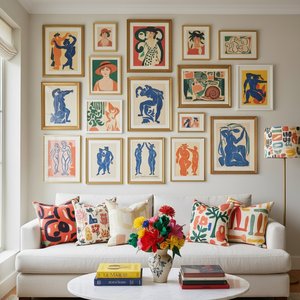
Atraskite 25 įspūdingiausius Henri Matisse šedevrus! Sužinokite apie Fauvizmą, spalvų magiją ir prancūzų dailininko kūrybos istorijas. Meno reprodukcijos jūsų interjerui – Most-Famous-Paintings.com

Explore 10 Fauvist masterpieces by Matisse, Derain & Vlaminck that ignited Modern Art! Discover bold colors, expressionist landscapes & the history of this revolutionary movement. Find museum-quality prints at Most-Famous-Paintings.com.
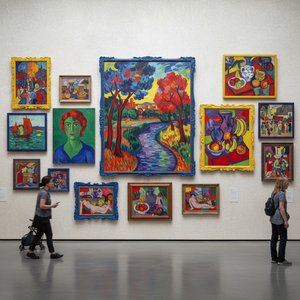
Atraskite fovizmo deimantus! 10 legendinių kūrinių, kuriuos pristato Henri Matisse ir kiti. Pažinkite spalvų revoliuciją bei įkvėpkite interjero dizainui. Aukštos kokybės meninės reprodukcijos – Most-Famous-Paintings.com

Immerse yourself in the captivating world of slate blue! Explore 10 iconic paintings by Monet, Van Gogh & Renoir. Discover their stories, techniques & find museum-quality art reproductions for your home at .

Explore the rich history of blue in art! Discover its symbolism, from ancient pigments to modern masterpieces by Kandinsky & Seurat. Uncover the psychological impact and cultural meanings behind this captivating hue.


Sekite naujausias meno naujienas, išskirtinius pasiūlymus ir dekoravimo idėjas.
Pasakokite mums apie savo projektą, o mūsų meno ekspertai parengs jums 3 asmeniškus meno pasiūlymus.
Leiskite mums parinkti 3 variantus būtent jums – nemokamai!


 Peržiūrėti realybėje
 Pasidalinti
 Dalintis
 Išsamiau

 Atsisiųsti
 Panašūs eksponatai
 Rentgeno nuotrauka
 Automatinė diorama

 Skaityti daugiau







 Stiklo variantas prieinamas tik pasirinkus dydį iki 110 cm


