x

 Aliejus ant drobėsSieninis menasPost-Impressionism
 1865XIX amžius
 59.0 x 76.0 cm
Rankiniu būdu tapytas aliejus ant droblio jūsų pageidaujamame dydį ir rėmuose – mūsų menininkų darbas pagal užsakymą. ( Pirkti spaudinį Pirkti vaizdą)





























Pasirinkite iš mūsų nustatytų dydžių, atitinkančių originalaus meno kūrinio proporcijas.

Galite įvesti savo matmenis, kad jie atitiktų konkretų rėmą ar erdvę. Jei pasirinktas dydis neatitinka originalaus paveikslėlio proporcijų, mes arba apkropsime meno kūrinį, arba papildysime tapybą rankomis dažytい elementais. Prieš pradėdami gamybą, jūsų patvirtinimui atsiųsime skaitmeninį maketą.
Atkreipkite dėmesį, kad ekrane rodomas vaizdas neatspindi tikrojo apkarpymo ar papildymo. Tik maketas tiksliai parodys galutinę kompoziciją.
Nors galima rinktis ir individualius dydžius, rekomenduojame pasirinkti matmenis iš nustatytos sąrašo, kad būtų išlaikytos originalios proporcijos.
Pristatymas visame pasaulyje () per 3–4 savaites, o ne įprastai – per 5 savaites. (17 rugpjūtis). Kokybė lieka nepakeičiama.


Štai „Darbas kambariu“ iš 1865 metų – Paul Cézanne šiuolaikinės dailės tėvas, kuriuo įvyko tylios revoliucijos įvykdymas drobėje. Tai ne tik kvietimas į žavingą produktų rinkinį; tai yra Cezano radikalus nutrūkdymas akademinėms tradicijoms ir pirmaujantis
Reprodukcijos matmenys
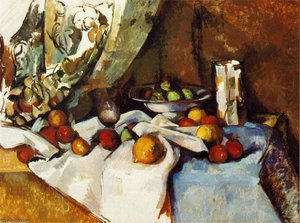
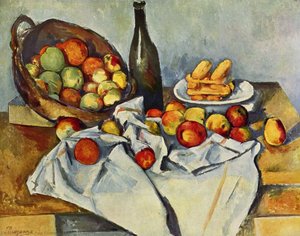
Paul Cézanne’s “Still Life with Bread and Eggs,” painted in 1865, isn’t merely a depiction of everyday objects; it’s a pivotal moment in the evolution of modern art. More than just a charming arrangement of loaf, eggs, and simple vessels, this work embodies Cézanne's radical departure from academic tradition and his pioneering exploration of form and color – a quiet revolution captured on canvas. Housed within the Cincinnati Art Museum, it stands as a testament to an artist who fundamentally reshaped how we perceive and represent the world around us.
Cézanne’s early work reveals a fascination with the tangible realities of life—a departure from the idealized subjects favored by his predecessors. “Still Life with Bread and Eggs” exemplifies this shift, presenting familiar elements – a rustic loaf, delicate eggs, and humble cups – in a way that feels both intimate and profoundly considered. The composition isn’t about photographic accuracy; instead, Cézanne meticulously dissects each object, isolating its essential shapes and planes. Notice how the bread is rendered not as a single form but as a series of overlapping rectangles, suggesting volume and weight. Similarly, the eggs are depicted with a subtle sense of curvature, hinting at their delicate structure. This deliberate simplification, this rejection of illusionistic depth, was revolutionary for its time.
Cézanne's style in “Still Life with Bread and Eggs” firmly establishes him as a key figure in the transition from Impressionism to Post-Impressionism. While he initially absorbed elements of Impressionistic color theory – particularly the use of broken brushstrokes to capture fleeting light—he soon moved beyond mere observation, seeking instead to define the underlying structure of objects. The painting’s surface is alive with these exploratory brushstrokes, each one a deliberate mark that contributes to the overall sense of solidity and presence. Unlike Impressionists who aimed to capture an immediate impression, Cézanne was interested in capturing the *essence* of his subjects – their form, their weight, their spatial relationships.
Initially, Cézanne’s unconventional approach was met with skepticism and ridicule by contemporary critics who were accustomed to the polished realism of academic art. However, a small circle of fellow artists—including Camille Pissarro and Ambroise Vollard—recognized his genius and championed his work. In 1895, Vollard organized the first solo exhibition of Cézanne’s paintings in Paris, which dramatically shifted public perception. This event marked a turning point, establishing Cézanne as a major artistic innovator.
The influence of Cézanne on subsequent generations of artists is undeniable. Henri Matisse and Pablo Picasso both acknowledged him as “the father of us all,” recognizing his profound impact on their own artistic development. His emphasis on form, color, and spatial relationships laid the groundwork for Cubism, Fauvism, and countless other avant-garde movements. “Still Life with Bread and Eggs” isn’t just a beautiful painting; it's a foundational work that continues to inspire artists today.
At Most-Famous-Paintings, we are proud to offer meticulously crafted, hand-painted reproductions of Paul Cézanne’s “Still Life with Bread and Eggs.” These aren't simply prints; they are faithful recreations of the original painting, capturing its subtle nuances, rich textures, and emotional depth. Each reproduction is created by skilled artists who share a deep appreciation for Cézanne’s legacy. Owning a Most-Famous-Paintings reproduction allows you to bring this iconic work into your home or office, celebrating the enduring power of art and the genius of Paul Cézanne.
Explore our collection today and discover the perfect way to experience “Still Life with Bread and Eggs” – a timeless masterpiece that continues to resonate with viewers across generations. Browse the Collection


1839 - 1906 , Prancūzija

Explore the transformative era of Post-Impressionism. Discover how masters like Van Gogh moved beyond light to embrace emotion, structure, and vibrant color, redefining modern art history through expressive brushwork and symbolic depth.


Sekite naujausias meno naujienas, išskirtinius pasiūlymus ir dekoravimo idėjas.
Pasakokite mums apie savo projektą, o mūsų meno ekspertai parengs jums 3 asmeniškus meno pasiūlymus.
Leiskite mums parinkti 3 variantus būtent jums – nemokamai!


 Peržiūrėti realybėje
 Pasidalinti
 Dalintis
 Išsamiau

 Atsisiųsti
 Panašūs eksponatai
 Rentgeno nuotrauka
 Automatinė diorama
 Skaityti daugiau







 Stiklo variantas prieinamas tik pasirinkus dydį iki 110 cm