x

 Oil On CanvasWallArtExpressionism
 1913Modern
 51.0 x 57.0 cm
Met de hand geschilderd in olieverf op canvas in uw gewenste maat en lijst, op bestelling gemaakt door onze kunstenaars. ( Bestel print Koop afbeelding)





























Kies uit onze vooraf ingestelde maten die overeenkomen met de originele verhoudingen van het kunstwerk.

U kunt uw eigen afmetingen invoeren om in een specifieke lijst of ruimte te passen. Als de door u gekozen maat niet overeenkomt met de verhoudingen van het originele beeld, zullen we het kunstwerk bijsnijden of het schilderij uitbreiden met extra handgeschilderde elementen. Een digitale mockup wordt ter goedkeuring naar u verzonden voordat de productie begint.
Houd er rekening mee dat de preview op het scherm niet de werkelijke uitsnede of uitbreiding weergeeft. Alleen de mockup toont de uiteindelijke compositie nauwkeurig.
Hoewel aangepaste afmetingen mogelijk zijn, raden we aan een maat uit de vooraf gedefinieerde lijst te selecteren om de originele verhoudingen te behouden.
Wereldwijde levering () binnen 3 tot 4 weken in plaats van de standaard 5 weken. (18 augustus). Zonder concessies aan de kwaliteit.


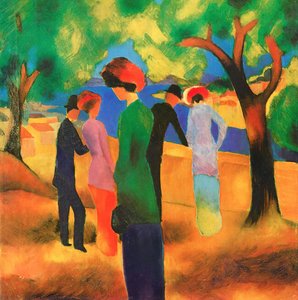
Promenade
Afmetingen reproductie
Captured in 1913, August Macke's "Promenade" offers a poignant glimpse into the burgeoning world of German Expressionism – a movement defined by its raw emotional intensity and rejection of traditional representational art. This intimate scene, measuring 51 x 57 cm, depicts a group of figures leisurely strolling along a shaded path beneath a canopy of trees, an idyllic tableau rendered with a distinctive boldness that speaks to the anxieties and aspirations of the early 20th century. The painting’s power resides not in photographic realism but in its ability to evoke a profound sense of mood and atmosphere – a feeling of quiet contemplation and fleeting joy within a rapidly changing world.
Macke's artistic trajectory was marked by a relentless pursuit of new forms, initially influenced by Impressionism and Post-Impressionism. However, “Promenade” firmly establishes him as a key figure within the Expressionist movement. The simplified forms, flattened perspective, and deliberate distortion of figures are hallmarks of this style. Notice how the rectangular shapes of the clothing contrast sharply with the organic curves of the trees, creating a visual tension that mirrors the emotional undercurrents of the scene. The use of color is particularly striking – vibrant greens and blues dominate, not to accurately depict nature but to amplify the painting’s emotive impact. Thick, impasto brushstrokes contribute significantly to this effect, adding a tactile quality and emphasizing the artist's deliberate manipulation of texture.
Executed in oil on canvas, “Promenade” reveals Macke’s masterful control of his medium. The visible brushwork is not merely a stylistic choice; it actively contributes to the painting’s expressive power. The layering of colors, particularly in the foliage and shadows, creates a sense of depth and volume while simultaneously conveying a feeling of movement and energy. The diffused lighting, ambiguous yet evocative, further enhances this effect, bathing the figures in a soft glow that suggests both serenity and an underlying melancholy. Macke’s technique demonstrates a commitment to capturing not just what he saw but how he *felt* about what he saw – a core tenet of Expressionist art.
Created in 1913, at the cusp of World War I, “Promenade” carries a subtle yet significant symbolic weight. The figures strolling along the path represent a momentary escape from the pressures and uncertainties of modern life – a brief respite within nature’s embrace. This theme resonates with the broader anxieties of the era, reflecting a desire for stability and tranquility amidst widespread social and political upheaval. Macke's work, like that of many Expressionist artists, can be interpreted as a response to the rapid industrialization, urbanization, and technological advancements transforming Europe at the time. The painting’s inherent beauty serves as a poignant reminder of the fragility of peace and the importance of cherishing simple pleasures.


1887 - 1914 , Duitsland

Explore the visceral power of German Expressionism. From Ernst Ludwig Kirchner to Die Brücke, discover how bold colors and distorted forms unmask raw human emotion in this expert art history guide for collectors and enthusiasts.


Blijf op de hoogte van het laatste kunstnieuws, exclusieve aanbiedingen en decoratie-ideeën.
Vertel ons over uw project en onze kunstexperts geven u 3 gepersonaliseerde kunstsuggesties.
Wij stellen drie opties speciaal voor u samen – gratis!


 Voorvertoning
 Verstuur
 Delen
Delen
 Details bekijken

 Download
 Vergelijkbare items
 Röntgenonderzoek
 Diavoorstelling
 Lees meer







 De optie voor glas is alleen beschikbaar bij een formaat kleiner dan 110 cm.