


x


 Preview
 Bestel schilderij Koop afbeelding in hoge resolutie
 Verstuur
 Details bekijken
 Toevoegen aan favorieten
 Download
 Vergelijkbare werken
 Röntgenonderzoek
 Diavoorstelling
Giclée- of canvasafdruk van museumkwaliteit met snelle productie en flexibele afwerkingsopties.





























Kies uit onze vooraf ingestelde maten die overeenkomen met de originele verhoudingen van het kunstwerk.

U kunt uw eigen afmetingen opgeven om in een specifieke lijst of ruimte te passen. Als de door u gekozen maat niet overeenkomt met de proporties van het originele kunstwerk, zullen wij de afbeelding bijsnijden of uitbreiden met een gespiegelde of effen rand. Een digitaal mockup wordt ter goedkeuring naar u verzonden voordat de productie begint.
Houd er rekening mee dat de preview op het scherm de werkelijke bijsneding of uitbreiding niet weergeeft. Alleen de mockup toont de uiteindelijke compositie nauwkeurig.
Hoewel aangepaste maten beschikbaar zijn, raden wij aan een afmeting uit de vooraf bepaalde lijst te kiezen om de originele proporties te behouden.
Wereldwijde levering () binnen 2 weken in plaats van de standaard 4/5 weken. (25 juli)


Proof for
Afmetingen reproductie
Barbara Hepworth's "Proof for 'Landscape Sculpture' Ascher scarf design," created in 1947, isn’t merely a decorative print; it’s a distilled essence of the artist’s profound engagement with form and space. Born in Wakefield, Yorkshire, Hepworth’s journey into abstraction began amidst the burgeoning artistic movements of the early 20th century, influenced by her time in Italy and her close relationships with figures like Ben Nicholson. This particular work represents a pivotal moment – a bridge between her sculptural explorations and a more accessible visual language. The design itself feels almost embryonic, a preliminary sketch for a larger concept, yet it possesses an undeniable maturity and a captivating internal logic. It’s as if Hepworth is inviting us to witness the birth of an idea, a geometric meditation on the relationship between solid form and negative space.
At first glance, the composition appears deceptively simple: a network of interlocking triangles and circles arranged within a central circular void. However, closer inspection reveals a complex system of relationships. The triangles aren’t randomly placed; they seem to be striving for equilibrium, pushing against each other in a dynamic tension. They evoke the fractured planes of a landscape viewed through shifting light, mirroring Hepworth's own sculptural explorations of natural forms – rocks, water, and earth. The circles, acting as anchors, provide stability and suggest the cyclical nature of existence. The deliberate absence of a definitive ‘foreground’ or ‘background’ further enhances this sense of spatial ambiguity, inviting the viewer to actively participate in constructing their own interpretation.
Symbolism Note:Hepworth was deeply influenced by Surrealist ideas and sought to capture the subconscious through her art. The fragmented forms can be interpreted as representing the brokenness of experience, while the circular void suggests a yearning for wholeness or perhaps an acceptance of incompleteness.
Understanding “Proof for ‘Landscape Sculpture’ Ascher scarf design” requires acknowledging Barbara Hepworth's broader artistic context. She was a key figure in the Unit One movement, alongside Ben Nicholson and Paul Nash, which aimed to synthesize Surrealist and abstract principles within British art. Her sculptural work, characterized by its clean lines, biomorphic forms, and exploration of negative space, profoundly influenced her printmaking. The design’s geometric precision reflects this commitment to reductive abstraction – stripping away extraneous detail to reveal the essential form. Her sculptures often sought to capture a sense of movement and dynamism, qualities that are subtly echoed in the arrangement of shapes within the print.
Despite its intellectual rigor, “Proof for ‘Landscape Sculpture’ Ascher scarf design” possesses a remarkable emotional resonance. The muted colors and carefully considered composition evoke a sense of quiet contemplation – an invitation to slow down and observe the subtle beauty of form. It's not a work that demands immediate attention; rather, it rewards patient viewing with a growing appreciation for its intricate details and underlying harmony. The design’s inherent ambiguity allows it to resonate differently with each viewer, making it a timeless piece that continues to provoke thought and inspire reflection. Its understated elegance makes it an ideal addition to any space seeking a touch of sophisticated serenity.


1903 - 1975 , Verenigd Koninkrijk

Ontdek de top 25 meesterwerken uit het Metropolitan Museum of Art, New York! Van Van Gogh tot Monet – leer over kunstgeschiedenis en bewonder iconische schilderijen. Vind museumkwaliteit reproducties & interieurinspiratie op Most-Famous-Paintings.com.
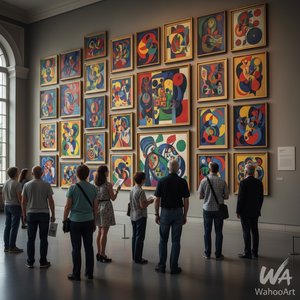
Ontdek de 25 meest iconische werken van Wassily Kandinsky! Duik in zijn abstracte wereld vol kleur, expressionisme & spirituele diepgang. Vind museumkwaliteit reproducties en interieurinspiratie op Most-Famous-Paintings.com.

Explore the profound world of Barbara Hepworth's sculpture. Discover her artistic evolution, iconic forms, and lasting influence on modern art. A guide for collectors & enthusiasts.

Ontdek de 10 meest legendarische bronzen beeldhouwwerken die kunstgeschiedenis schreven! Van Rodin tot Michelangelo, leer over hun meesterwerken & technieken. Vind museumkwaliteit reproducties en inspiratie voor uw interieur op Most-Famous-Paintings.com.
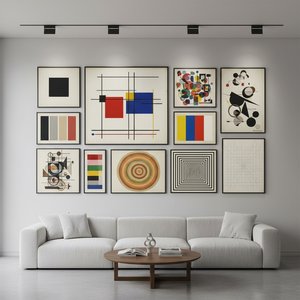
Ontdek de 10 meest invloedrijke meesterwerken van de geometrische abstractie! Van Mondriaan tot Malevich, leer over kunstenaars, technieken & kleuren. Museumkwaliteit reproducties op Most-Famous-Paintings.com – voor een unieke interieurstijl.


Blijf op de hoogte van het laatste kunstnieuws, exclusieve aanbiedingen en decoratie-ideeën.
Vertel ons over uw project en onze kunstexperts geven u 3 gepersonaliseerde kunstsuggesties.
Wij stellen 3 opties speciaal voor u samen – Gratis!


 Delen
Delen


 Lees meer







 De optie voor glas is alleen beschikbaar bij een formaat kleiner dan 110 cm.


