


x

 BronzeSculptureModern Abstract
 1969
1969 270.0 x 61.0 cm
 The Hepworth Wakefield
Giclée- of canvasafdruk van museumkwaliteit met een snelle productie en flexibele afwerkingsmogelijkheden. ( Bestel handgeschilderde reproductie Koop afbeelding)
Kies uit onze vooraf ingestelde maten die overeenkomen met de originele verhoudingen van het kunstwerk.

U kunt uw eigen afmetingen opgeven om in een specifieke lijst of ruimte te passen. Als de door u gekozen maat niet overeenkomt met de proporties van het originele kunstwerk, zullen wij de afbeelding bijsnijden of uitbreiden met een gespiegelde of effen rand. Een digitaal mockup wordt ter goedkeuring naar u verzonden voordat de productie begint.
Houd er rekening mee dat de preview op het scherm de werkelijke bijsneding of uitbreiding niet weergeeft. Alleen de mockup toont de uiteindelijke compositie nauwkeurig.
Hoewel aangepaste maten beschikbaar zijn, raden wij aan een afmeting uit de vooraf bepaalde lijst te kiezen om de originele proporties te behouden.
Wereldwijde levering () binnen 2 weken in plaats van de standaard 4/5 weken. (14 augustus)


Single Form (Antiphon)
Afmetingen reproductie
Barbara Hepworth's 'Single Form (Antiphon)', created in 1969, isn’t merely a sculpture; it’s an invitation to contemplation. Standing nearly three meters tall and cast from bronze, this piece embodies the core of Hepworth’s mature style – a masterful synthesis of abstract form and deeply rooted connection with nature. It resides outdoors, nestled against a weathered brick wall and embraced by the verdant textures of ferns and foliage, suggesting an immediate dialogue between human creation and the organic world. The sculpture's elongated, subtly curving shape evokes both a standing figure and a stylized stone monolith, hinting at ancient forms and timelessness.
Hepworth’s approach to sculpture was profoundly influenced by her time in St Ives, Cornwall, where she found inspiration in the rugged coastline and the interplay of light and shadow. This piece reflects that sensibility – a deliberate simplification of form, achieved through meticulous modeling and casting. The bronze itself is not merely a material; it's treated with a subtle patina, revealing the artist’s hand and adding layers of texture and history to the surface. The smooth, almost polished sections contrast beautifully with the rougher, more textured base, creating a dynamic tension that draws the eye upwards.
Hepworth's work is characterized by a deliberate avoidance of representational imagery. Instead, she focused on capturing essential gestures and underlying forms – the movement of water, the curve of a branch, the solidity of stone. ‘Single Form (Antiphon)’ exemplifies this approach perfectly. The elongated form seems to possess an internal life, suggesting a sense of contained energy and quiet dynamism. The subtle shifts in scale and proportion create a feeling of spatial ambiguity, inviting viewers to engage with the sculpture from multiple perspectives.
Her technique involved a process of subtractive modeling – starting with a rough block of material and gradually removing excess until the desired form emerged. This method allowed her to explore the inherent qualities of the chosen medium—in this case, bronze—and to create surfaces that were both tactile and visually arresting. The resulting texture is not simply a surface treatment; it’s integral to the sculpture's expressive power, conveying a sense of age, weathering, and the passage of time.
Barbara Hepworth was a pivotal figure in the development of modern sculpture. Born in 1903, she emerged during a period of radical artistic experimentation, challenging traditional notions of form and representation. Her work aligned with the broader currents of abstraction and non-objective art that were gaining momentum throughout Europe and America. During her time in St Ives, Hepworth was part of a vibrant artistic community alongside Ben Nicholson and Patrick Heron, contributing to the development of British modernism.
‘Single Form (Antiphon)’ was created during a period of significant social and political change – the late 1960s. The sculpture reflects this era’s interest in exploring new forms of expression and challenging established conventions. It stands as a testament to Hepworth's enduring legacy as one of the most important sculptors of the 20th century, whose work continues to resonate with audiences today.
While devoid of explicit imagery, ‘Single Form (Antiphon)’ is rich in symbolic potential. The sculpture’s verticality suggests aspiration and connection to the heavens, while its grounded base anchors it firmly within the earth. The interplay between smooth and rough surfaces evokes a sense of balance and harmony – reflecting Hepworth's belief that art should be both intellectually stimulating and emotionally engaging.
Ultimately, ‘Single Form (Antiphon)’ is an invitation to experience a moment of quiet contemplation. It’s a reminder of the beauty and power of abstract form, and of the enduring connection between art and nature. Its presence outdoors creates a powerful dialogue with its surroundings, inviting viewers to consider their place within the larger world.


1903 - 1975 , Verenigd Koninkrijk

Explore the profound history of sculpture, from classical realism to modern abstraction. Discover the mastery of form, texture, and medium through an expert art-historical lens designed for discerning collectors and enthusiasts.

Discover the sophisticated world of metal art. From industrial grace to contemporary sculpture, our expert guide explores how premium metallic masterpieces elevate luxury interiors for discerning collectors seeking timeless elegance and investment-grade artistry.
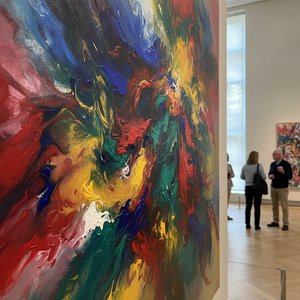
Explore the profound emotional depth of Lyrical Abstraction. Discover how masters like Raymond Parker used color and form to bridge Impressionism and Abstract Expressionism. Learn about this pivotal movement through our expert-led art history guide.


Blijf op de hoogte van het laatste kunstnieuws, exclusieve aanbiedingen en decoratie-ideeën.
Vertel ons over uw project en onze kunstexperts geven u 3 gepersonaliseerde kunstsuggesties.
Wij stellen drie opties speciaal voor u samen – gratis!


 Verstuur
 Delen
Delen
 Details bekijken

 Download
 Vergelijkbare items
 Diavoorstelling
 Lees meer




































 De optie voor glas is alleen beschikbaar bij een formaat kleiner dan 110 cm.


