x

 Olieverf op canvasWanddecoratieBaroque
 1606Renaissance
 128.0 x 103.0 cm
 Palazzo Rosso
Koop een digitale afbeelding in hoge resolutie met verbeterde kwaliteit, die veel superieur is aan de online voorvertoning.
Elk bestand wordt met uiterste precisie voorbereid door onze interne specialisten, met behulp van geavanceerde tools en deskundige handmatige retouche. Wij garanderen dat elke afbeelding een uitzonderlijke helderheid, nauwkeurige kleurweergave en verfijnde details bezit.
Het uiteindelijke bestand wordt binnen 72 uur per e-mail geleverd, geoptimaliseerd voor direct gebruik in professionele, redactionele en printomgevingen. Dit is dezelfde kwaliteit waarop vooraanstaande designstudio's, uitgevers en galerieën vertrouwen.
Download een bestand met hoge resolutie voor persoonlijke weergave, afdrukken en creatieve projecten. ( Bestel print Bestel handgeschilderde reproductie)
Wanneer u kiest voor Most-Famous-Paintings.com, ontvangt u niet alleen een afbeelding – u krijgt een professioneel verbeterd digitaal kunstwerk, met precisie vervaardigd en voorzien van een tevredenheidsgarantie. Dit is alles wat automatisch bij uw bestelling is inbegrepen:

Uw hoogwaardige digitale afbeeldingsbestand wordt binnen 72 uur na bestelling naar u gemaild – klaar voor direct gebruik.

Uw kunstwerk wordt professioneel geoptimaliseerd met behulp van geavanceerde AI-tools en handmatige bewerkingen, waardoor maximale details, helderheid en kleurnauwkeurigheid worden gegarandeerd.

Je bestand per ongeluk verwijderd of kwijtgeraakt? Geen zorgen – we sturen het u op elk gewenst moment gratis opnieuw toe.

Geniet direct van uw kunstwerk zonder invoerrechten, belastingen of verzendkosten – digitale downloads zijn altijd belastingvrij.

Met behulp van professionele hulpmiddelen en kleurbeheer zorgen wij ervoor dat uw digitale afbeelding de originele kleuren zo nauwkeurig mogelijk weergeeft.

Als u niet tevreden bent met uw digitale afbeelding, passen wij deze aan of storten wij 100% terug binnen 60 dagen – zonder vragen gesteld.

Niet tevreden? Ontvang binnen 60 dagen na ontvangst van uw digitale bestand uw volledige aankoopbedrag terug – zonder vragen te stellen.

Koop 3 afbeeldingen, bespaar 10% - Koop 5, bespaar 15% - Koop 10+, bespaar 20%. Ideaal voor creatieve projecten, galerieën en bureaus.
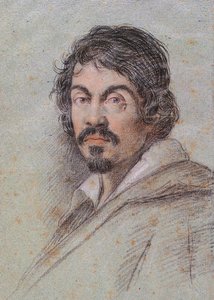
Michelangelo Merisi da Caravaggio, universally known as Caravaggio (1571–1610), stands as one of the most influential figures in Baroque painting. Born in Milan amidst familial tragedy—his father and grandfather succumbed to plague shortly after his birth—Caravaggio’s formative years instilled within him a profound awareness of human vulnerability and resilience, themes that would permeate his artistic output for decades to come. His early training under Simone Peterzano, a former pupil of Titian, provided him with foundational skills in Renaissance technique while simultaneously nurturing an rebellious spirit that would propel him toward groundbreaking innovations.
Rome welcomed Caravaggio around 1592, marking the commencement of his illustrious artistic career. However, this arrival wasn’t without hardship; he endured poverty and struggled to establish himself amidst the competitive milieu of the papal capital. Despite these challenges, Caravaggio swiftly gained recognition as a painter—a reputation bolstered by commissions from prominent patrons—and cultivated an unparalleled mastery of chiaroscuro, a technique that would forever redefine artistic expression.
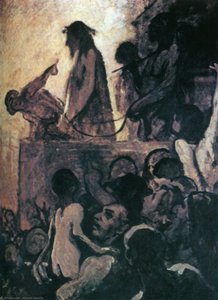
His magnum opus, *Ecce Homo*, exemplifies these principles perfectly. Painted circa 1605/06 or 1609 and currently residing in the Palazzo Bianco of Genoa, this arresting image transcends mere depiction; it’s a profound meditation on faith, guilt, and the unsettling confrontation between humanity and divine judgment. Caravaggio's masterful use of chiaroscuro—the technique of highlighting figures against dark backgrounds—immediately commands attention, immersing the viewer in an atmosphere charged with moral ambiguity.
Consider the composition itself: Pontius Pilate presents Jesus to a hostile crowd, illuminated by a single beam of light that casts sharp shadows across their faces. The man holding Jesus down embodies the oppressive force of authority, while the observer symbolizes indifference—a chilling reminder of humanity’s capacity for cruelty and inaction. Caravaggio doesn't merely portray these figures; he sculpts them from darkness, amplifying their vulnerability and conveying the psychological torment inherent in the scene.
The painting’s symbolism is equally compelling. The crown of thorns serves as a poignant emblem of Christ’s suffering—a visual shorthand for martyrdom—while the dark backdrop underscores the pervasive presence of evil. Caravaggio's deliberate manipulation of light isn’t merely aesthetic; it’s deeply symbolic, representing the conflict between divine grace and human sin.
*Ecce Homo* stands as a testament to Caravaggio’s artistic genius—a masterpiece that continues to captivate audiences centuries after its creation. Its enduring power lies in its ability to confront viewers with uncomfortable truths about morality, faith, and the human condition. Reproductions of this iconic artwork strive to capture only a fraction of its original impact, offering a glimpse into the heart of Baroque artistry.

1571 - 1610 , Spanje


Blijf op de hoogte van het laatste kunstnieuws, exclusieve aanbiedingen en decoratie-ideeën.
Vertel ons over uw project en onze kunstexperts geven u 3 gepersonaliseerde kunstsuggesties.
Wij stellen drie opties speciaal voor u samen – gratis!


 Voorvertoning
 Verstuur
 Delen
Delen
 Details bekijken

 Download
 Vergelijkbare items
 Röntgenonderzoek
 Diavoorstelling
 Lees meer