x

Giclée- of canvasafdruk van museumkwaliteit met een snelle productie en flexibele afwerkingsmogelijkheden. ( Bestel handgeschilderde reproductie Koop afbeelding)





























Kies uit onze vooraf ingestelde maten die overeenkomen met de originele verhoudingen van het kunstwerk.

U kunt uw eigen afmetingen opgeven om in een specifieke lijst of ruimte te passen. Als de door u gekozen maat niet overeenkomt met de proporties van het originele kunstwerk, zullen wij de afbeelding bijsnijden of uitbreiden met een gespiegelde of effen rand. Een digitaal mockup wordt ter goedkeuring naar u verzonden voordat de productie begint.
Houd er rekening mee dat de preview op het scherm de werkelijke bijsneding of uitbreiding niet weergeeft. Alleen de mockup toont de uiteindelijke compositie nauwkeurig.
Hoewel aangepaste maten beschikbaar zijn, raden wij aan een afmeting uit de vooraf bepaalde lijst te kiezen om de originele proporties te behouden.
Wereldwijde levering () binnen 2 weken in plaats van de standaard 4/5 weken. (15 augustus)


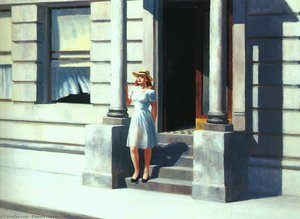
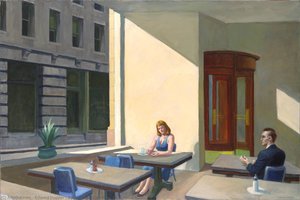
Eleven A.M.
Afmetingen reproductie
Edward Hopper’s “Eleven A.M.” (1926) is more than just a depiction of a woman in a room; it’s a meticulously crafted meditation on the quiet loneliness inherent within the burgeoning modern American experience. Painted during a pivotal moment in Hopper's career, this work exemplifies his signature style – characterized by stark realism, carefully controlled light, and an unsettling sense of detachment. The scene unfolds with a deliberate simplicity: a woman seated in a chair, her gaze fixed upon the exterior world through a window, a silent observer within her own domestic sphere. This seemingly straightforward composition belies a profound exploration of isolation and the challenges of navigating a rapidly changing society.
Hopper's technical skill is immediately apparent in “Eleven A.M.” His use of light is particularly noteworthy; it isn’t merely illumination but a powerful tool for conveying mood and atmosphere. The diffused natural light filtering through the window casts long, dramatic shadows, emphasizing the emptiness of the room and intensifying the woman’s solitary posture. He employs a precise, almost photographic realism, meticulously rendering textures – from the worn fabric of the chair to the smooth surface of the vases – yet avoids sentimentality. This restrained approach is crucial to the painting's emotional impact; it allows the viewer to project their own feelings and interpretations onto the scene.
"Eleven A.M." was created during the Jazz Age, a period of immense social and cultural change in America. The rise of urban centers, industrialization, and new forms of entertainment contributed to a sense of alienation and displacement. Hopper’s work reflects this shift, capturing the anxieties and uncertainties of individuals struggling to find their place within this rapidly evolving world. The woman's gaze out the window can be interpreted as a yearning for connection or an escape from the confines of her domestic life – themes that resonated deeply with audiences at the time and continue to hold relevance today.
Ultimately, “Eleven A.M.” is a profoundly moving work that speaks to the universal human experience of loneliness and introspection. Hopper’s ability to capture this quiet emotion with such precision and subtlety has ensured its enduring appeal. It's a painting that invites contemplation, prompting viewers to consider their own relationships with solitude, isolation, and the search for meaning in an often-chaotic world. This reproduction offers a remarkable opportunity to experience the power of Hopper’s vision firsthand, bringing this iconic image into your home or office.

1931 - 1967 , Verenigde Staten van Amerika

Explore the profound history of American Regionalism. Discover how Grant Wood captured the heart of the Midwest through masterpieces like American Gothic. An expert guide to the movement, its cultural impact, and the enduring beauty of American Realism.

Explore the profound history and technical mastery of woodcut relief printing. From ancient origins to German Expressionism, discover how artists use the subtractive process to create iconic works. A definitive guide for art students, collectors, and historians.

Discover the technical mastery behind Most-Famous-Paintings.com's premium Giclée canvas prints. Our guide for elite collectors explores archival pigment inks, museum-grade substrates, and the science of high-fidelity reproduction to ensure lasting beauty and historical accuracy.


Blijf op de hoogte van het laatste kunstnieuws, exclusieve aanbiedingen en decoratie-ideeën.
Vertel ons over uw project en onze kunstexperts geven u 3 gepersonaliseerde kunstsuggesties.
Wij stellen drie opties speciaal voor u samen – gratis!


 Voorvertoning
 Verstuur
 Delen
Delen
 Details bekijken

 Download
 Vergelijkbare items
 Röntgenonderzoek
 Diavoorstelling

 Lees meer







 De optie voor glas is alleen beschikbaar bij een formaat kleiner dan 110 cm.