x

Giclée- of canvasafdruk van museumkwaliteit met een snelle productie en flexibele afwerkingsmogelijkheden. ( Bestel handgeschilderde reproductie Koop afbeelding)





























Kies uit onze vooraf ingestelde maten die overeenkomen met de originele verhoudingen van het kunstwerk.

U kunt uw eigen afmetingen opgeven om in een specifieke lijst of ruimte te passen. Als de door u gekozen maat niet overeenkomt met de proporties van het originele kunstwerk, zullen wij de afbeelding bijsnijden of uitbreiden met een gespiegelde of effen rand. Een digitaal mockup wordt ter goedkeuring naar u verzonden voordat de productie begint.
Houd er rekening mee dat de preview op het scherm de werkelijke bijsneding of uitbreiding niet weergeeft. Alleen de mockup toont de uiteindelijke compositie nauwkeurig.
Hoewel aangepaste maten beschikbaar zijn, raden wij aan een afmeting uit de vooraf bepaalde lijst te kiezen om de originele proporties te behouden.
Wereldwijde levering () binnen 2 weken in plaats van de standaard 4/5 weken. (18 augustus)


untitled (3371)
Afmetingen reproductie
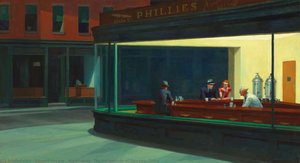
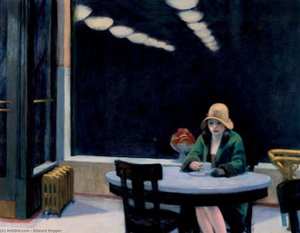
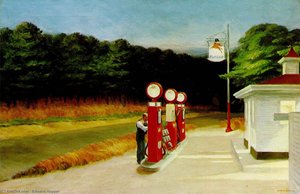
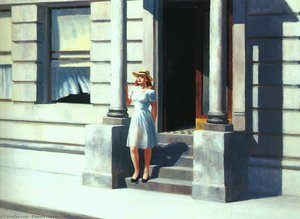
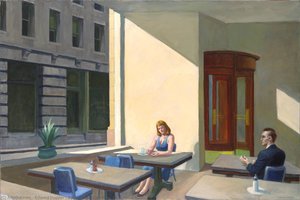
Edward Hopper (1882-1967), born in Nyack, New York, stands as one of the most recognizable figures in American art history. His artistic journey began with a grounding in commercial illustration—a pragmatic path suggested by his parents—yet Hopper swiftly gravitated toward fine art, enrolling at the New York School of Art under William Merritt Chase and Robert Henri.
These formative influences profoundly shaped Hopper’s artistic vision. Chase instilled technical proficiency, while Henri championed expressive realism—a commitment to portraying the world with unflinching honesty. This dedication to capturing the essence of human experience is evident throughout his extensive body of work, cementing his reputation as a chronicler of modern life.
Hopper's distinctive style—characterized by stark contrasts of light and dark, simplified forms, and an almost photographic precision—became synonymous with the mood of the era. He eschewed grand narratives or overtly dramatic gestures, instead focusing on capturing fleeting moments of everyday existence—a deliberate choice that underscores his belief in the power of observation.
Hopper's technique was meticulously honed through years of practice. He favored a restrained palette, primarily utilizing shades of gray and white—a stylistic decision that heightened the impact of his compositions. The artist skillfully manipulated light to sculpt forms and create depth within the canvas, emphasizing the interplay between illumination and darkness.
Detailed brushstrokes—often subtly textured—were employed to render surfaces with remarkable accuracy, capturing the subtle nuances of material texture. This meticulous attention to detail contributes significantly to the artwork’s overall realism and reinforces Hopper's commitment to portraying the world as he perceived it.

1931 - 1967 , Verenigde Staten van Amerika

Explore the profound history of American Regionalism. Discover how Grant Wood captured the heart of the Midwest through masterpieces like American Gothic. An expert guide to the movement, its cultural impact, and the enduring beauty of American Realism.


Blijf op de hoogte van het laatste kunstnieuws, exclusieve aanbiedingen en decoratie-ideeën.
Vertel ons over uw project en onze kunstexperts geven u 3 gepersonaliseerde kunstsuggesties.
Wij stellen drie opties speciaal voor u samen – gratis!


 Voorvertoning
 Verstuur
 Delen
Delen
 Details bekijken

 Download
 Vergelijkbare items
 Röntgenonderzoek
 Diavoorstelling
 Lees meer







 De optie voor glas is alleen beschikbaar bij een formaat kleiner dan 110 cm.